Bangladesh is holding its first general election since Sheikh Hasina was forced from power in 2024, in a vote set to define the country’s political direction after months of unrest.
More than 127 million eligible voters are choosing a new parliament in what is widely seen as one of the most consequential elections in the country’s history.
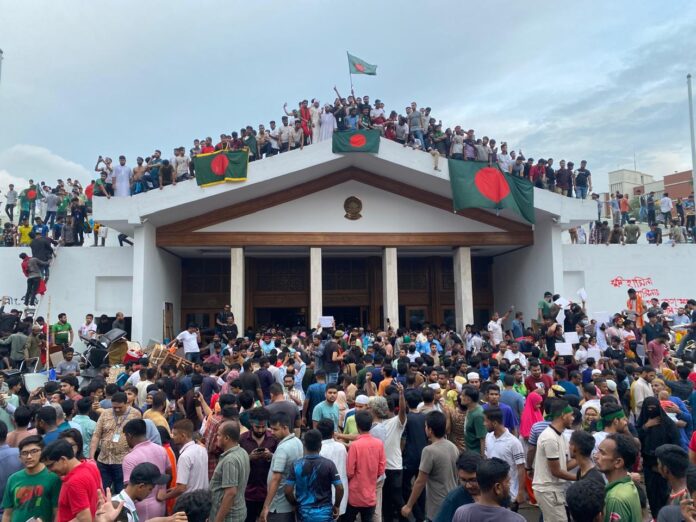
The vote follows the July 2024 mass uprising that ended Hasina’s 15 years in power and left around 1,400 people dead and thousands injured, according to the UN.
Hasina fled to India, where she remains, and her Awami League party has been barred from competing.
After two years of interim governance, voters are now deciding who will lead the 13th parliamentary term and whether to approve a sweeping reform plan alongside the election.

Main contenders
Over 2,000 candidates from more than 50 political parties, along with independents, are contesting 300 parliamentary seats. Another 50 that are allocated on a basis of voter percentage to parties. To form a government, a party or alliance must secure at least 151 seats.
Subscribe to our newsletter and stay updated on the latest news and updates from around the Muslim world!
The race is dominated by two alliances. One is led by the Bangladesh Nationalist Party, or BNP, under Tarique Rahman, who took control of the party after the death of his mother, former premier Khaleda Zia. Rahman returned to Bangladesh after decades in exile in the United Kingdom.
The BNP is heading a 10 party alliance and has fielded candidates in 292 constituencies, leaving the remaining seats to coalition partners. It has pledged to build a Bangladesh where “terrorism, corruption, and discrimination are eliminated,” to cap the Prime Minister’s time in office at 10 years, and to provide financial support for marginal and low income families.
The other major bloc is led by Bangladesh Jamaat e Islami, the Bangladeshi variant of the Muslim Brotherhood, which was banned for years under Hasina. It now heads an 11 party alliance and is contesting 224 seats. Shafiqur Rahman leads the party.
The alliance includes the National Citizen Party (NCP), whose leaders played a central role in the July Uprising that deposed Hasina’s government. The NCP is contesting 30 seats, with other partners running in the remaining constituencies.
Jamaat has promised greater roles for young people in state leadership and reforms in the judiciary, education system, and economy. According to a survey reported by National Daily Prothom Alo, the BNP alliance may secure 44.1% of the vote, while the Jamaat led alliance could follow closely with 43.9%, suggesting a tight result.
Key issues
The 2024 uprising, economic strain, and corruption are at the centre of this election. Many voters, especially younger ones, say they want a political culture that is more accountable and less confrontational than the one that defined the previous era.
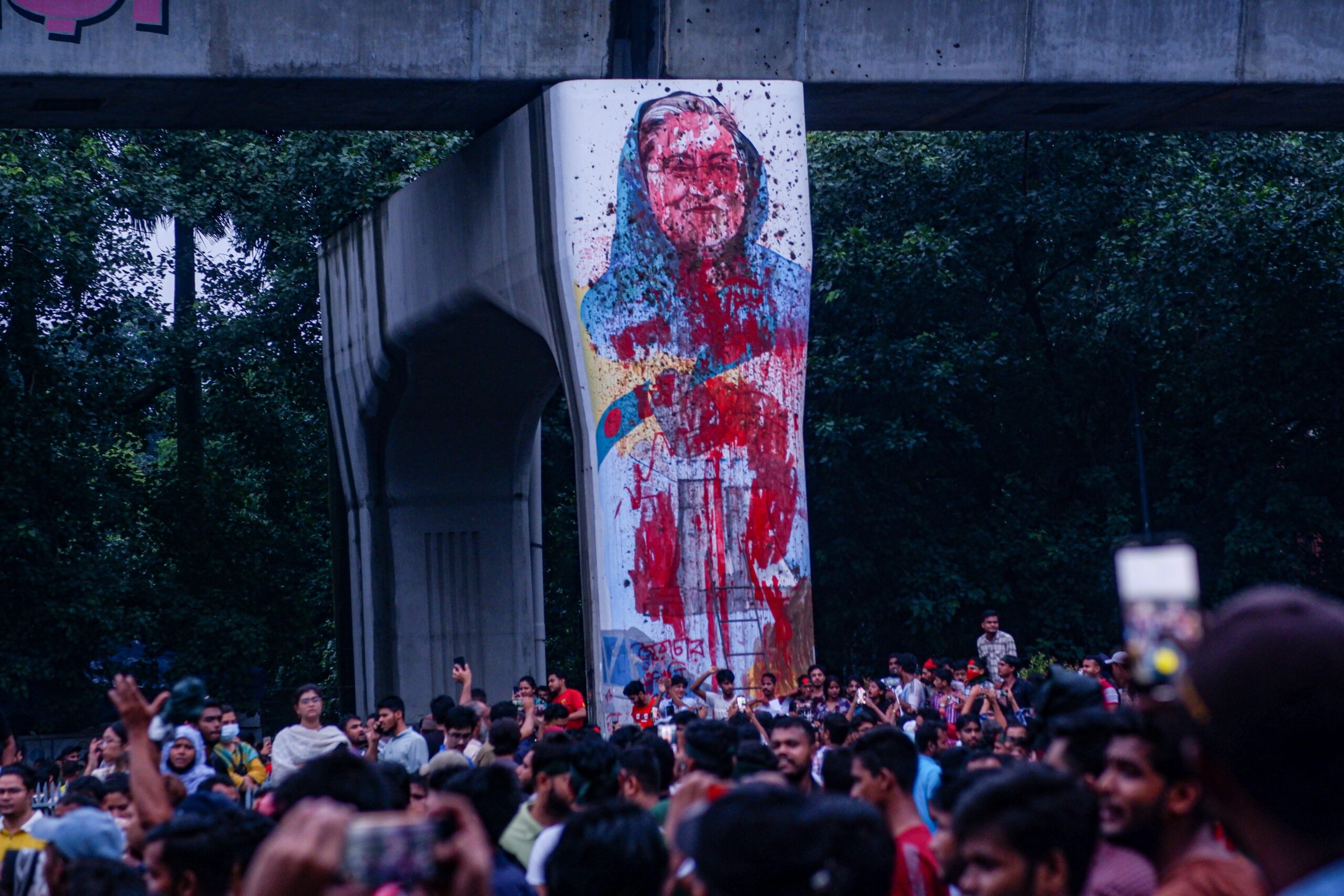
Nearly one fourth of the electorate are first time voters. Many of them took part in the July and August protests and are now seeking structural change.
Bangladesh recorded inflation of 8.58% in January, adding to pressure on households already facing high living costs.
Zakaria Polash, strategic coordinator of the Dhaka based Communication and Research Foundation, said: “The party that is promising better arrangements of curbing corruption will gain higher acceptance.”
Job creation for the country’s 45.9 million young people is also a major demand.
Reform vote
Alongside the parliamentary contest, voters are being asked to approve or reject the July Charter, a reform blueprint drafted by the interim government’s National Consensus Commission. The charter contains more than 80 proposals aimed at overhauling governance.
Among the proposals are term limits for the prime minister, expanded presidential powers, stronger judicial independence, increased women’s representation, and broader fundamental rights. If approved, the new parliament would be required to implement the reforms within a fixed timeframe.
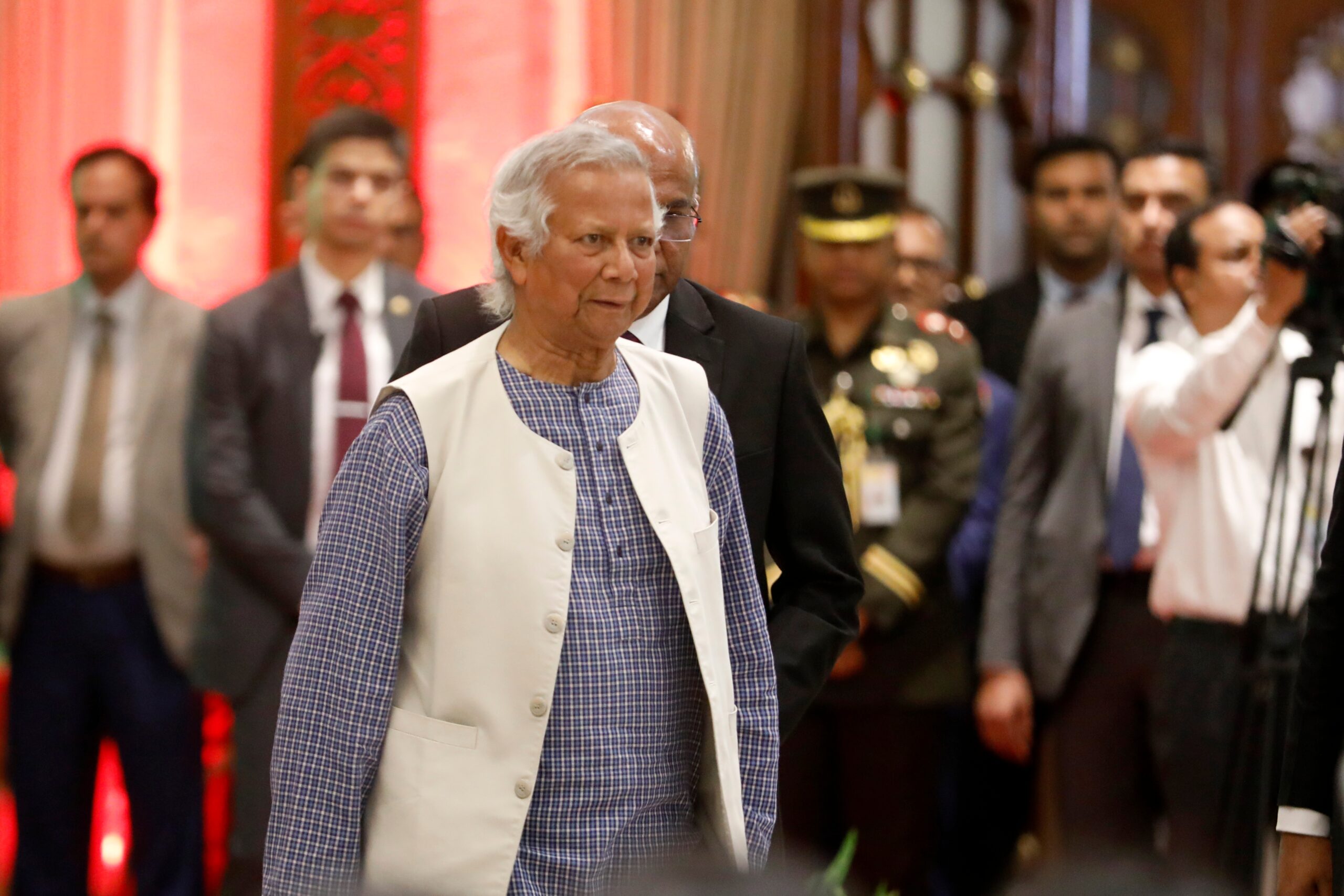
Chief Adviser Muhammad Yunus has framed the election as a turning point.
In a televised address, he said: “I am not merely requesting you. I am demanding it. Set fear aside and bring courage forward as you head to the polling stations.
“Your vote will not only elect a government. It will respond to 17 years of silence, challenge unrestrained fascism, reshape the nation, and prove that this country will never let the voices of its youth, women and resilient people be silenced again.”
What comes next?
In the short term, simply holding the election is seen by some analysts as a milestone after months of unrest. Yunus has promised that his interim administration will hand over power as soon as possible once results are finalised.
In the longer term, whichever alliance forms the next government is expected to face strong public pressure to prioritise national interests, tackle corruption, and manage relations with regional and global powers more carefully.
The result could also reshape Bangladesh’s domestic balance of power, especially if the reform charter is approved. With a closely divided electorate and energised youth base, the next government is likely to operate under intense scrutiny from both voters and a vocal opposition.