


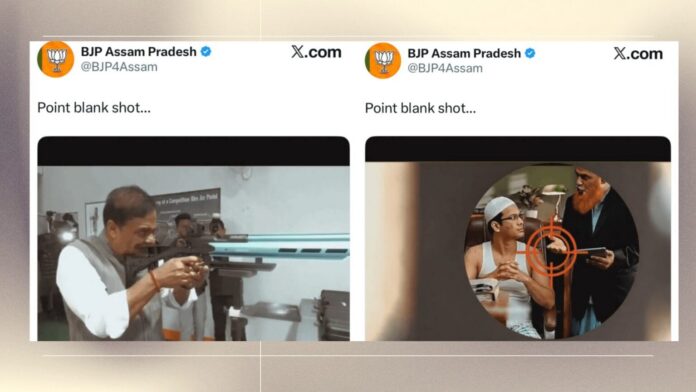
India’s ruling Bharatiya Janata Party (BJP) has deleted an AI-generated video posted by its Assam chapter depicting the state’s chief minister, Himanta Biswa Sarma, shooting at Muslims.
The 17-second clip, titled “Point Blank Shot,” was uploaded to social media platform X on Saturday and quickly went viral, drawing sharp criticism from opposition parties, civil society groups and Muslim organisations across India.
The video combined real footage of Sarma handling a rifle with AI-generated images showing him firing at two Muslim men. Text overlays including “No Mercy” and “Foreigner Free Assam” appeared throughout the clip.
Assam, a northeastern Indian state bordering Bangladesh, is home to more than 12 million Muslims, accounting for around one-third of its population.
Opposition figures accused the BJP of promoting hatred and encouraging violence against Muslims.

Aman Wadud, a leader of the opposition Indian National Congress in Assam, described the video as “deeply disturbing.”
“This shows the BJP has absolutely no regard for law or even basic decency,” Wadud told Al Jazeera. “It also shows their desperation. The people of Assam are ready to defeat this politics of hatred and division.”
Subscribe to our newsletter and stay updated on the latest news and updates from around the Muslim world!
The Congress party said in a statement that the clip “amounts to a call for mass violence and genocide.”
Mahua Moitra, a senior leader of the All India Trinamool Congress, urged Supreme Court of India to intervene, writing on X: “What more does this man need to do for the judiciary to wake up?”
Indian media also reported that one of the Muslim men shown in the video bore a resemblance to a Congress Member of Parliament.
BJP offers no explanation
Despite the backlash, the Assam BJP has offered little explanation for the post.
Ranjib Kumar Sarma, a local BJP leader, told The Indian Express: “There is no comment. It has been deleted. There is nothing to say.”

Chief Minister Himanta Biswa Sarma has not publicly commented on the controversy. Sarma, a hardline Hindu nationalist, has frequently been accused by critics of using inflammatory language against Muslims, particularly Bengali-speaking Muslims in Assam.
State elections in Assam are expected in March or April this year. Opposition parties say the BJP is attempting to polarise voters along religious lines ahead of the polls.
Rising anti-Muslim rhetoric
In recent months, Sarma has intensified his attacks on Assam’s Muslim community. Last month, he urged local residents to give “Miya Muslims” — a derogatory term for Bengali-origin Muslims — a “hard time.”
Addressing supporters, he said: “Even small acts like paying less fare to a rickshaw driver. If they ask for five rupees, give them four. They will leave Assam only if they face hardships.”
Human rights groups warn that such remarks encourage discrimination and hostility against an already vulnerable minority. Assam has a long history of tension over migration from neighbouring Bangladesh, with Hindu nationalist groups often accusing Bengali-speaking Muslims of being “illegal immigrants” and a threat to the state’s culture and identity.
In September last year, the Assam BJP shared another AI-generated video titled “Assam Without BJP,” which portrayed the state as being “taken over” by Muslims.
Wider climate in India
The controversy comes amid growing concern over rising Islamophobia in India since Narendra Modi’s BJP came to power in 2014. Muslims make up about 14 percent of India’s 1.4 billion population and say they are increasingly treated as outsiders under the BJP’s Hindu-majoritarian politics.
In 2019, the Modi government amended India’s citizenship law to fast-track citizenship for non-Muslim migrants from neighbouring countries, a move widely criticised by rights groups as discriminatory.
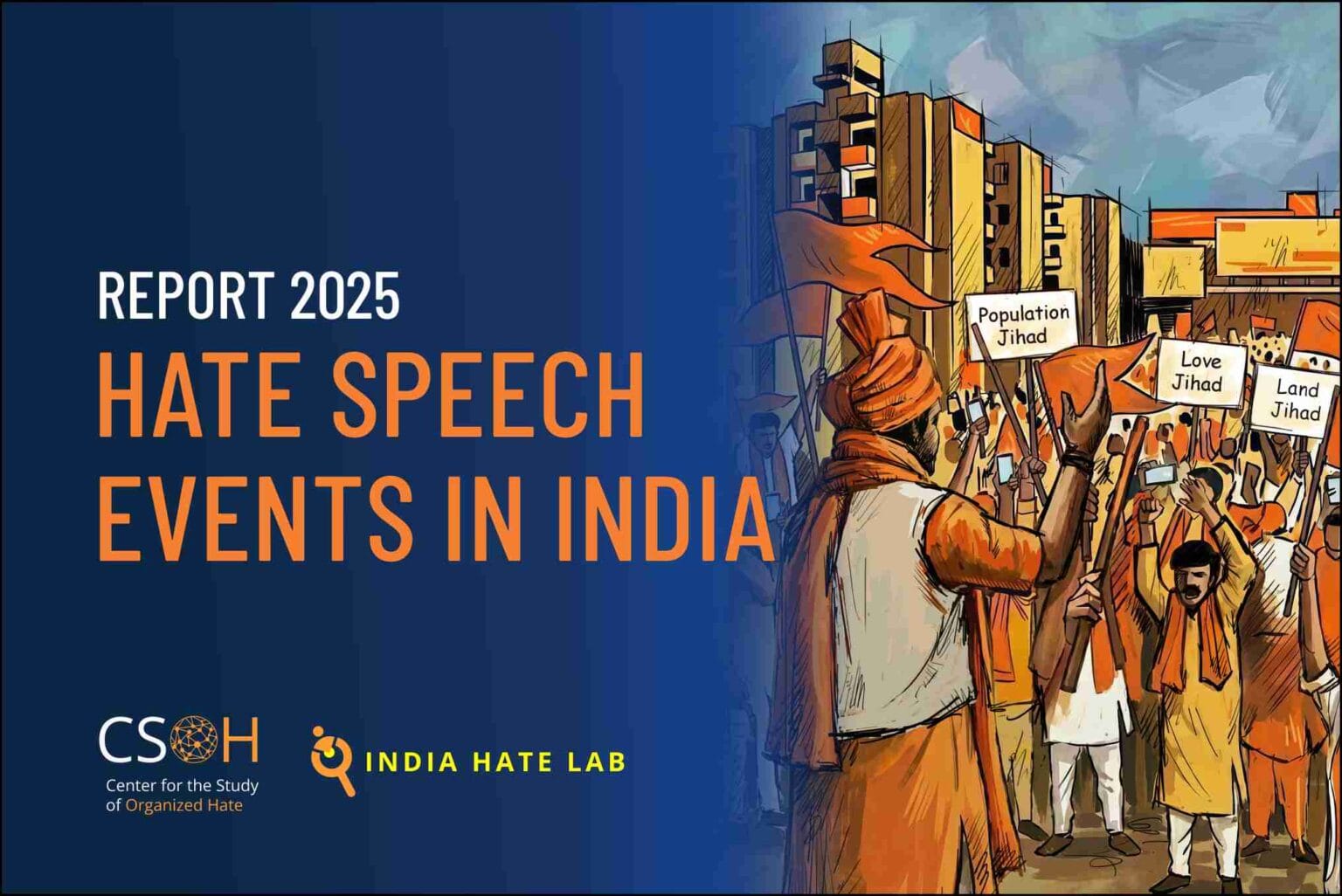
According to India Hate Lab, India recorded 1,318 hate-speech incidents in 2025, with 98 percent targeting Muslims. Human Rights Watch has also accused senior BJP leaders of using anti-Muslim rhetoric during election campaigns, fostering a climate of fear and hostility.
The BJP rejects these allegations, insisting its policies are aimed at national security and curbing illegal immigration.
Concerns over AI misuse
Digital rights experts say the Assam video underscores how AI-generated content can be weaponised to inflame political and religious tensions.
“Deepfake and AI-generated media can be extremely powerful tools for spreading hate,” said a Delhi-based digital rights activist. “When such material is shared by a ruling party, the impact becomes even more dangerous.”
Muslim organisations have called for legal action against those responsible for creating and sharing the video. As Assam heads towards elections, critics fear the use of divisive online propaganda will intensify, raising urgent questions about the regulation of AI and political content in India.