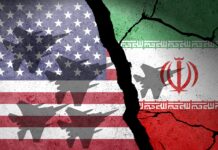




A group of Arab countries including Saudi Arabia, Qatar, Egypt and Oman reportedly managed to convince U.S. President Donald Trump to ditch plans to strike Iran, preventing a massive potential regional crisis – for now.
The collection of Arab nations pressed Washington hard to avoid an attack, while simultaneously warning Tehran against retaliating if the U.S. followed through with its threats.
“We believe in dialogue, and we believe in solving any disagreements at the negotiating table,” said Saudi Minister of State Adel al-Jubeir in a statement.
in recent weeks, President Trump has issued several threats towards Iran, warning that the U.S. will intervene to help anti-regime protesters who have been rioting across the country amid complaints by some Iranians over the economy.
In a statement released on his Truth Social social media platform, Trump said: “If Iran shoots and violently kills peaceful protesters, which is their custom, the United States of America will come to their rescue. We are locked and loaded and ready to go. Thank you for your attention to this matter!”
Iran hit back, warning that any attack on Iran would be met with a deadly response.

The Secretary of Iran’s Supreme National Security Council Ali Larijani issued his own threat in retaliation, urging Trump to “be mindful of your soldiers’ safety.”
Following reports of the Arab lobby effort, Trump appeared to downplay their role in appearing to de-rail momentum towards a fresh U.S./Israel war against Iran.
Subscribe to our newsletter and stay updated on the latest news and updates from around the Muslim world!
“Nobody convinced me. I convinced myself,” Trump told reporters outside the White House on January 16 when asked if Arab and Israeli officials had persuaded him to stand down. “You had yesterday scheduled over 800 hangings. They didn’t hang anyone. They canceled the hangings. That had a big impact.”
On Friday Trump took the unusual step of commending the Iranian government for not following through on executions of what he said was meant to be hundreds of “political prisoners.”

The Iranian authorities have been rounding up and arresting significant numbers of ringleaders which played a role in inciting and mobilising violent riots during the recent flare up of anti-regime unrest.
Tehran has claimed that foreign backed mercenaries, some armed with weapons funnelled to them by Mossad, began attacking government buildings and mosques across the country, turning what was initially peaceful protests over the economy into a violent attempt to overthrow the state.
Protests have since ended following a significant security response and huge pro-regime rallies have also been witnessed as many Iranians rallied to condemn calls for regime change by Western powers.
The death toll from those protests is heavily disputed but western media continues to raise the predicted toll. Trump seems to have hinted that the prospects for U.S. military action have fading since Iran had allegedly held off on the executions.
Iran has often been at odds with its Arab neighbours, particularly Saudi Arabia in the past over disputes involving Syria, Yemen, Lebanon and the treatment of religious minorities in their respective countries.
However, in a full scale war, it is widely feared that Iran would attack key oil and energy infrastructure in various Middle Eastern countries as a way of tanking the global economy. Saudi Arabia has also made efforts to calm tensions with Iran in recent years, moving away from proxy conflict towards a strategy of dialogue with their Iranian regional rival.
“Saudi Arabia’s embassy in Tehran was burned. The Saudi ambassador in DC was targeted in an assassination attempt. Saudi cities and civilian infrastructure were repeatedly aimed at by missiles and drones launched by Iranian-backed proxies. These were not abstract tensions. They were direct attacks on Saudi sovereignty and Saudi lives. And yet, despite that history, the Kingdom has consistently chosen de-escalation over retaliation. It has resisted the temptation to respond emotionally or militarily, fully aware that escalation in this region rarely punishes those who provoke it, and almost always devastates those who live in it.”