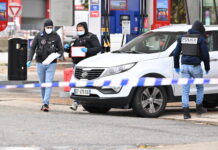



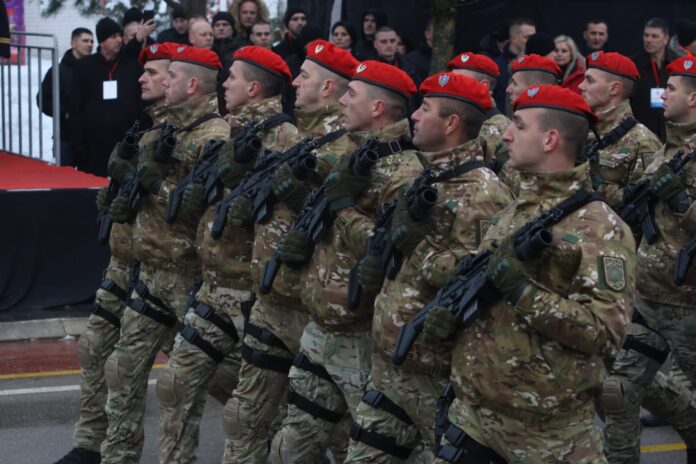
Serbs celebrated the 33rd anniversary of Republika Srpska today, an entity founded on the genocide of Bosnian Muslim cities.
The Republika Srpska authorities held military parades and official events on January 9 to mark what they call the entity’s national day.
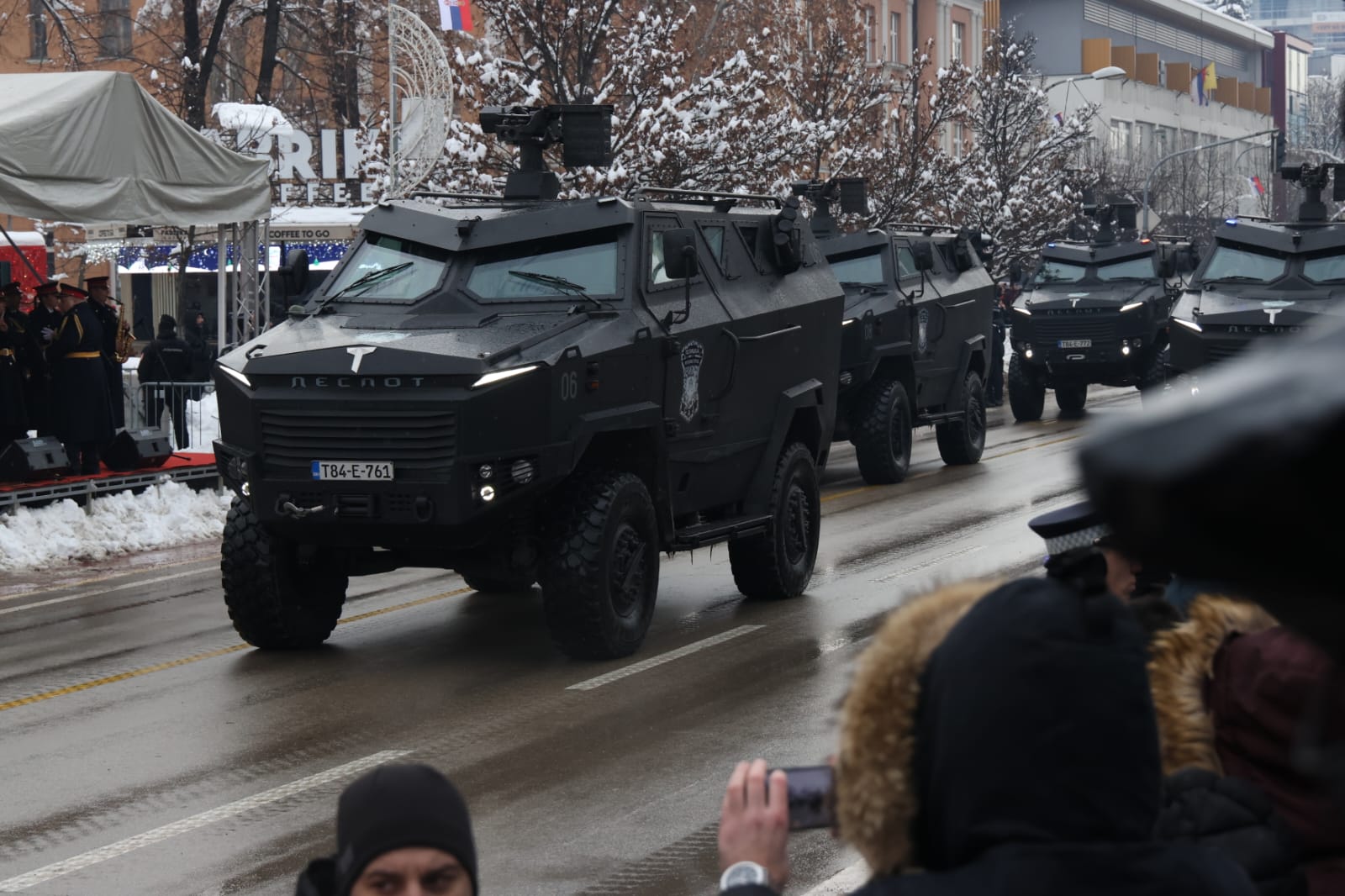
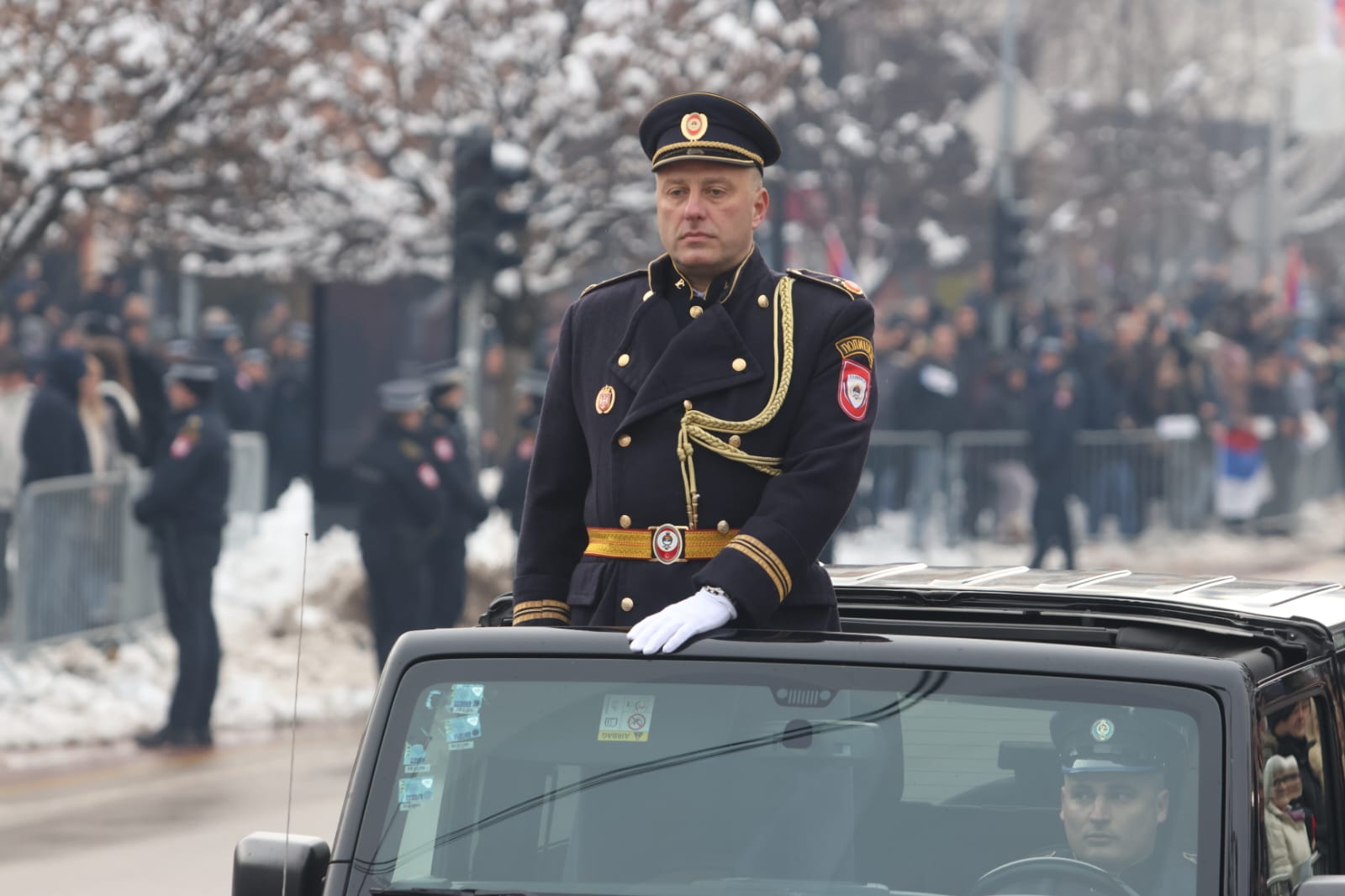
The celebration was organised by the government in Banja Luka, including participation from police units and political leaders.
Bosnia and Herzegovina’s Constitutional Court ruled in 2016 that January 9 cannot be recognised as a public holiday.
January 9 marks the 1992 declaration of the “Serb Republic of Bosnia and Herzegovina.”

That declaration preceded the outbreak of the Bosnian war and the campaign to forcibly remove Muslims from large areas of the country. That campaign included mass killings, concentration camps, systematic rape, and the destruction of mosques and Muslim heritage.
More than 100,000 people were killed in the war, the majority of them Bosniak Muslims.
Subscribe to our newsletter and stay updated on the latest news and updates from around the Muslim world!
The violence culminated in the 1995 Srebrenica genocide, where over 8,000 Bosniak men and boys were executed by Bosnian Serb forces. International courts ruled this was genocide.
Genocide celebration
Republika Srpska was later formally recognised as one of Bosnia’s two entities under the Dayton Peace Agreement. However, its territory was carved out through war crimes and ethnic cleansing.
Cities like Višegrad, Foča, and Banja Luka, once predominantly Muslim for hundreds of years, were ethnically cleansed and largely depopulated during the 1990s, with mosques destroyed and thousands displaced.
Today, Banja Luka now the capital of the Serb dominated breakaway province, has few Muslims left.

In Višegrad, the anniversary is marked by the celebration of genocide, with flags and slogans honouring war criminals like Ratko Mladić and Radovan Karadžić.
These celebrations take place on the very same Ottoman bridge in which Muslims were slaughtered and thrown off from.
Today that bridge is a symbol for many Serbs of the victory against the Muslims.
In schools, these figures are sometimes celebrated as heroes, fueling anti-Muslim and anti-Bosniak sentiment. This day, therefore, ignites a troubling narrative that suggests Muslims never belonged in the region, reinforcing the notion that Republika Srpska’s foundation was a step toward a Bosnia free of Muslims.
The date is also tied to Serbian Orthodox Saint Stephen’s Day, reinforcing its religious and ethnic character.
Bosnia’s Constitutional Court said this violates the country’s obligation to be neutral between communities.
Serb indoctrination
Schools in Republika Srpska use textbooks that minimise or deny genocide.
Convicted war criminals such as Radovan Karadžić and Ratko Mladić are often presented as wartime leaders rather than perpetrators of mass murder.
Murals, plaques and student materials across the entity refer to these figures as heroes.
Survivors of Srebrenica and other massacres have repeatedly protested this.
The Office of the High Representative and the OSCE have both warned that celebrating January 9 undermines Bosnia’s constitutional order and celebrates the genocide of its Muslim people.
No Republika Srpska official was sanctioned this year for defying the court ruling. The ceremonies went ahead under heavy police presence.
For Bosnian Muslims, January 9 is not a cultural holiday. It is the anniversary of a political project that produced mass graves, destroyed Muslim communities, and left tens of thousands of families without fathers, sons, or homes.