


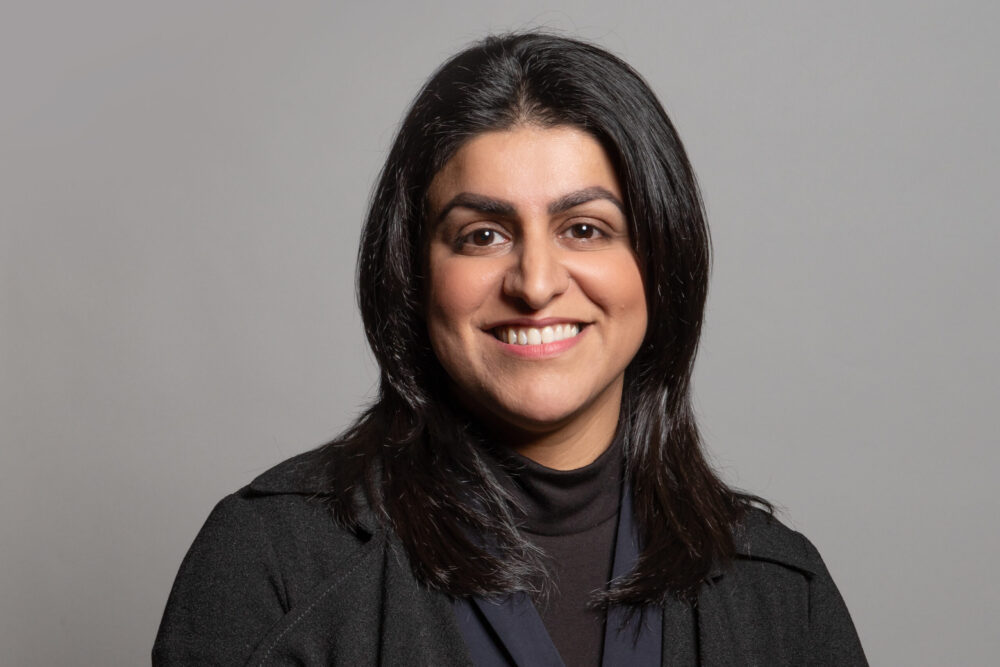
Home Secretary Shabana Mahmood has barred U.S.-based Islamic speaker Dr Shadee Elmasry from entering the country after a campaign by Zionists who objected to his pro-resistance, anti-Israel views.
The decision, taken under immigration powers, came days before Elmasry was due to begin a speaking tour across several British cities at the invitation of the Global Relief Trust charity.
The move followed public pressure from pro-Israel politicians and community groups who raised concerns about Elmasry’s past statements, particularly comments made after the October 7, 2023 Hamas attacks on Israel.
Critics pointed to social media posts and lectures in which they said Elmasry framed the attacks as legitimate resistance and questioned Israeli accounts of atrocities. They described the remarks as extremist and antisemitic.
Elmasry has denied supporting Hamas or extremism, arguing that his remarks were misrepresented, rooted in international law and political opposition to Zionism rather than religion, and that efforts to label him extremist are aimed at silencing criticism of Israel rather than addressing his actual views.

Among the comments that were cited in complaints were that on October 8 2023, Elmasry wrote on social media: “They are all in this (fake or real) state of shock that the people of Gaza finally punched back (after 50 years).”
Subscribe to our newsletter and stay updated on the latest news and updates from around the Muslim world!
Elmasry also said: “Hypothetically even if it was Hamas, it’s conceivable and maybe even expected that a legitimate [sic] resistant [sic] movement will make condemnable mistakes or go to excesses every once in a while. That doesn’t take anything away from the morality of their resistance.”
And in video footage from one of Elmasry’s sermons, he said: “Today is 9/11, which is the day in which Netanyahu and the Mossad initiated and fooled the American people by taking down the World Trade Centres. And right now, if you have any brain cells, you know that that’s the dominant theory — that’s not even the dominant theory, that’s facts, basically.”
Among those campaigning for his exclusion were pro-Israel Conservative MP Nick Timothy and the Campaign Against Antisemitism, which argued that allowing Elmasry to tour the UK would risk inflaming communal tensions.
Jewish community organisations in Greater Manchester and elsewhere welcomed the government’s decision, saying it demonstrated a commitment to public safety and social cohesion.
Shadee Elmasry response
Dr Shadee Elmasry is an American Muslim scholar, educator and community leader from New Jersey who focuses on traditional Islamic learning and outreach.
He began studying Islam in depth at age 18, studying both in Western universities and with scholars in countries including Egypt, Saudi Arabia, Yemen, Morocco and the UK.
He holds a Master’s degree in Religious Studies from The George Washington University and a PhD in Islamic Studies from the School of Oriental and African Studies (SOAS), University of London.
Elmasry has taught at institutions such as Yale, SOAS, Trinity College and Hartford Seminary, and currently serves as Scholar-in-Residence and Director of Education at the New Brunswick Islamic Center in New Jersey.
He is also the founder and head of the Safina Society, an institution dedicated to traditional Islamic education for English-speaking audiences.
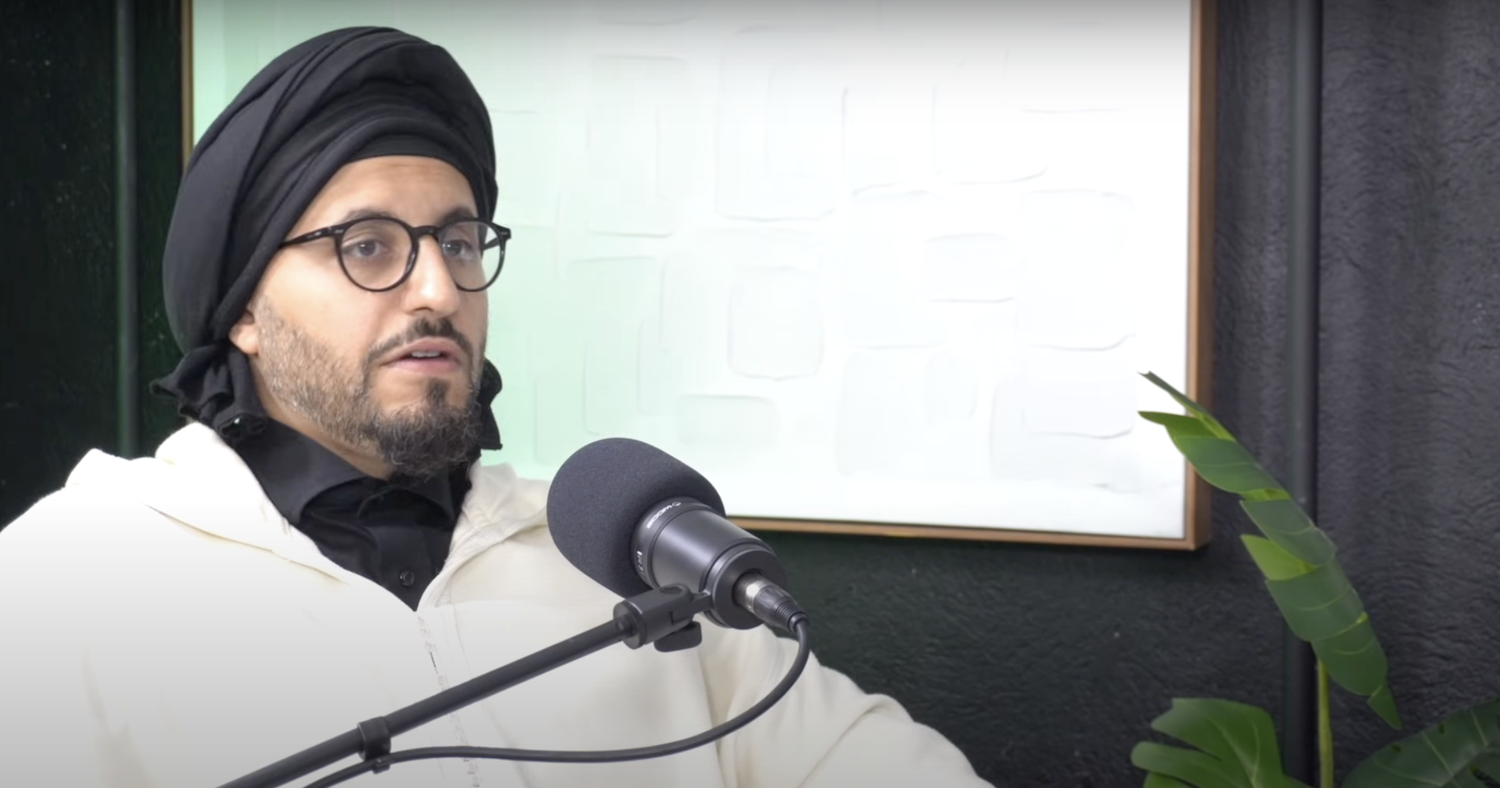
Addressing the allegations in a recent speech, Elmasry framed the controversy as politically motivated rather than substantive, asserting that criticism of his views stemmed primarily from his opposition to Zionism rather than from his religious beliefs.
Addressing specific quotations cited by journalists, Elmasry denied supporting Hamas as an organisation. He stated that he does not support any political group in its entirety, arguing that political movements inevitably engage in actions that may later prove morally or ethically problematic. According to Elmasry, support can only be extended to particular actions or principles, not to organisations as a whole.
He further argued that references he made to Palestinian resistance were grounded in international law rather than religious doctrine. Elmasry cited United Nations principles that recognise the right of people living under illegal occupation to resist, including through armed struggle. On that basis, he said that describing Palestinians as having “punched back” was a factual observation, not an endorsement of violence against civilians or of any specific militant group.
Elmasry also emphasised a distinction between the legitimacy of a cause and the actions carried out in its name. He maintained that a resistance movement may have a morally defensible objective while still committing acts that deserve condemnation. He criticized what he described as a double standard, arguing that similar reasoning is frequently applied to state militaries, including Israel’s, when civilian casualties are described as unintended or accidental.
Elmasry concluded by portraying the backlash against his comments as part of a wider effort to marginalize voices critical of Israel through social and professional pressure. He argued that attempts to label such criticism as extremism are designed to discourage dissent rather than address the substance of the arguments being made.