


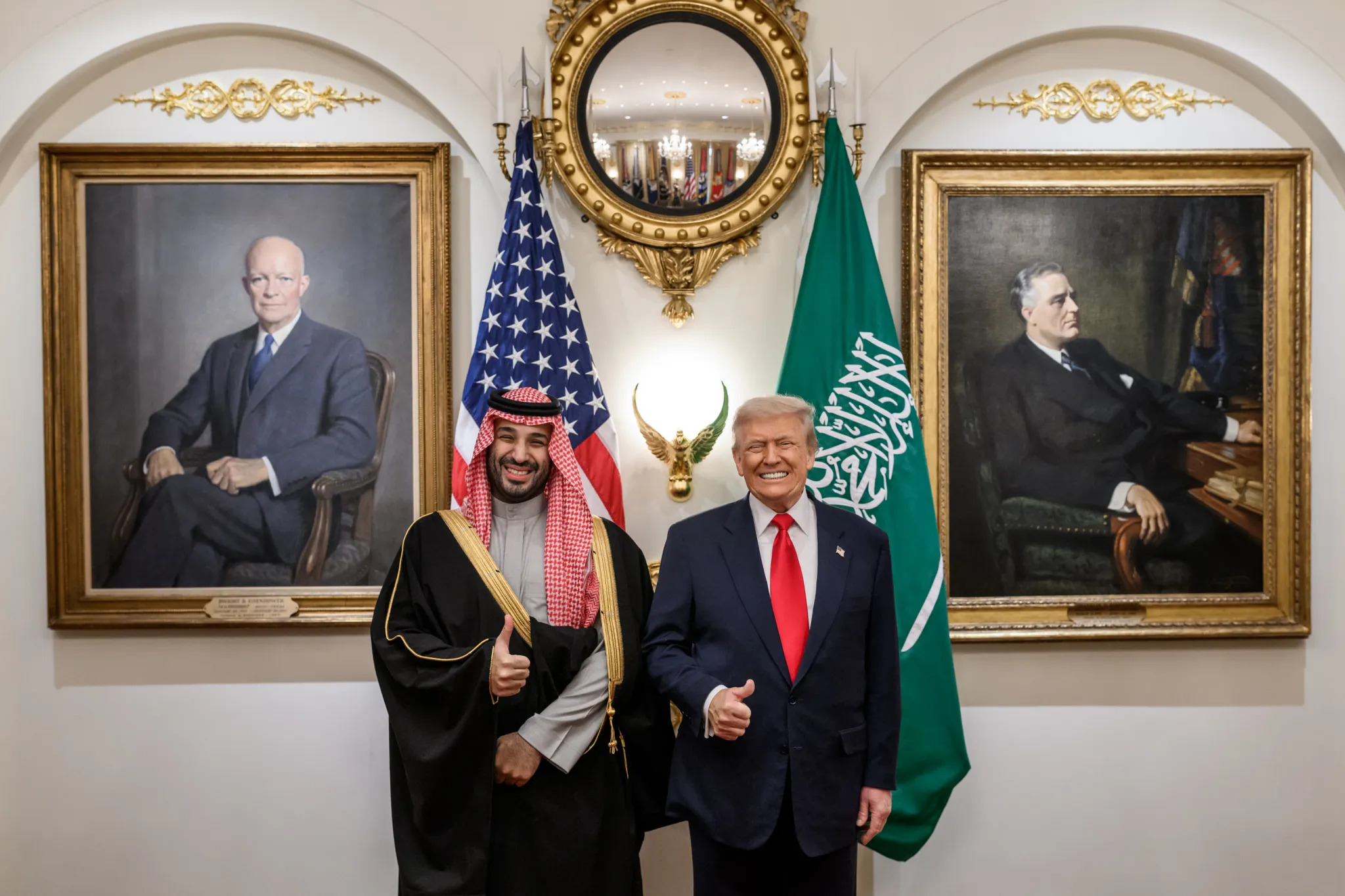
Saudi Crown Prince Mohammed bin Salman said during a visit to Washington this week that Riyadh wants to join the Abraham Accords with Israel, as the Kingdom and the U.S announced sweeping new agreements spanning defence, nuclear energy, Artificial Intelligence, trade, and nearly $1 trillion in Saudi investment.
Speaking at the White House on Tuesday alongside U.S. President Donald Trump, the Crown Prince said Saudi Arabia supports a future in which Israelis and Palestinians live peacefully, but stressed that joining the accords must coincide with a credible path toward resolving the Israeli-Palestinian conflict.
“We want to be part of the Abraham Accords, but we want also to be sure that we secure a clear path of two-state solution,” he said. “We want peace for the Israelis. We want peace for the Palestinians. We want them to coexist peaceful in the region.”
He added that further discussions with the U.S. administration would continue.
Bin Salman arrived in Washington on Tuesday for a three-day visit during which Trump said that he is upgrading ties with Saudi Arabia, designating the Kingdom as a major non-NATO US ally.

Major non-NATO allies are granted certain defence trade and security cooperation benefits, including being able to enter into joint research and development programs with the Pentagon and having privileged access to U.S. weaponry, training and loans.
Other major non-NATO allies include Bahrain, Colombia, Egypt, Israel, Japan, Kenya, Pakistan, Qatar, South Korea and Tunisia.
Subscribe to our newsletter and stay updated on the latest news and updates from around the Muslim world!
Expansion of U.S.–Saudi partnership
Following the Tuesday meeting, the White House released an extensive statement detailing a series of “landmark agreements” that it said deepen U.S.–Saudi strategic and economic ties while bolstering regional stability.
According to the statement, the new agreements build on Trump’s earlier visit to Riyadh, where $600 billion in Saudi investment commitments were secured.
On Tuesday, MohammedBin Salman announced that the Kingdom would increase total investments in the U.S. to nearly $1 trillion, a move the White House described as reflecting “deepening trust and momentum for the United States under President Trump’s leadership.”
Key agreements include:
- Civil Nuclear Cooperation: Completion of negotiations on a decades-long partnership, confirming U.S. companies as Saudi Arabia’s nuclear partners of choice under strict nonproliferation standards.
- Critical Minerals Framework: A strategic effort to secure and diversify supply chains essential for advanced manufacturing, energy and national security.
- Artificial Intelligence Memorandum of Understanding: Providing the Kingdom access to advanced U.S. AI systems while safeguarding American technologies.
- Strategic Defence Agreement (SDA): Strengthening an 80-year defence partnership, expanding deterrence in the Middle East, and easing operations for U.S. defence firms in Saudi Arabia.
- Major U.S. Defence Sales: Approval of future F-35 deliveries and nearly 300 American-manufactured tanks, supporting U.S. industry and jobs.
- Trade and Investment Cooperation: Including recognition that U.S. Federal Motor Vehicle Safety Standards (FMVSS) meet Saudi requirements, efforts to reduce non-tariff barriers, and new agreements between the U.S. Treasury and the Saudi Ministry of Finance on capital markets and financial technologies.
The White House said these agreements will “create high-paying American jobs, boost U.S. technological leadership, and deliver massive returns for American workers and families for decades to come.”
‘Unprecedented growth’
On Wednesday, bin Salman addressed the U.S.–Saudi Investment Forum in Washington, predicting that bilateral economic cooperation will expand at a historic pace.
“We are confident that our economic partnership will witness unprecedented growth in the coming years,” he said, praising Trump for strengthening ties based on “growth, economic diversification, and innovation.”
The Crown Prince said numerous new agreements were finalised during his visit, including initiatives in defence, energy, Artificial Intelligence, rare minerals, and finance. He also highlighted the signing of a Strategic Economic Partnership Document, calling it a “historic step” toward deepening cooperation.
He urged American investors to “seize the attractive opportunities offered by the Saudi-American partnership,” expressing hope that the investment forum would reinforce the “historic relationship” between the two countries.