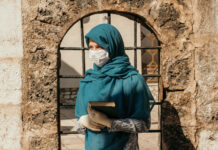



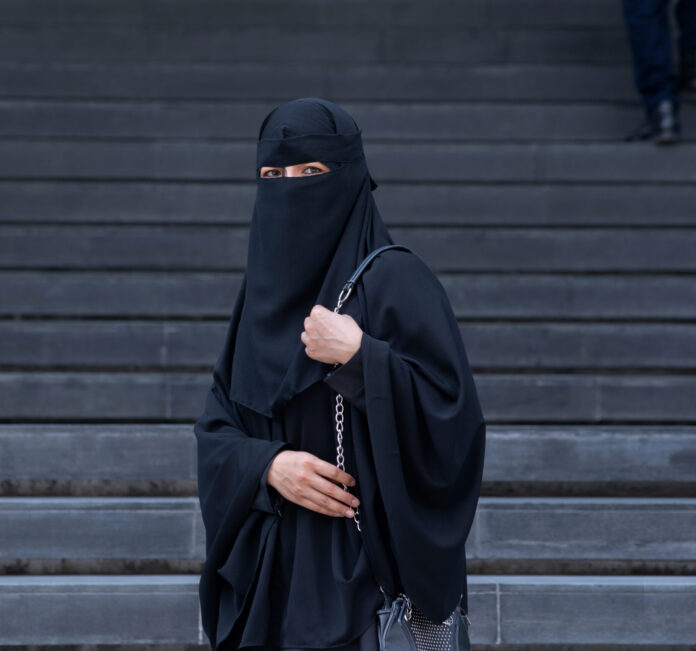
Portugal’s parliament has voted in favour of a bill that would prohibit face covering veils such as the burqa and niqab in public spaces.
The measure was introduced by the far-right Chega party and supported by the Social Democratic Party, the Liberal Initiative, and the Centre Democratic and Social People’s Party.
The Socialist Party, the Left Bloc, Livre, and the Communist Party opposed it, while Together for the People and the People Animals Nature abstained.
If enacted, the bill would impose fines ranging from €200 to €4,000 (£175 and £3,475) on anyone wearing garments that obscure the face in public spaces.
Exceptions would apply for health, safety, cultural, or religious reasons under specific circumstances. Face coverings would still be permitted in diplomatic missions, aeroplanes, and places of worship.

Supporters of the legislation argue that it protects women’s rights and strengthens public safety.
Chega’s leadership said that women forced to wear the burqa lose autonomy and dignity, insisting that immigrants in Portugal must respect the country’s social norms, including keeping their faces visible in public.
Subscribe to our newsletter and stay updated on the latest news and updates from around the Muslim world!
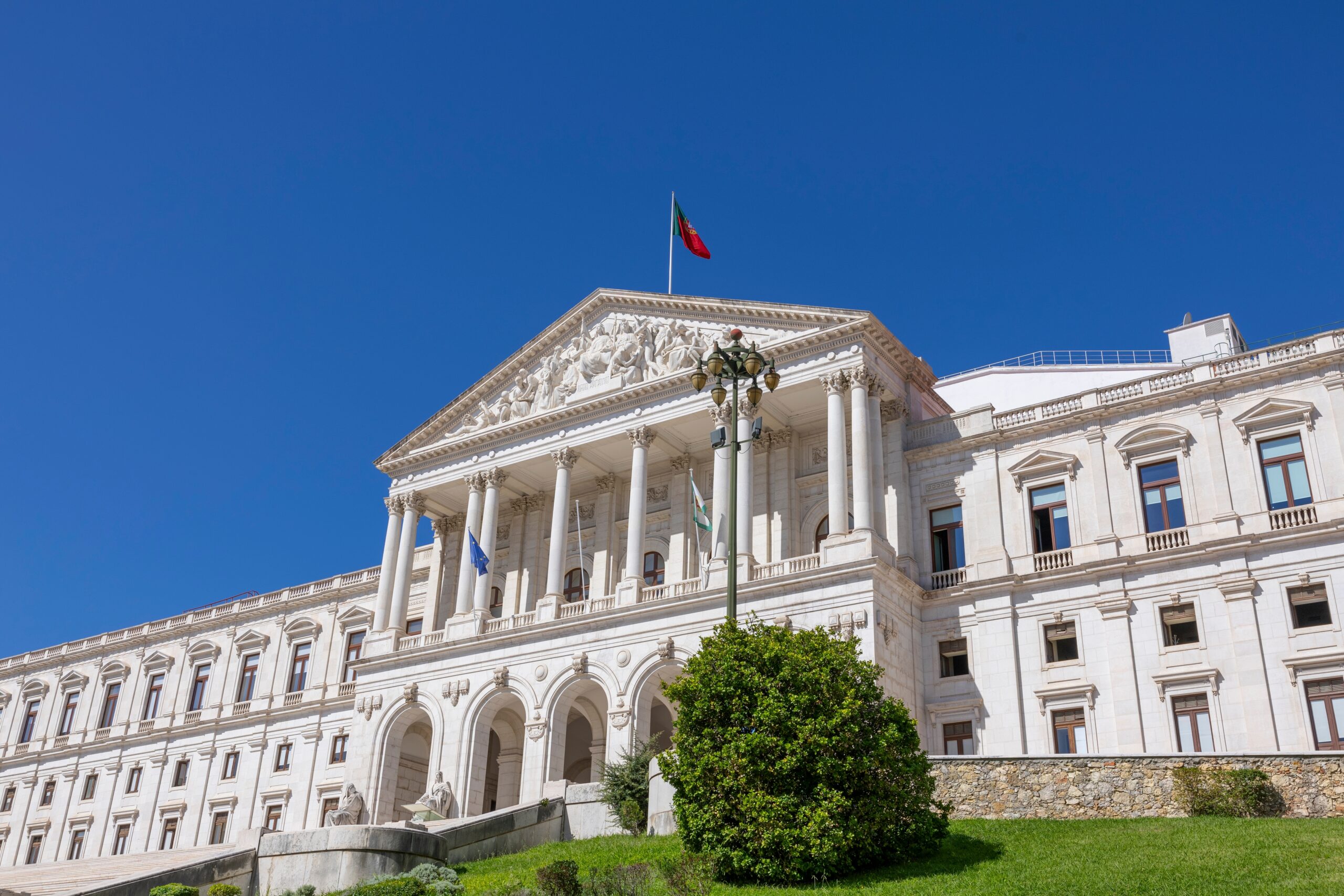
Lawmakers backing the bill also cited identification and security concerns as justification for their support.
Opponents, however, warned that the proposal risks targeting Muslims and promoting intolerance.
“This initiative is used solely to target foreigners, those who have a different faith,” said P.S. MP Pedro Delgado Alves, whose party voted against the bill, according to The Guardian.
He added that while no woman should be forced to wear a veil, the far right party’s approach was wrong.
The B.E. and P.C.P. said the measure violates constitutional protections of religious freedom and personal choice, while Livre accused Chega of exploiting the issue to divide society.
The bill will now be reviewed by the parliamentary committee on Constitutional Affairs, Rights, Freedoms, and Guarantees before being sent to President Marcelo Rebelo de Sousa. He could either approve it, veto it, or refer it to the Constitutional Court for further scrutiny.
If signed into law, Portugal would join a growing list of European countries that have imposed restrictions on face coverings in public.
France became the first European nation to implement such a measure in 2011, followed by Belgium a year earlier in 2010. Bulgaria introduced its ban in 2016 citing security concerns, while Austria passed similar legislation in 2017.
Denmark’s prohibition came into effect in 2018, and the Netherlands adopted a partial ban in 2012 covering schools, hospitals, and public transport. Norway also passed legislation that same year restricting face coverings in educational settings.
Switzerland became the most recent to follow this path, approving a nationwide ban through a 2021 referendum that will take effect in January 2025.
Although only few women in Portugal wear the burqa or niqab, the proposed legislation has reignited debate about the balance between secularism and religious freedom, and about the growing influence of far-right politics in Europe.