


A fact-finding report has raised serious concerns over disproportionate police action and administrative targeting of Muslims in Bareilly, northern India, following a peaceful demonstration in support of the Prophet Muhammad ﷺ.
The report, released on 10 October by the Association for Protection of Civil Rights (APCR), revealed that 4,505 Muslims across India have been booked and at least 265 arrested, including 89 in Bareilly alone, as of October 7.
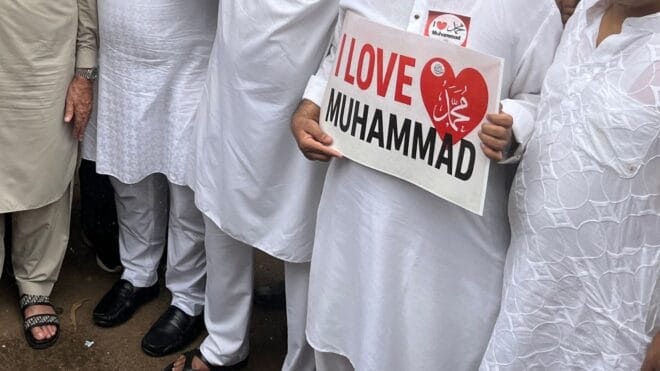
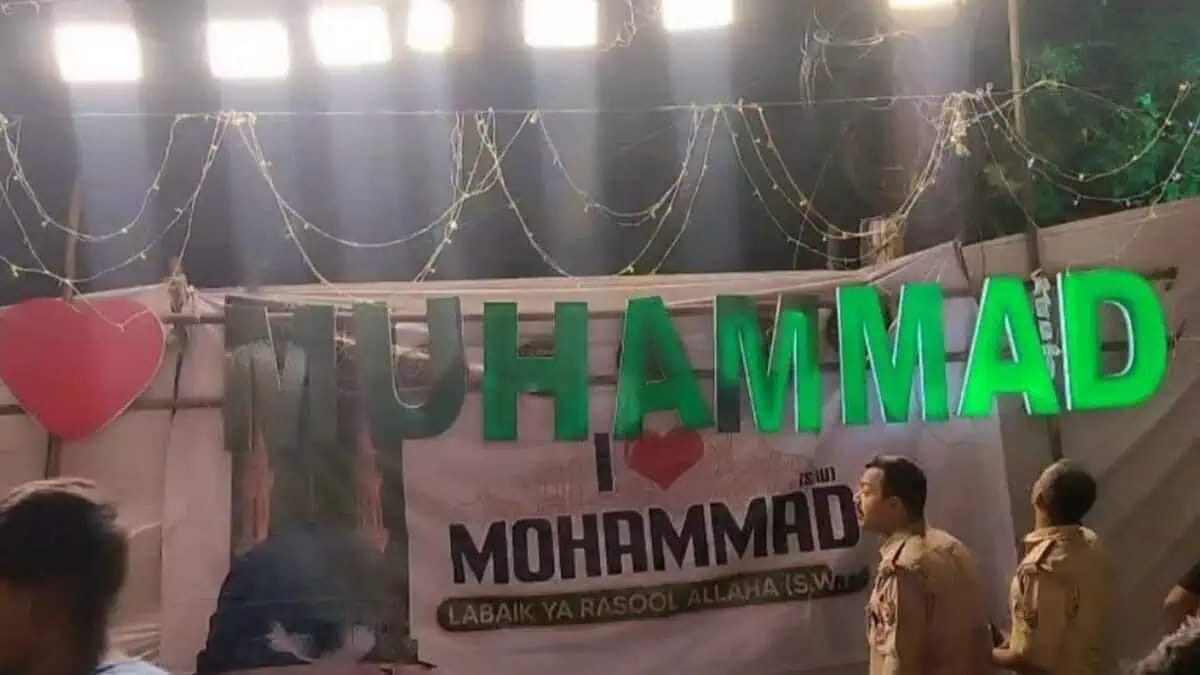
Their alleged crime was writing, “I Love Muhammad,” a reference to Prophet Muhammad (pbuh), on posters, t-shirts, or in social media posts, which authorities say is threatening “public order”.
The demonstration was organised by Maulana Tauqeer Raza Khan, a prominent cleric in Bareilly, with the stated purpose of submitting an appeal to local authorities under the “I Love Muhammad” campaign. According to APCR, the gathering was entirely peaceful.
“No slogans were raised, no vandalism took place, and there was no violence. It was simply a show of devotion to the Prophet Muhammad ﷺ,” the report said, noting that similar protests in the past had concluded without incident.

Yet police reportedly responded by using force with batons, mass arrests, and the deployment of paramilitary forces, including the Provincial Armed Constabulary (PAC) and Rapid Response Force (RRF).
The aggressive police response was carried out across Muslim-majority areas. Authorities also suspended internet services for 48 hours, disrupting local businesses and heightening fear within the community.
Subscribe to our newsletter and stay updated on the latest news and updates from around the Muslim world!
Muslim community affected by police crackdown
Two days after the protest, the administration sealed 32 shops in Mazaar Pehalwaan Market, a registered Waqf property (No. 383). The fact-finding team found that the action was taken without prior notice or documentation, despite a standing stay order from the Waqf Tribunal.
One of the affected shopkeepers told investigators: “We were not given any warning. They came with force, shut down our livelihoods, and left. This is punishment for simply standing with our Prophet ﷺ.”
Lawyers involved in the case described the move as a violation of due process and an attempt to intimidate the Muslim community. They pointed out that the property is still tied up in ongoing court cases, yet the authorities still went ahead and took unathorised action on their own accord.
APCR’s report also documented cases of illegal arrests, with many detainees not being provided with First Information Reports (FIR) copies – a document which tells the individual on what charges they were arrested for.
In several instances, police allegedly picked up people from their homes late at night without informing their families.
The fact-finding team also received complaints that minors were detained, with their whereabouts unclear and their access to legal counsel denied. One lawyer said: “Even we, as legal representatives, were prevented from accessing case files. It is as if the rule of law has been suspended for Muslims.”
Collective punishment
The report emphasised that the crackdown displayed a “pattern of collective punishment and institutional bias.” While Muslim localities were heavily patrolled and targeted, nearby Hindu-majority areas reportedly remained unaffected.
APCR noted that prominent community figures, clerics, and activists were also singled out for administrative measures. Among those arrested was Dr Nafis Khan, a member of the local Waqf Management Committee and an associate of Maulana Tauqeer Raza Khan.
Police presence remains heavy in Muslim-majority neighbourhoods, while families of detainees struggle with legal hurdles and economic hardship.
A local resident told investigators: “We went to show love for the Prophet ﷺ, but now our sons are in jail, our shops are locked, and our voices silenced. Is this justice?”
Muslim rights under threat
The Bareilly incident forms part of a broader pattern, APCR warned, where Muslims face collective punishment for peaceful assertion of their religious identity. By contrast, gatherings in other contexts are often tolerated or even supported by the authorities.
Human rights observers say the crackdown raises troubling questions about freedom of religious expression and the equal protection of law in India.
As one lawyer summed up: “The state must choose whether it will uphold justice, or whether it will continue to treat one community as a permanent suspect.”
The situation in Bareilly remains tense, with continued police presence and mounting calls for transparency and accountability from state authorities.