



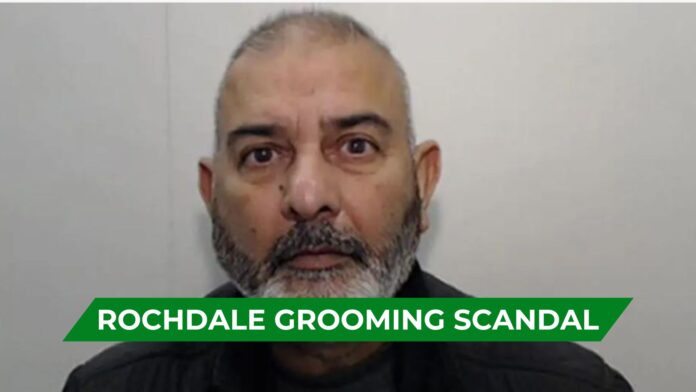
A grooming gang ringleader from Rochdale who preyed on vulnerable young girls has been jailed today for 35 years.
Mohammed Zahid, 65, known locally as “Boss Man,” was convicted of raping two schoolgirls, and supplying them to other men for sex between 2001 and 2006.
The father-of-three, who ran a stall in Rochdale market, was one of seven men sentenced at Manchester’s Minshull Street Crown Court in June.
The court heard how Zahid and his associates exploited two girls, both aged 13, by plying them with alcohol, drugs and cigarettes before subjecting them to “almost incessant sexual abuse.”
Judge Jonathan Seely described the treatment of the girls as “appalling”. He told the court: “They were abused, degraded and then discarded. It would have been obvious to these men that they craved the attention that their home lives didn’t provide, but they felt they had little or no choice but to submit.”

Convictions
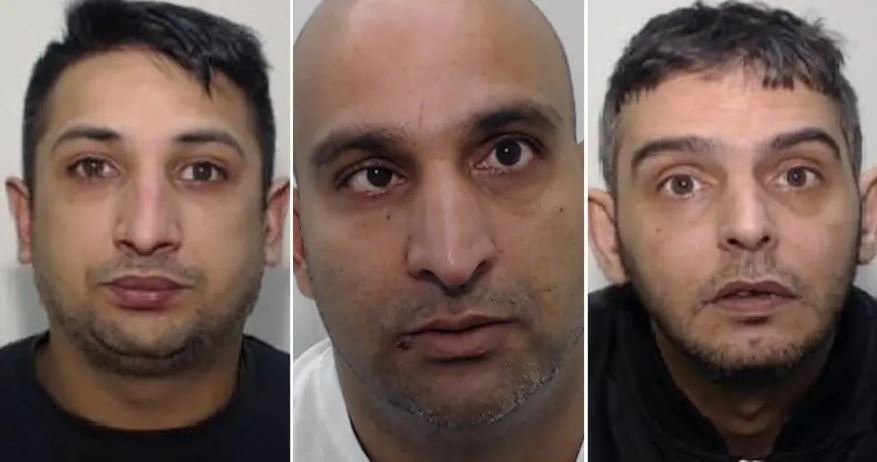
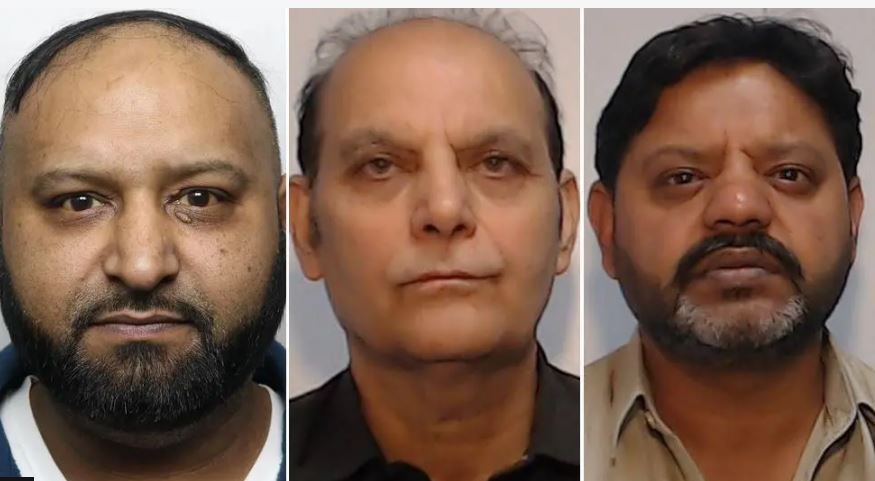
Zahid was found guilty of multiple counts of rape, indecency with a child, and procuring a child for sex. Six other men — Mushtaq Ahmed, 67, Kasir Bashir, 50, Mohammed Shahzad, 44, Naheem Akram, 49, Nisar Hussain, 41, and Roheez Khan, 39 — were convicted of rape and other offences, and were handed lengthy sentences ranging from 12 to 29 years.
Subscribe to our newsletter and stay updated on the latest news and updates from around the Muslim world!
The victims, referred to as Girl A and Girl B, told the court they were treated as “sex slaves.” Girl A said her phone number was passed around to “hundreds of men,” while Girl B, who was living in a children’s home at the time, testified that police and social services knew of her situation but failed to act. Both services have since apologised for historic failings.
Far-right exploitation
While the convictions bring closure for the victims, cases like these have increasingly been used by far-right activists and right-wing politicians to push Islamophobic narratives.
Since the high-profile grooming gang cases in towns such as Rotherham, Telford and Rochdale, far-right groups have sought to racialise these crimes by framing them as an inherently a “Pakistani” or “Muslim” problem.
This ignores the reality that child sexual exploitation is widespread across all communities in Britain, the largest demographic of perpetrators being white British men.
In recent years, “grooming gang” scandals have been weaponised to advance anti-Muslim rhetoric, with far-right Islamophobic agitators like Tommy Robinson gaining prominence on the back of such cases.
The framing suggests that British Pakistani men, and Muslims more broadly, are uniquely predisposed to child sexual abuse, a claim consistently debunked by child protection experts.
A new report by the Centre for the Study of Organised Hate (CSOH) highlights how Elon Musk and his platform X have supercharged this narrative in 2025, giving it unprecedented reach.
On January 1, Musk boosted a post defending Tommy Robinson by suggesting a cover-up by British institutions.
That intervention alone generated nearly 50 million views, sparking a month-long surge of Islamophobic engagement online.

The CSOH report notes that in January 2025 alone, discourse around “grooming gangs” attracted 1.53 billion engagements, compared to just 16 million in the whole of 2024.
More than half of the posts analysed promoted hatred against Islam, Muslims, Pakistanis and South Asians, while others alleged institutional cover-ups, and attacked multiculturalism as the root cause. Researchers warn that this weaponisation of sexual exploitation risks further polarising communities and undermining child protection.
“In many cases, the focus on these crimes has less to do with justice for victims and more to do with reinforcing racialised fears,” the report concluded.
The Rochdale case shows the scale of harm caused by predatory men who exploited the vulnerabilities of children. But experts caution that far-right actors will use it not to seek justice for victims but to advance their political agenda.
By linking such crimes to Muslim communities as a whole, Islamophobic networks, amplified by powerful big tech figures like Musk, turn individual convictions into a tool of collective demonisation.
The danger, analysts say, is that this distracts from the systemic failures in policing and child protection that allowed abuse to continue for years, while fuelling division and mistrust in an already polarised society.