



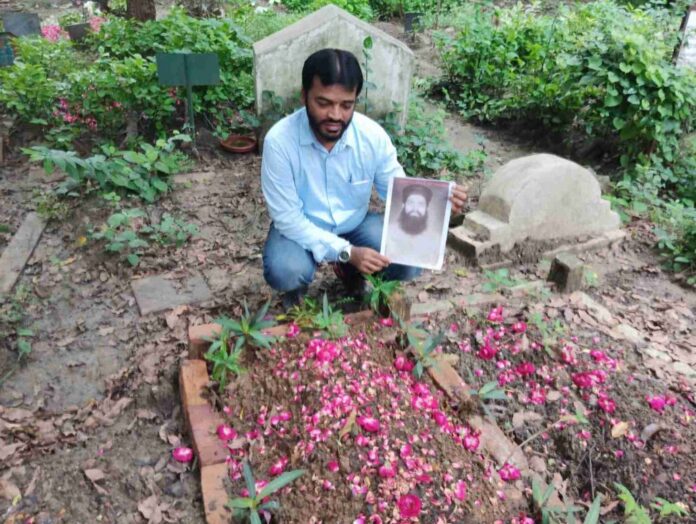
The family of a Muslim man wrongfully convicted in the 2006 Mumbai train blasts read his acquittal at his grave in Nagpur, four years after he died in prison.
Family members, activists and community leaders gathered at the grave of Kamal Ahmed Vakil Ansari on Sunday in Nagpur’s Jaripatka Qabrastan to mark the “posthumous victory.”
Kamal Ansari was a poor Muslim worker from Bihar who worked daily-wage jobs to provide for his wife and five children.
He died in prison four years before the Bombay High Court acquitted him of all charges in the 2006 Mumbai train blasts case.
Ansari was one of 12 Muslim men convicted in 2015 by a special court under the Maharashtra Control of Organised Crime Act (MCOCA). Five men, including Ansari, were sentenced to death.

But just last month, on July 21 2025, the High Court overturned the convictions, ruling that the prosecution had relied on coerced confessions, unreliable witnesses and fabricated evidence.
For Kamal’s family, the verdict came too late. He had already passed away in Nagpur Central Jail in 2021, at the height of the COVID-19 pandemic.
Subscribe to our newsletter and stay updated on the latest news and updates from around the Muslim world!
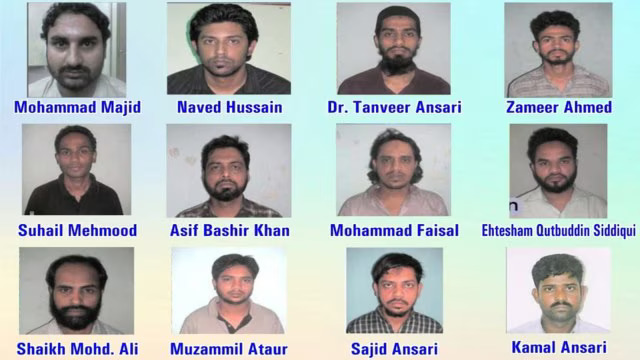
The ATS claimed to have recovered explosives from his home, but the High Court later dismissed this evidence as fabricated and riddled with inconsistencies. Despite the weakness of the case, Kamal was sentenced to death in 2015 and spent 16 years in prison.
By the time the High Court cleared his name, he had already been buried in Nagpur’s Jaripatka Qabrastan.
A solemn gathering at the grave of a wrongfully convicted man
On Sunday, Dr Abdul Wahid Shaikh, General Secretary of the Innocence Network of India, and Qari Maulana Mohammad Sabir, president of Jamiat-e-Ulema Hind in Nagpur, led prayers at Kamal’s grave.
Family members, including his younger brother Jamal Ahmed, who travelled from Delhi, gathered to recite Qur’an and read aloud paragraph 1,486 of the High Court’s judgment, which declared Kamal innocent.
“This is a hollow victory,” said Dr Shaikh, who himself was jailed for nine years in the same case before being acquitted.
“His life was stolen. His children grew up without a father, his wife lived under unbearable stigma, and his family endured humiliation. The judgment clears his name in law, but it cannot undo the suffering inflicted.”
Kamal’s mother, too frail to travel, joined the memorial via live video.
She broke down in tears as she recalled the years of abuse she endured for being the mother of a falsely-accused “terrorist.”
A wider pattern of injustice
Activists say Kamal’s case is not unique. Over the past two decades, dozens of young Muslim men in India have been arrested under sweeping anti-terror laws such as MCOCA and the Unlawful Activities (Prevention) Act (UAPA).
Many have spent decades in jail before higher courts eventually overturned their convictions.
In several cases, men died before their acquittals. Rights groups have documented a pattern:
- Poor Muslim families targeted, evidence fabricated, and confessions extracted under torture.
- Trials often relied on “stock witnesses” who repeatedly appeared in unrelated terror cases, raising serious questions about credibility.
The Malegaon blasts case is one of the most prominent examples.
In 2006, Muslim men from Maharashtra were arrested, allegedly tortured, and charged under UAPA for bomb blasts at a mosque. After spending years in jail, they were acquitted when courts ruled the evidence was fabricated.
Calls for accountability
The Innocence Network of India, which campaigns for wrongfully accused prisoners, vowed to continue documenting such cases and pushing for justice system reforms.
“Every grave like Kamal’s is a testimony to the urgent need for accountability,” said Dr Shaikh. “We will keep fighting for the release of innocent prisoners and for action against those who fabricated cases.”
For Kamal’s family, his posthumous acquittal is a painful reminder that delayed justice is no justice at all.
His brother Jamal summed it up: “He was in Nepal the day of the blasts. We told the courts again and again, but nobody listened. He spent 16 years in jail, and he died there. What justice is this?”
Kamal Ahmed was acquitted in death, but for his family and community, the ruling only underscored a brutal reality.
Behind every falsely accused “terrorist” in India lies a story of ruined lives and broken families – raising serious concerns about the justice system.