



Uzbekistan’s secular, authoritarian regime is marking its 34th Independence Day — with days of festivities pulsating throughout the capital and beyond. Muhammad Siddeeq reflects on how the country has made progress in many areas except in the way that it is governed.
At a large park in the Uzbek capital, the secular President, Shavkat Mirziyoyev, delivered a speech with no mention of the country’s Islamic heritage or the role of Islam in the nation’s future. Instead, he chose to reflect on the achievements of the independence era: a doubling of GDP to $115 billion, record-high foreign exchange reserves, and nearly $130 billion in new investments.
He highlighted Uzbekistan’s first-ever football World Cup qualification, new Olympic academies, and landmark cultural projects such as the Center for Islamic Civilization.
The address ended with the usual nationalistic rallying chants: “We are all one people, one country, one family,” he declared. “Long live Uzbekistan!”
Three decades of draconian rule and a crackdown on Islamic political activism, however, mean that anyone who may have challenged President Mirziyoyev’s vision for the future of Uzbekistan is either dead or behind bars.

Trials and challenges on the road to independence
Behind the celebratory mood in Tashkent lay a reminder of the struggles that shaped modern Uzbekistan.
The 1990s brought the painful economic adjustments after the collapse of the Soviet Union, when inflation, shortages and unemployment tested the young state. Political consolidation prioritised stability, but often drew international criticism over limited freedoms.
Subscribe to our newsletter and stay updated on the latest news and updates from around the Muslim world!
The country also faced security threats from political and Islamic groups, while the Aral Sea disaster became a stark symbol of environmental devastation. Socially, a young and rapidly growing population also created pressure for jobs, education and housing.
These trials, though difficult, laid the foundation for reforms and resilience that characterise the “New Uzbekistan” today.
Uzbekistan in the golden age of Islam
Uzbekistan’s historical lands played a central role during the Golden Age of Islam (8th–14th centuries), serving as a hub of scholarship, Islamic culture and trade.
Cities such as Bukhara, Samarkand and Khiva became renowned centres of learning, attracting Muslim scholars, scientists and philosophers from across the Islamic world.
Bukhara, often called the “City of Scholars,” was home to renowned Islamic jurists, theologians, and poets, including the legendary Imam al-Bukhari, whose compilation of hadith remains a classical foundational text in Sunni Islam.
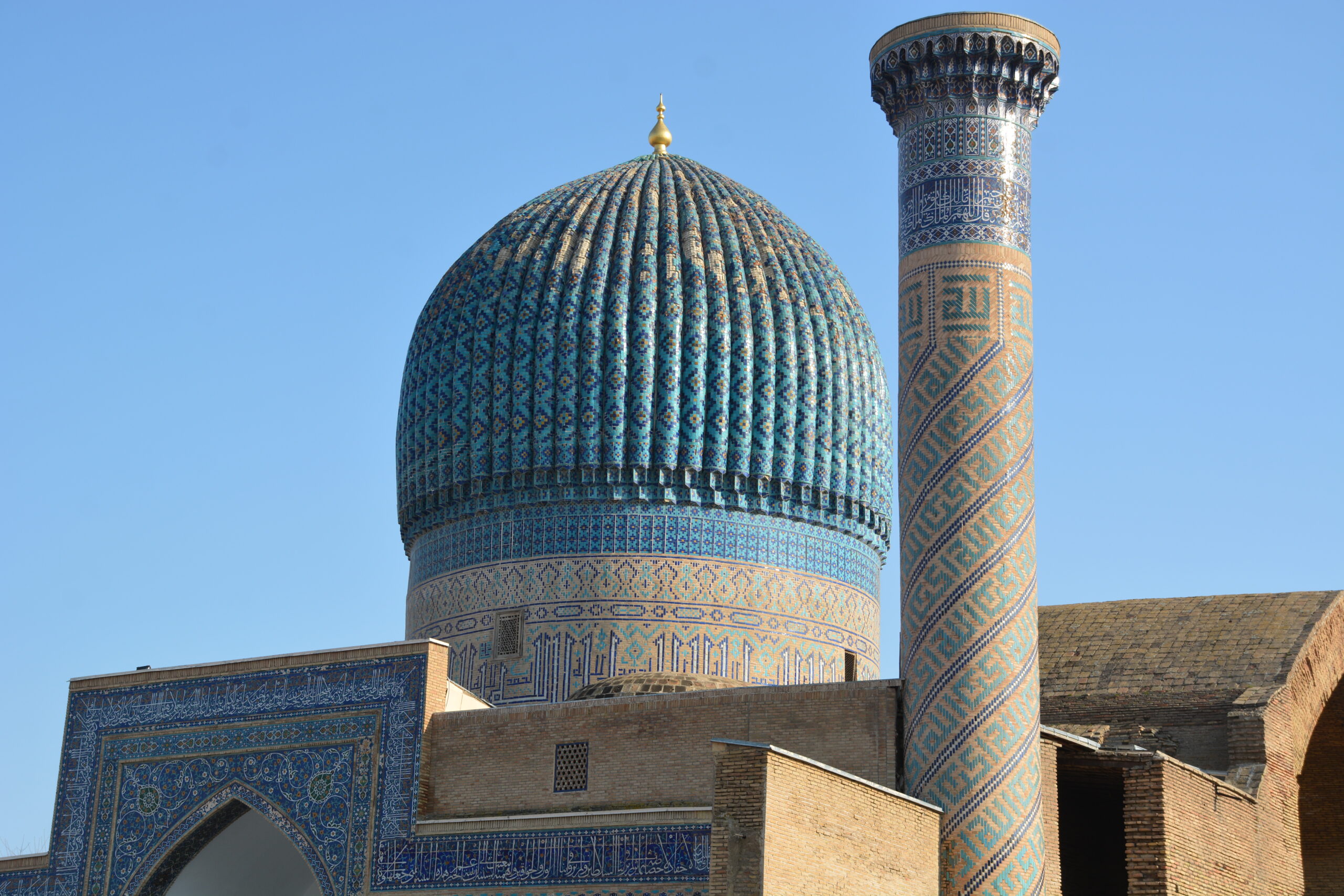
Samarkand flourished as a centre of astronomy, mathematics, medicine and architecture under the patronage of Muslim rulers like Tamerlane (Timur), whose constructions —including the historic mosque and madrassah complex in the heart of Samarkand, known as Registan and Gur-e-Amir — still stand as monuments of Islamic civilisation.
This legacy continues to influence Uzbekistan today, shaping its identity as a nation proud of its Islamic heritage, intellectual traditions and cultural achievements.
Islamic revival since independence
The independence of Uzbekistan in the early 1990’s opened the door to a religious and spiritual reawakening. Once suppressed under Soviet atheism, Islam returned to public life. Thousands of mosques were reopened, and holy sites such as the Imam Bukhari Complex near Samarkand and the Hazrati Imam Complex in Tashkent became thriving centres of worship and scholarship.
The return of public celebrations of Ramadan and Eid, expanded Qur’an study programs, and flourishing Islamic art reflect how faith has become both a cultural cornerstone and a symbol of national pride in Uzbekistan.
The religious revival, however, has not been without challenges for the country’s former communist rulers. In the mid-1990s, Hizb ut-Tahrir, the banned transnational Islamic political party, began gaining traction in the Ferghana Valley by spreading calls for a global Islamic caliphate.
The country’s secular rulers, all of whom were former senior members of the Soviet Communist Party, responded by outlawing the political group, dismantling its underground cells, and arresting thousands of members accused of spreading extremist ideology. Though not linked to direct acts of violence, the group was seen as undermining national stability.
The brutal crackdown by the former tyrannical president, Islam Karimov, meant that by the 2010s, Hizb ut-Tahrir’s influence in Uzbekistan had begun to wane. Yet Uzbek officials remain vigilant, emphasising that economic growth, youth empowerment and accessible religious education are the best safeguards against what they refer to as “Islamic radicalisation.”
Managing political Islam
Over the past decade, the Uzbek government has pursued a draconian approach to prevent the rise of political Islam, ensuring that religious revival does not translate into political movements.
Key measures have included:
- Banning Islamic groups such as Hizb ut-Tahrir and the Islamic Movement of Uzbekistan (IMU).
- Monitoring mosques and religious education centres to ensure teachings align with officially-sanctioned interpretations of Islam.
- Prohibiting political mobilisation based on religion, detaining individuals advocating theocratic governance or political caliphates.
- Promoting “moderate” Islamic education and counter-radicalisation programs.
- Strengthening border security, particularly along Afghanistan and Tajikistan.
- Reinforcing legislation, prosecuting those distributing extremist propaganda while offering rehabilitation programs for “low-risk individuals.”
This strategy reflects Uzbekistan’s broader goal of supporting a revival of Islam as a cultural and spiritual force, while restricting its use for political purposes.
Economic progress and regional relations
Since its independence, Uzbekistan has achieved remarkable economic progress, transforming the country from a Soviet-era cotton monoculture into a diversified economy with strong sectors in energy, mining, agriculture, manufacturing, and services.
GDP growth has averaged 5–6% annually over the past decade, supported by foreign investments, remittances, and reforms liberalising trade and improving the business climate.
Major infrastructure projects — including new railways, highways, and energy pipelines —have strengthened Uzbekistan’s role as a regional transit hub between China, Central Asia and Europe.
Uzbekistan’s demographics position the country as a potential rising power. With a population exceeding 37 million, nearly 60% are under 30, fueling innovation and entrepreneurship.
Urbanisation and investments in healthcare and education have raised life expectancy to 75.1 years, while fostering a skilled workforce. Coupled with strategic location, natural resources, and economic reforms, Uzbekistan is poised to become a key economic and political player in Central Asia and beyond.
Prospects of a future Islamic resurgence
Political analysts note the potential for a renewed Islamic resurgence in the years ahead.
Uzbekistan’s rich spiritual heritage, moderate religious policies, and growing youth population could strengthen the role of Islam as a cultural and political force, while the country’s strategic position allows it to connect with broader Islamic networks globally.
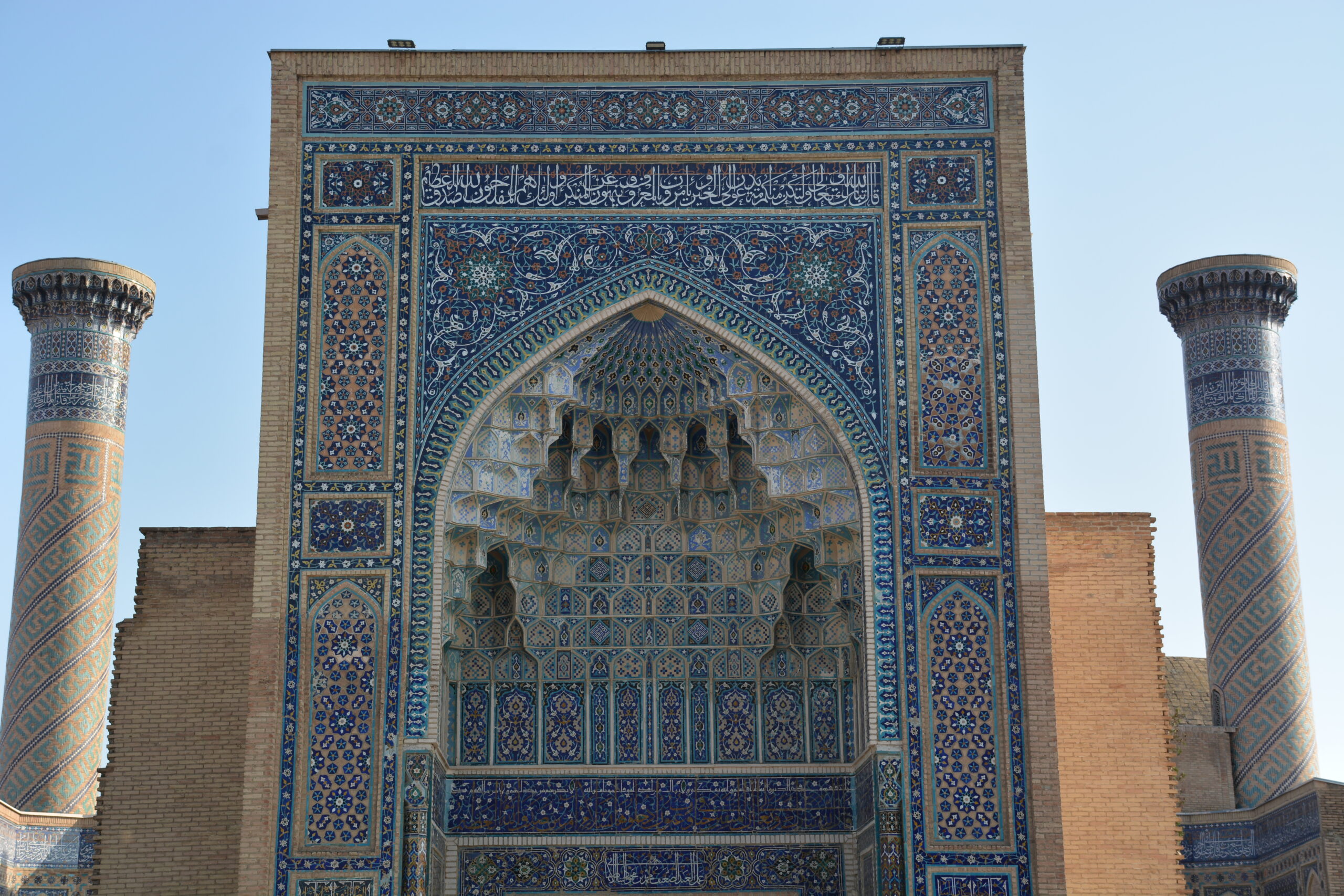
Such a resurgence, guided responsibly, could enhance Uzbekistan’s soft power, contributing to scholarship, interfaith dialogue, and initiatives promoting peace and stability.
Human rights and press freedom
While Uzbekistan has made remarkable progress in economic development and diplomacy, human rights and press freedom remain areas of concern.
Since 2016, President Mirziyoyev has introduced reforms aimed at improving transparency and accountability:
- Releasing some political prisoners and reviewing wrongful imprisonment cases.
- Easing restrictions on civil society organisations.
- Encouraging more independent media, though outlets remain under government oversight.
Despite reforms, journalists and activists still face occasional intimidation, censorship or legal pressure. Freedom House categorises Uzbekistan as “partly free,” noting improvements but urging further institutional reforms to protect civil liberties and independent media.
A nation looking forward
From dazzling fireworks in Tashkent’s districts to heartfelt prayers in historic mosques across the country, Uzbekistan’s 34th Independence Day was more than a celebration — it was a reflection on a journey.
A nation once defined by Islamic history and culture, has emerged resilient, rooted in its Islamic heritage, proud of its economic progress, and determined to secure a prosperous and peaceful future for its young and dynamic population.
However, the only true way for Uzbekistan to reclaim its rightful place on the world stage and to ensure that their future is as glorious as their past, is for the nation’s secular rulers to respect the will of their peoples and to adopt the Islamic ruling system.