


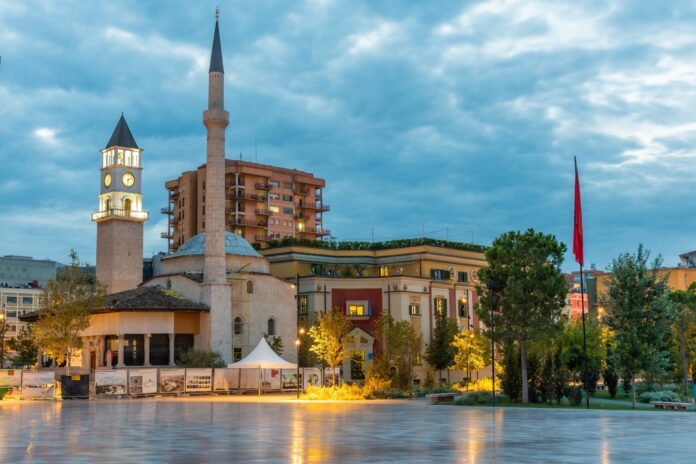
In the largest formal response from Balkan Muslims yet, prominent Albanian Muslim figures condemned Israel’s genocide in Gaza, in spite of the Albanian government’s continued silence.
In a fierce statement released on Thursday, close to 300 Muslim leaders across Albania condemned Israel’s war in Gaza as a clear genocide.
This declaration marks the strongest display of Islamic unity from the Balkans since October 7, 2023.
The statement was signed by imams, scholars, academics, and community leaders, who accused Israel of “systematically targeting civilians.”
“This is not a war; it is a genocide against a besieged people who have no means to defend themselves,” the declaration stated, adding that Israel was using starvation and famine as a weapon of war.

A key theme of the declaration was calling out other Muslim-majority states and governments for failing to take decisive action in ending the war.
With this, the declaration also staunchly criticised the Albanian government, for their inaction, silence, and increasingly friendly ties with the Israeli regime.
Subscribe to our newsletter and stay updated on the latest news and updates from around the Muslim world!
The Albanian Muslim leaders said that “it is not enough to pray for Gaza, we must speak out, act, and stand firmly against oppression wherever it exists.”
Albania’s ties with Israel
Albania was one of the first countries to recognise Israel, doing so on 16 April 1949.
Analysts have frequently pointed to the historic bond between Albania and its Jewish community much of which later emigrated to Israel and settled on Palestinian land.
Over 75 Albanians were awarded the “Righteous Among the Nations” title by Yad Vashem, Israel’s official Holocaust memorial institution, for their actions in providing Jews with refuge from the Nazis in World War Two.
Bako Goxhaj, a prominent pro-Palestinian activist in Albania, said that “Albania’s government has deepened ties with Israel without any concern about the Muslim community reaction.”
Albania is a multi-religious yet Muslim-majority country, with Muslims making up 50.67% according to the 2023 census.
Albanian historian Olsi Jazexhi from the International Islamic University of Malaysia said that “this declaration reflects growing frustration within Albanian civil society over the Albanian silence about (Gaza), and Prime Minister Edi Rama’s stance, as Tirana continues to fully cooperate with the Israeli regime.”
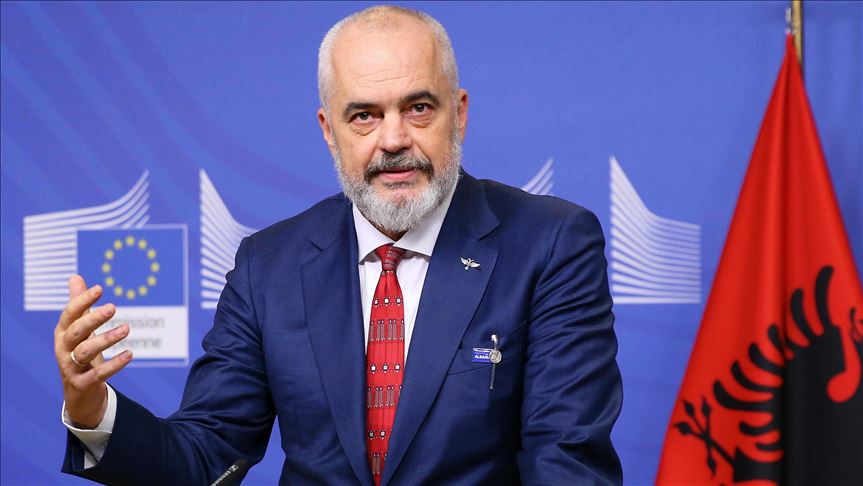
Last year, a report revealed that Albania was one of the top five suppliers of refined petroleum products to Israel, just after the U.S., Russia, and Brazil.
Adding to the tensions, Muslim and pro-Palestinian Albanians criticised their government in September of last year after a video emerged of Albania’s chief Rabbi, Yoel Kaplan, celebrating the destruction of Gaza.
Kaplan was also leading IDF troops in prayer in Israel. He is not an Albanian citizen and has admitted to the Middle East Eye that he fought in both Gaza and Lebanon.
The declaration from Albania’s Muslim clerics has come amongst a wider shift across the Balkans, where Muslim communities in Bosnia, Kosovo, North Macedonia, and Montenegro have all organised mass protests and campaigns to stand in solidarity with the Palestinians.
Unlike protests in much of Western Europe, those in the Balkans carry a different weight, as the attendees are directly driven by their not-so-distant memories of ethnic cleansing and war from the 1990s.
For many in the Balkans, the plight of Palestinians mirrors their own memories of siege, mass killings, and displacement, less than 30 years ago
Linking Albania’s history of suffering with Gaza
One of Albania’s leading pro-Palestine activists, Baki Goxhaj, stated that this historic declaration was largely driven by the fact that Albanian Muslims, much like the Palestinians, have suffered through various genocides and ethnic cleanings themselves.
Since the Balkan Wars of 1912-1914, World War Two, right up to the 1990s, Albanian Muslims have experienced various attempts to erase their identity and religion from Europe.
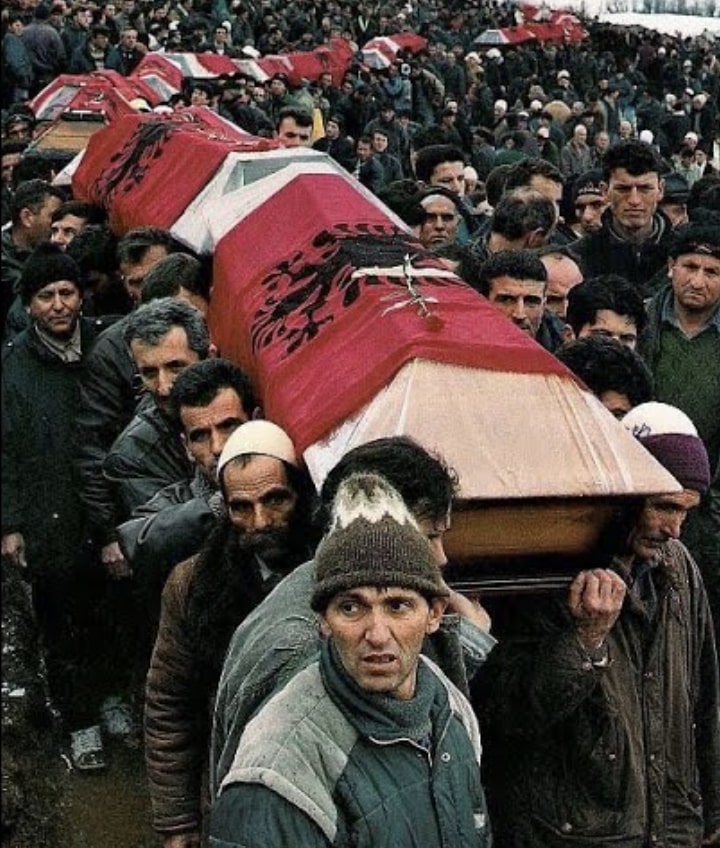
Last month, Albanian Muslims across the world commemorated 80 years since the genocide in Chameria – a brutal case of ethnic cleansing at the hands of Greece.
More recently, however, was the Kosovo war of 1998-1999, where the Serb Yugoslav forces also sought to ethnically cleanse the territory of Kosovo, then a semi-autonomous Yugoslav Republic seeking independence.
“As Albanians, and especially as Muslim Albanians, we have suffered all war crimes, from the Greek genocide of Chameria to ethnic cleansing and massacres under Serbia and Montenegro, to the most recent massacres and ethnic cleansing in Kosova that was stopped in its tracks by Nato intervention,” Baki Goxhaj, an Albanian pro-Palestine activist, told Middle East Eye.
Albanians also have a diasporic community in the Levant, as hundreds of families migrated to Ottoman Syria, Jordan, and Palestine, in the 19th and 20th centuries, known today as “Arnauts.”
Ahmed Hilmi Pasha Abd al-Baqi (1882-1963) was the Prime Minister of the All-Palestine government in Gaza, established in 1948. He was also of Albanian origin and one of the most prominent Palestinian figures of his time.
The statement from the Muslim leaders comes as a significant move for Albanian Muslims, as many pointed towards Prime Minister Edi Rama’s silence as a sign of a lack of concern for the country’s Muslim majority population.