



As Lebanon struggles with economic collapse and political paralysis, a new disarmament drive confronts its deepest fault lines: foreign influence, sectarian militias, and contested sovereignty, writes journalist Kamal al-Shami.
Lebanon has launched a campaign to disarm Palestinian factions in refugee camps, marking a potential turning point in its fragile history. The move, framed by officials as the first step towards consolidating the state’s monopoly on arms, carries profound implications for Hezbollah, the most powerful non-state actor in the country. It comes at a moment of national vulnerability, when Lebanon’s sovereignty, legitimacy, and future direction are being tested as never before.
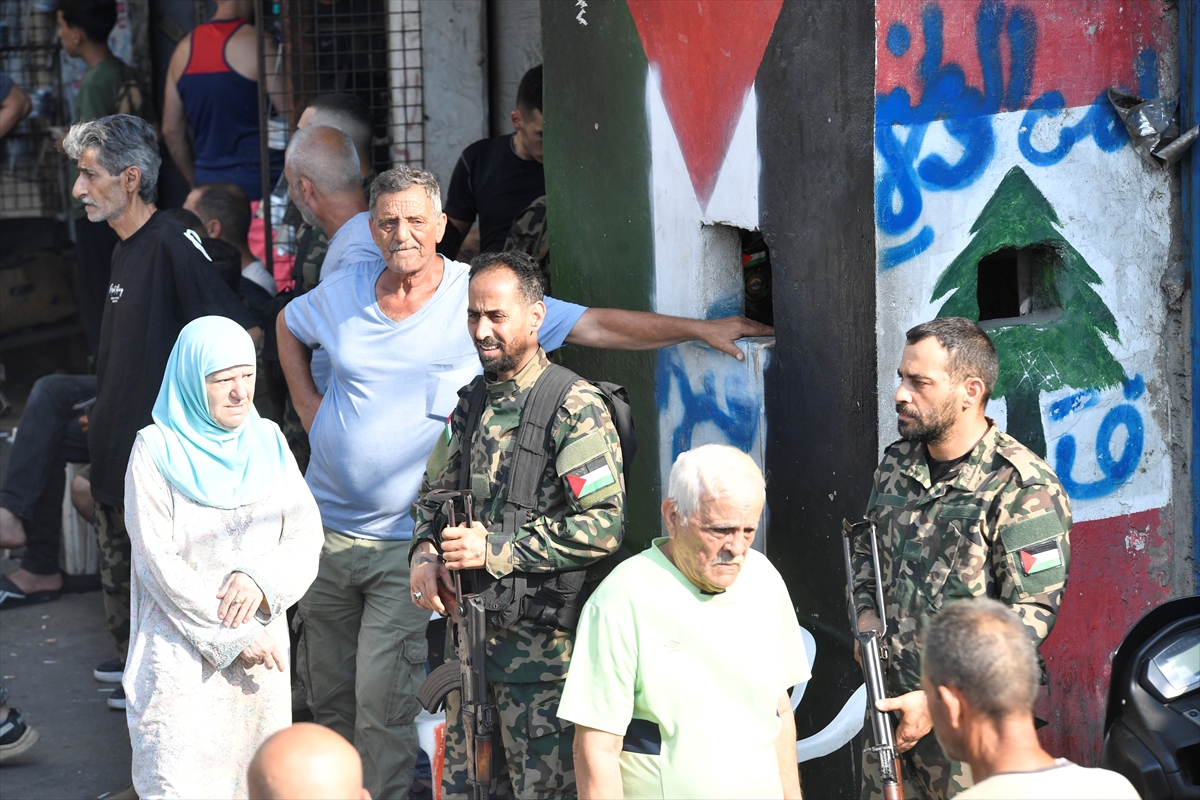
Last week, the Lebanese Armed Forces (LAF) entered Burj al-Barajneh refugee camp in Beirut to receive weapons from Palestinian groups. The prime minister’s office confirmed the transfer, describing it as the opening stage of a nationwide campaign across Lebanon’s 12 official camps. Television footage showed military vehicles in the camp, but the weapons handed over were said to be only “illegal arms” smuggled in days earlier.
Nevertheless, officials hailed the process as the most serious attempt in years to restore authority inside the camps. For decades, Palestinian factions acted as protectors, political representatives, and sometimes enforcers for communities denied basic rights such as property ownership or entry into professions. In this vacuum, armed factions established themselves as alternative authorities, reinforcing Lebanon’s fractured sovereignty.
1948 displacement

The origin of Palestinian arms in Lebanon dates back to the Nakba of 1948, when 750,000 Palestinians were displaced during the creation of Israel. Many settled in Lebanon, where camps grew into semi-permanent enclaves. Movements such as Fatah, Hamas, and the Popular Front for the Liberation of Palestine (PFLP) soon took root, embedding themselves in local communities while carrying on the armed struggle against Israel.
Over the years, the camps became more than temporary shelters — they evolved into fortified spaces where Lebanese authority had little reach. For many Palestinians, the factions represented not just military wings, but also providers of protection and a sense of continuity in exile.
Subscribe to our newsletter and stay updated on the latest news and updates from around the Muslim world!
Lebanon’s 15-year civil war formally ended in 1989 with the Taif Accords. The agreement required all militias to disband, but Hezbollah was granted an exemption as a “resistance” movement. This arrangement enshrined a precedent that continues to define Lebanon today: a state where official institutions coexist uneasily with armed non-state actors.
The exemption was rationalised at the time as necessary to confront Israel’s continued occupation of southern Lebanon. Yet it created a two-track political order — one where militias could thrive under the banner of resistance, eroding the principle of state monopoly over force.
Wars and unresolved obligations
The unresolved contradictions of Taif resurfaced in the 2006 war between Hezbollah and Israel. The month-long conflict devastated Lebanon and ended with UN Security Council Resolution 1701, which prohibited armed groups from operating south of the Litani River.
In truth, Hezbollah emerged stronger by rearming itself and expanding its military capacity. Among its supporters, the group was celebrated for withstanding Israel’s offensive. Among its critics, it was blamed for plunging Lebanon into unnecessary destruction while ignoring the resolution’s requirements.
That failure to enforce 1701 paved the way for today’s stricter terms. The U.S.-brokered ceasefire of November 2024, following Israel’s large-scale assault on Lebanon, explicitly called for the disarmament of all non-state actors. For Lebanon, compliance is now linked directly to international aid and reconstruction.
Hezbollah’s changing face
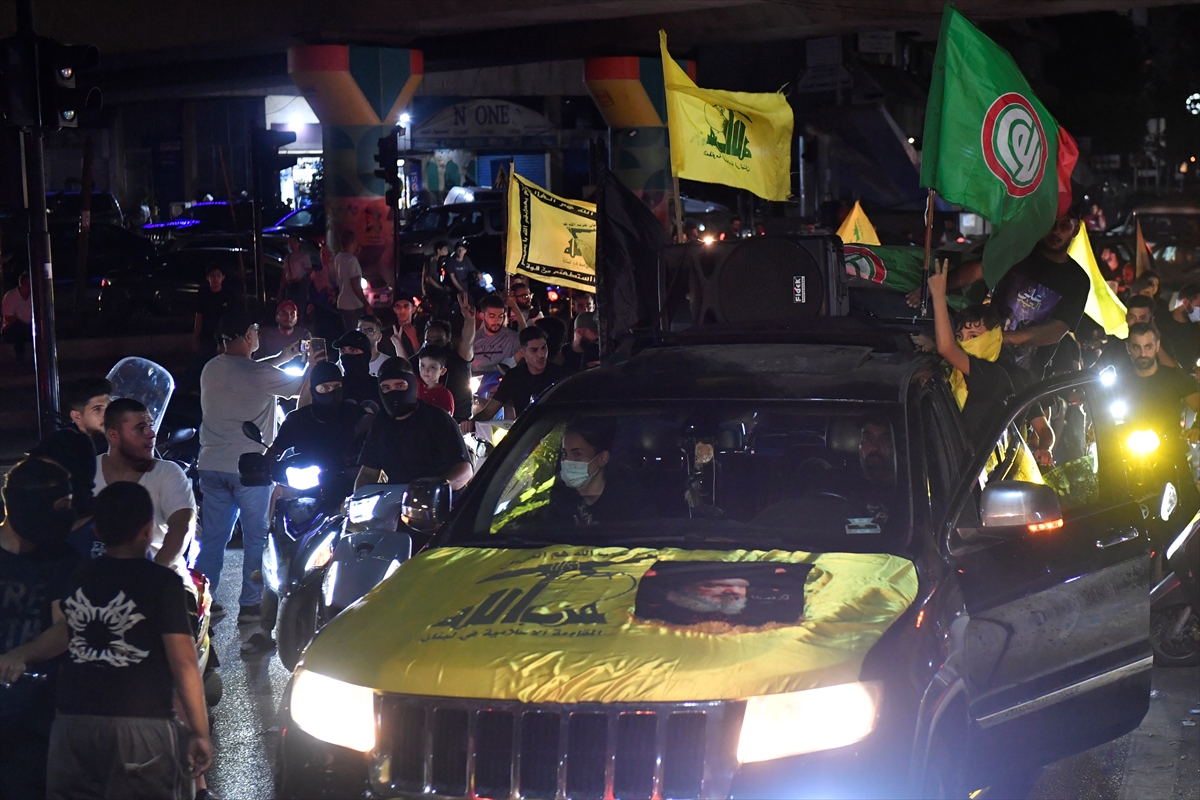
Hezbollah’s arms was long justified as a shield against Israel. But its actions over the past two decades contradicts this narrative. In May 2008, the group turned its weapons inward, seizing West Beirut after a dispute with the government. That moment was seared into the memory of many Lebanese, who began to view Hezbollah less as a national defender and more as a domestic enforcer.
The group’s reach later extended far beyond Lebanon’s borders. Its intervention in Syria’s civil war in support of Bashar al-Assad, its training of militias in Iraq, and its assistance to the Houthis in Yemen transformed it into a central pillar of Iran’s regional strategy. While these operations showcased Hezbollah’s strength, they also blurred its identity. Was it still defending Lebanon, or had it become an expeditionary force advancing foreign interests?
The cost of these choices has been high. In 2024, Israel’s assault dealt Hezbollah its greatest setback, killing much of its leadership, including its long-serving secretary general, Hassan Nasrallah, and destroying significant parts of its arsenal. Fighters, infrastructure, and command networks were devastated, leaving the group weakened and embattled.
Resistance to occupation remains a powerful and noble cause, resonant across the Arab and Muslim-majority world. Yet Hezbollah’s trajectory raises uncomfortable questions. A movement once seen as the spearhead of defiance against Israel has also fought regional wars, trained militias abroad, and used arms against its own citizens. For many Lebanese, the claim of “resistance” has shifted into something more troubling — a liability that ties the country to conflicts it did not choose.
The group’s domestic legitimacy has eroded steadily over the past decade. The nationwide protest movement of 2019–2020 broke sectarian boundaries, with demonstrators openly criticising Hezbollah for preserving corruption. The anger deepened after the 2020 Beirut port explosion, when suspicions about links to stored material swirled despite Hezbollah’s denials.
Combined with the collapse of Lebanon’s economy, these events reshaped public opinion. For growing numbers of Lebanese, militias are no longer seen as protectors but as obstacles to national recovery.
International leverage
Global powers have seized upon this shifting mood. Western and Gulf states have tied financial aid to tangible progress on disarmament. Lebanon’s economic collapse has only increased the leverage of external actors, giving them unprecedented influence over domestic policy. The Palestinian handovers are framed as a starting point, a signal that eventually Hezbollah must face similar demands.
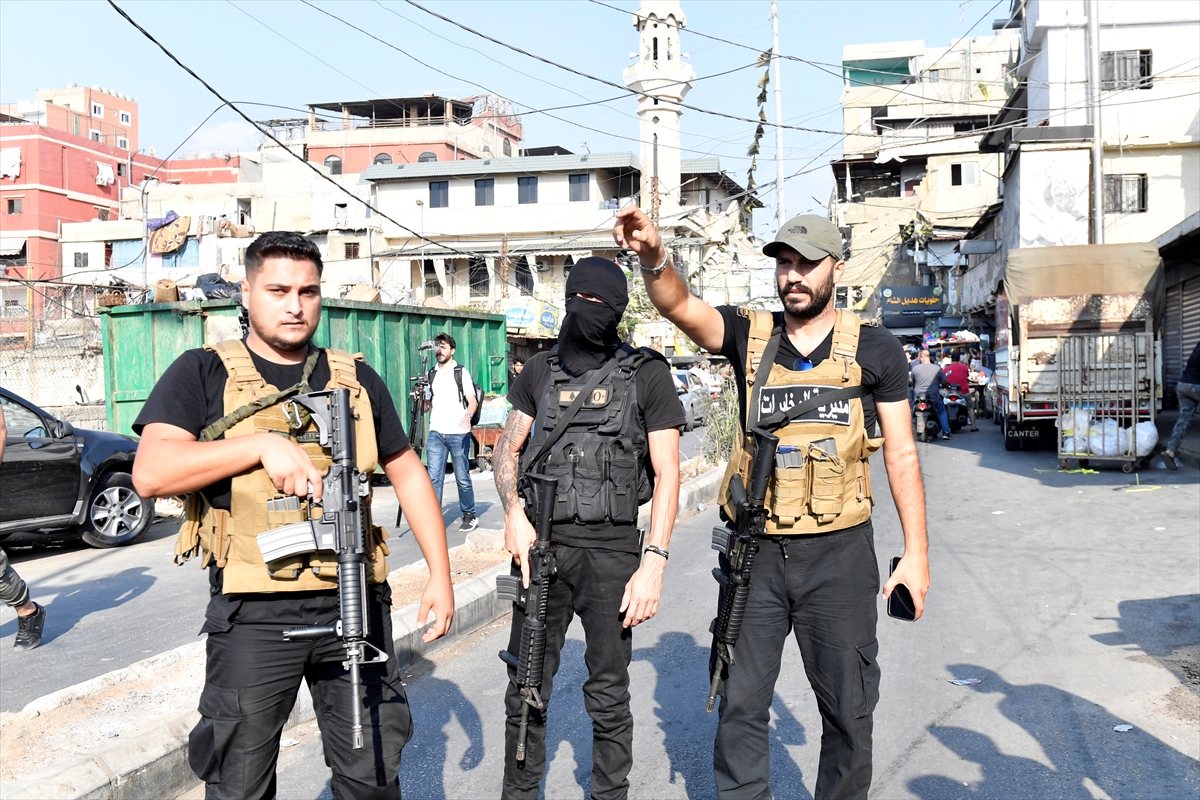
But analysts warn that dismantling Hezbollah’s arsenal is far more complicated than disarming Palestinian camps.
Any attempt to do so risks political paralysis, sectarian tension, or outright confrontation. The stakes are far higher, and the costs of failure graver.
Several scenarios are possible. One is gradual integration, where non-state fighters surrender weapons in phases, with some absorbed into the army and others reintegrated into civilian life.
International monitors could oversee the process, linking economic assistance to measurable progress.
Another is partial disarmament, where groups hand over visible arsenals while retaining covert capacities. This would leave the problem unresolved but give the appearance of compliance.
A third scenario is stalemate. Political gridlock could freeze the process, entrenching the current order while Lebanon’s crisis deepens. The most destabilising outcome would be confrontation, in which attempts at forced disarmament trigger violent resistance and push Lebanon back into conflict.
Lebanon’s campaign to disarm Palestinian factions represents both an opportunity and a test. It offers the possibility of restoring sovereignty, unlocking aid, and reasserting the primacy of the state. Yet it also risks deepening paralysis if political leaders lack the unity to follow through.
The country stands at a crossroads. As weapons are surrendered in refugee camps, the harder question looms: can Lebanon finally confront Hezbollah’s arsenal? Or has the narrative of resistance stretched so far that it now shields a movement more deeply entangled in regional conflicts than in defending its homeland?
The answer will determine not only the balance of power within Lebanon, but also whether its fragile statehood can survive the pressures of dismantling parallel armies.