Afghans are commemorating their Independence Day today which celebrates the end of British colonialism in 1919 after three bloody wars.
Afghan Independence Day specifically remembers the Anglo-Afghan Treaty of 1919, or Treaty of Rawalpindi, which granted Afghanistan full sovereignty, ending British control over its foreign affairs.
The treaty followed the Third Anglo-Afghan War, led by Emir Amanullah Khan, who capitalised on Britain’s post-World War I exhaustion.
The national holiday symbolises Afghan resilience, unity and independence from British influence and external domination.
The Anglo-Afghan wars

British engagement in Afghanistan was driven by the “Great Game,” a geopolitical rivalry with Russia to secure Central Asia and protect “British India.”
The First Anglo-Afghan War (1839–1842) aimed to install Shah Shuja, a pro-British ruler, replacing Emir Dost Mohammad Khan, suspected of Russian leanings. British forces captured Kabul but faced fierce resistance from Dost Mohammad’s son, Akbar Khan.
Subscribe to our newsletter and stay updated on the latest news and updates from around the Muslim world!
In 1842, a British retreat from Kabul ended in disaster, with nearly 16,000 troops and civilians massacred in snowy passes. Britain briefly reoccupied Kabul but withdrew, allowing Dost Mohammad’s return, exposing British vulnerabilities and Afghan tenacity.
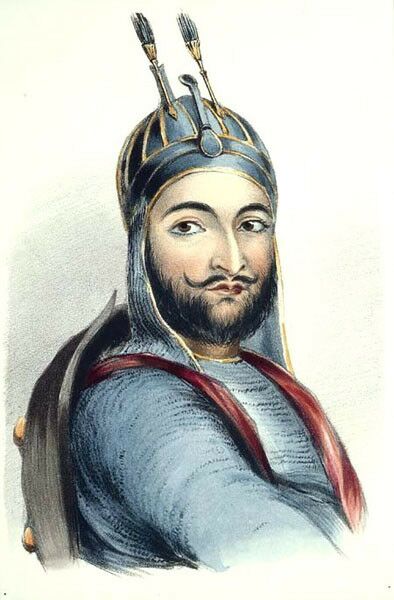
The Second Anglo-Afghan War (1878–1880) followed renewed Russian advances.
When Emir Sher Ali Khan refused a British mission, Britain invaded, occupying much of Afghanistan. The Treaty of Gandamak (1879) forced Sher Ali’s son, Yaqub Khan, to cede foreign policy control to Britain.
After a British envoy’s murder, Britain reinvaded, installing Abdur Rahman Khan as emir. The war ended with Britain controlling Afghanistan’s foreign affairs but withdrawing from direct governance, allowing Abdur Rahman to modernise the state while aligning with British interests.
The Third Anglo-Afghan War (1919) was decisive.
Amanullah Khan, fueled by anti-British sentiment and Indian independence movements, attacked British India. Despite Britain’s use of air raids, the conflict ended in a stalemate.
The Treaty of Rawalpindi granted Afghanistan full independence, celebrated today as Independence Day.
The wars fueled Afghan nationalism, shaped modern borders, and highlighted the limits of British control, with the 1893 Durand Line remaining a contentious Afghanistan-Pakistan border issue.
Post-1919 British Influence
After 1919, British influence waned but persisted indirectly due to geopolitical concerns, particularly countering Soviet expansion. The Treaty of Rawalpindi ended Britain’s control over Afghan foreign policy, shifting its role to diplomacy.
A British legation in Kabul and limited subsidies supported Afghan rulers like Amanullah Khan to maintain stability as a buffer against Soviet Russia, which signed a 1921 friendship treaty with Afghanistan. And British intelligence monitored Soviet-Afghan ties, reflecting ongoing “Great Game” tensions.
In the late 1920s, Amanullah’s modernisation reforms sparked a rebellion, leading to his 1929 abdication. Britain quietly supported Nadir Shah, who overthrew rebel leader Habibullah Kalakani, providing recognition and aid to stabilise his rule.
The Durand Line continued to strain relations, as Afghanistan rejected its legitimacy.
During World War II, Britain and the Soviet Union pressured Afghanistan to expel Axis nationals in 1941, a rare coordinated effort. However, Britain’s focus shifted to India’s independence movement and global conflicts, reducing Afghanistan’s priority.
After Indian independence in 1947, British influence further declined, with Pakistan inheriting the Durand Line dispute.
British Military Involvement (2001–2021)
Britain’s modern engagement began after the September 11, 2001, attacks, when the U.S., with British support, accused the Taliban of sheltering Al Qaeda’s Osama bin Laden.
Britain invaded in November 2001 alongside U.S. forces and the Afghan Northern Alliance.
By December, the Taliban fell, and Britain helped establish the International Security Assistance Force (ISAF), initially leading it under a UN mandate to secure Kabul and support reconstruction.

From 2001–2006, about 1,700 British troops operated Provincial Reconstruction Teams, focusing on training the Afghan National Army (ANA) and rebuilding infrastructure, with minimal casualties (five deaths).
In 2006, Britain’s role escalated in Helmand Province under Operation Herrick, deploying 3,000 troops to secure a Taliban stronghold and curb opium production, linked to 90% of UK heroin.
Intense fighting in areas like Sangin and Musa Qala followed, with strategic missteps —underestimating Taliban strength and overextending forces — leading to peak casualties (108 deaths in 2009, over 100 in 2010).
By 2015, 456 British personnel had died, surpassing losses in Iraq or the Falklands, with costs reaching £40 billion by 2014.
Public support waned amid unclear objectives and local resistance, exacerbated by Britain’s counter-narcotics efforts alienating farmers.
By 2014, Britain ended combat operations, handing over Camp Bastion to Afghan forces. But about 450 personnel remained under Operation Toral, training the ANA until 2021.
The Taliban’s rapid 2021 resurgence prompted Operation Pitting, evacuating 29,700 Afghans and British nationals from Kabul.
British-Afghan Relations in 2025
Today, British-Afghan relations are limited, shaped by the Taliban’s 2021 return and the UK’s non-recognition of their government.
The UK engages through its Doha-based mission, conducting “pragmatic” diplomacy on humanitarian and counter-terrorism issues without legitimising the Taliban.
The Afghan embassy in London closed in 2024, reflecting severed formal ties.
The UK still provides significant humanitarian aid, with 70% of 2023/24 aid targeting preparedness and response for 22.9 million Afghans facing crisis.
Geopolitically, the UK aligns with the U.S. and EU, focusing on regional stability amid tensions like Pakistan’s 2025 Afghan refugee expulsions.