




Pakistan has used the controversial Anti-Terrorism Court to hand down lengthy jail terms to at least 108 members of jailed ex-Prime Minister Imran Khan’s party, for their involvement in protests against the military in 2023.
On Thursday, the Anti-Terrorism Court of Pakistan sentenced a large number of political leaders and activists, including some high-profile female politicians belonging to Khan’s party, Pakistan Tehreek-e-Insaf (PTI) for their involvement in attacks on military installations in 2023, according to court records.
The Anti-Terrorism Court determined that cases were proven “without a shadow of doubt,” citing coordinated conspiracy and direct participation in acts of violence, siege of military offices, and destruction of public property on May 9, 2023.
Opposition figures have denounced the rulings by the court, which also disqualified six PTI lawmakers from their seats.
“For the first time in Pakistan’s judicial history, such a sad and shameful incident occurred that the leaders of the opposition in both houses [of parliament] were punished solely on the basis that they were loyal allies of Imran Khan’s political narrative, public representation, and constitutional struggle,” PTI wrote on its official X account.
Supporters of the PTI have also vehemently denounced the verdicts as politically motivated and aimed at weakening the PTI ahead of planned August 5 rallies marking the anniversary of Imran Khan’s jailing.
The Human Rights Commission of Pakistan (HRCP) expressed concern over the timing and scale of convictions, warning of erosion to judicial credibility.
Subscribe to our newsletter and stay updated on the latest news and updates from around the Muslim world!

The Anti Terrorism Court of Pakistan was established in Pakistan in 1997, under Nawaz Sharif’s government, to deal with terrorism cases. Currently, Nawaz’s brother Shehbaz Sharif rules the country raising serious concerns about the political nature of the case against the PTI and its jailed leader.
A court in the northeastern city of Faisalabad sentenced Omer Ayub Khan, and Senator Shibli Faraz, opposition leaders in the National Assembly and the Senate, respectively, along with the other lawmakers to 30 years each in jail in multiple cases.
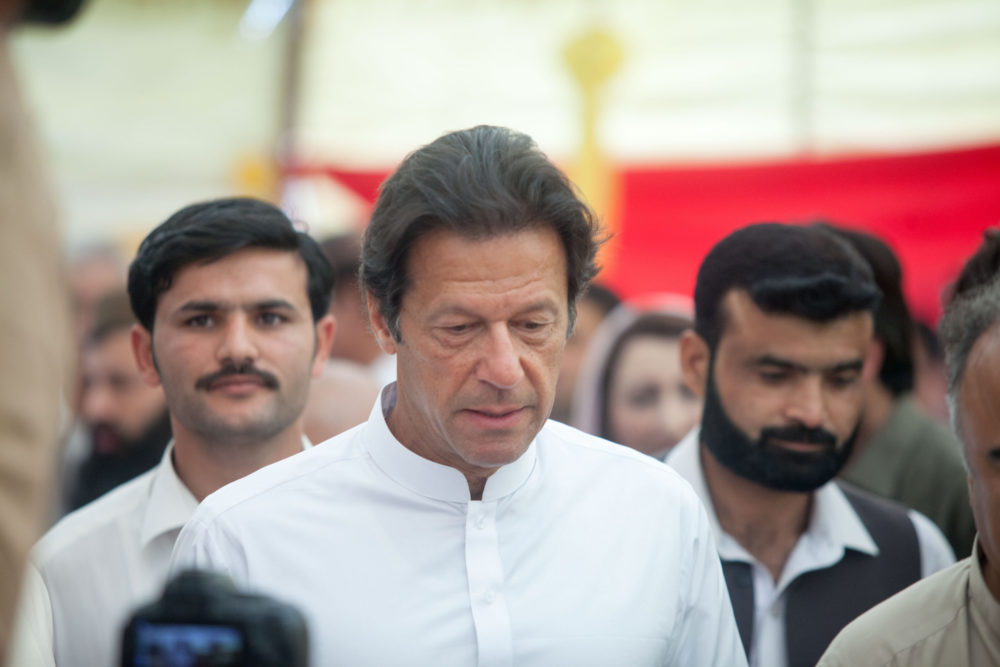
Omer Ayub Khan is the leader of the opposition and hails from one of the most influential political families in the country. He is the grandson of Pakistan’s former president, Field Marshall Ayub Khan.
Shibli Faraz is the leader of the opposition in the senate and a former federal minister of science and technology.
Other high profile names on the list of people convicted and sentenced to long jail terms include Zartaj Gul, Kanwal Shauzab and Junaid Afzal Sahi.
In addition, Islamic scholar and chairman of the Sunni Ittehad Council (an alliance of small Islamic political parties), Sahibzada Hamid Raza, was also sentenced to 10 years in prison.
The defendants were involved in three cases related to attacks on security installations, including the local office of the premier intelligence agency, the Inter Services Intelligence, or the ISI, according to court records.
Observers have noted that all of the defendants given hefty jail terms belong to former Prime Minister Imran Khan’s Pakistan party, which is the largest opposition party in both chambers of the federal parliament.
Seventy-seven of those who were accused, including former Information Minister Fawad Chaudhry and Zain Qureshi, son of the incarcerated former Foreign Minister Shah Mahmood Qureshi, were acquitted because of a lack of evidence.
The latest judgments came days after an Anti-Terrorism Court in the north-eastern Sargodha district convicted Ahmed Chattha from the federal parliament and Malik Ahmed Bhachar, who is the opposition leader in the provincial Punjab legislative assembly, for their involvement in violence during protests against the arrest of Khan in May, 2023.
The judgments can be appealed against in the High Court, and subsequently in the Supreme Court.
Several military installations, including the Army Headquarters, commonly known as the General Headquarters in the garrison city of Rawalpindi, were stormed by protesters after Khan was briefly arrested in a corruption case.
The PTI denies involvement in the violence and has long complained of state persecution.
The political impact
Under Pakistani law, all convicted parliamentarians automatically lose their seats, translating to a dramatic reduction in the PTI’s political representation.
The party has announced its intention to file appeals promptly and may boycott the National Assembly or organise large‑scale protests in response.
This batch of mass convictions marks the third major ATC ruling this month, following earlier verdicts affecting dozens of PTI parliamentarians and workers across Punjab

Imran Khan is currently languishing in a jail in Rawalpindi after he was sentenced to 14 years in a corruption case.
The former PM continues to face numerous other legal cases, which he says are all politically motivated.
Meanwhile, PTI supporters maintain that the verdicts are part of a broader campaign orchestrated by Pakistan’s military-led establishment to suppress opposition and consolidate power.
This wave of verdicts comes as international media and human rights observers monitor press freedom and judicial independence in the country. Calls for Imran Khan’s release have been echoed across the Pakistan diaspora with protests held in Western capitals including London and Washington, urging Western pressure to secure Khan’s release.