


The UN agency for Palestinian refugees (UNRWA) has once again accused Israeli authorities of using starvation as a weapon of war against the civilian population of Gaza.
In a statement on X, UNRWA said: “The Israeli Authorities are starving civilians in Gaza. Among them are 1 million children.”
UNRWA renewed its urgent call for the lifting of Israel’s ongoing siege, saying: “Lift the siege: allow UNRWA to bring in food and medicines.”
According to the latest UNRWA report, the malnutrition crisis in Gaza has reached catastrophic levels following the collapse of the ceasefire on March 17-18, 2025, driven by severe restrictions on humanitarian aid, particularly food, due to an 11-week total Israeli siege from March 2 to May 18, 2025.
The report states: “Malnutrition screenings conducted by UNRWA show that acute malnutrition among children under five years of age has more than doubled from March to June, due to the effect of the 11-week-long (from 2 March to 18 May) total Israeli siege on the Gaza Strip…

“Around one in ten children screened in UNRWA health facilities across the Gaza Strip is malnourished.”
Between June 16 and June 30, 2025, UNRWA screened 10,638 children aged 6 to 59 months, with “over 8.5 per cent presenting with some form of malnutrition.”
Subscribe to our newsletter and stay updated on the latest news and updates from around the Muslim world!
Since January 2024, over 240,000 children under five have been screened, confirming the widespread prevalence of malnutrition.
UNRWA states: “Families generally survive on a single nutritiously poor meal per day, and in some cases, people go for days without eating.”
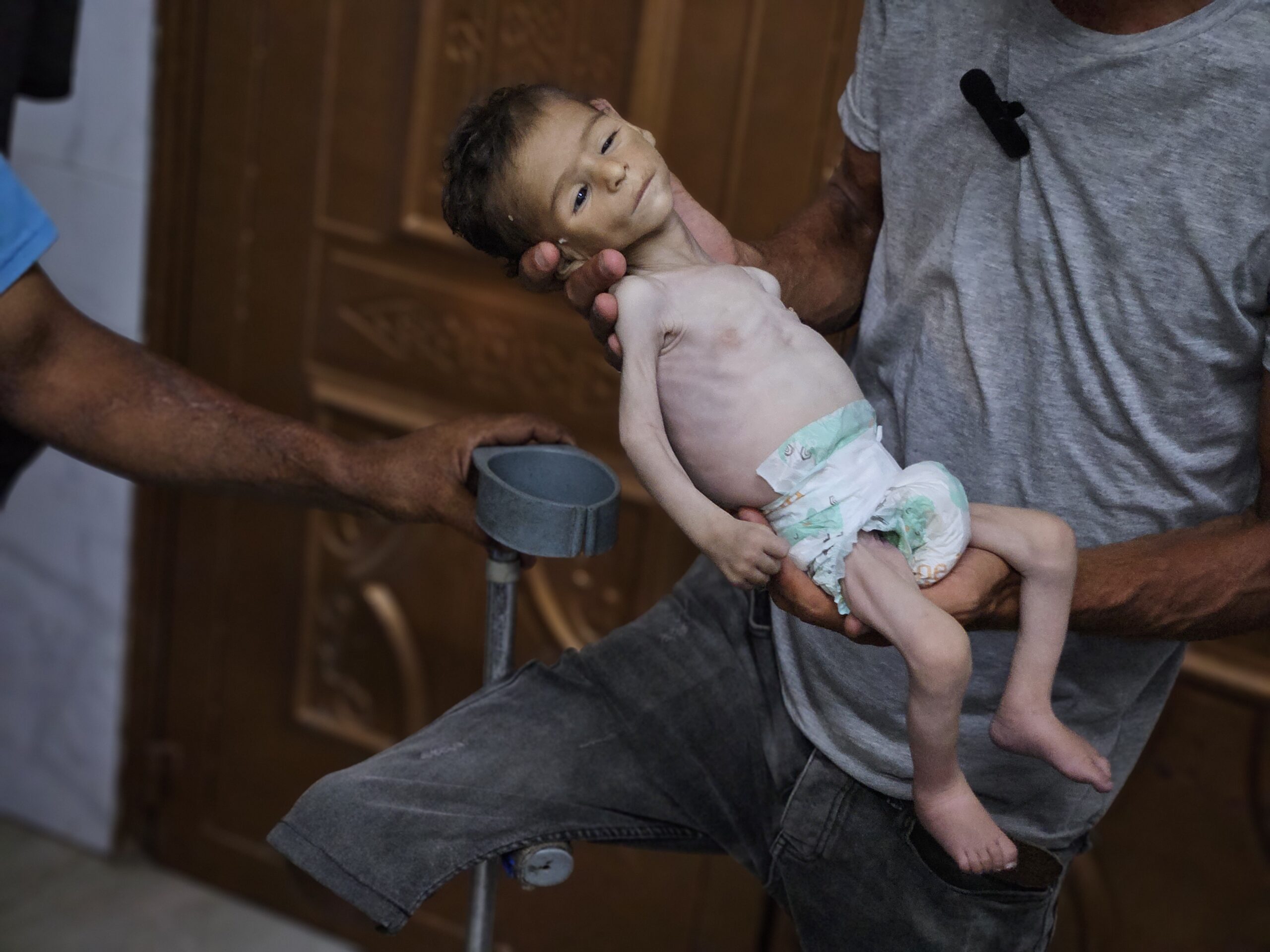
The 11-week siege, which blocked all food, medicine, and fuel, is identified as the primary driver of the malnutrition surge.
The report notes: “Since 19 May, after almost 80 days of siege on the entry of aid and other supplies into the Gaza Strip – including food, medicine and fuel, the Israeli authorities have allowed only a select number of UN agencies and international non-governmental organisations (NGOs) to bring very little aid into Gaza.”
Critically, “UNRWA has not been able to bring in any humanitarian supplies for over four months (since 2 March).” This prolonged restriction has crippled food distribution efforts, with UNRWA running out of food supplies by the end of April 2025, forcing a halt to distributions.
The report highlights the impact of these restrictions: “UNRWA ran out of flour and food parcels at the end of April and was forced to halt food distributions.” Before this, between March 1 and April 19, 2025, UNRWA distributed “nearly 270,000 bags of flour, reaching an estimated 88,000 families – or over 700,000 people.”
However, since the ceasefire’s collapse, only “around 15,500 families (or an estimated 77,500 people) have received UNRWA food parcels” by April 8, 2025, a fraction of the need.

The scarcity of food has led to deadly consequences, particularly at aid distribution points.
The report states, “According to OCHA, the Gaza Ministry of Health reported that 851 people were killed and at least 5,634 injured trying to access food supplies since 27 May 2025.”
These casualties occurred as people, desperate for food, gathered at militarised distribution points in Rafah and Deir al-Balah or waited for aid trucks, highlighting the extreme risks faced by civilians seeking basic sustenance.
The lack of adequate nutrition has also contributed to health deterioration. The report links malnutrition to the spread of diseases, noting, “Diseases are spreading, with the Health Cluster reporting an increase in acute watery diarrhea cases. Severe dehydration, acute jaundice syndrome and bloody diarrhea are also on the rise.”
These conditions disproportionately affect malnourished children, with “178 suspected cases of meningitis” reported between July 1 and 9, 2025, “the majority of which were among children under one year of age.”

The malnutrition crisis is compounded by the broader collapse of essential services. The report notes, “While limited quantities of fuel have entered the Gaza Strip, its levels remain dangerously low, with critical services – including health care, WASH, and telecommunications – at risk of shutting down.”
Fuel shortages hinder food distribution and preparation, while the destruction of infrastructure and displacement of 1.9 million people (90% of Gaza’s population) further limit access to food.
The report emphasises, “People are living in inhumane conditions, seeking shelter anywhere they can, including damaged or destroyed buildings, overcrowded displacement sites, and open areas,” exacerbating the challenge of addressing malnutrition.

Despite international legal obligations to protect civilians and allow the delivery of aid, Israel has maintained a total siege on Gaza since March 2, bombing convoys, blocking border crossings, and targeting aid distribution points, actions that have been widely condemned as collective punishment and potential war crimes.
According to Gaza’s Health Ministry, dozens of children have already died from starvation and dehydration, while hundreds of thousands more are at risk due to widespread food insecurity and the collapse of healthcare services.
On Saturday alone, Israeli strikes killed at least 136 Palestinians, including 38 individuals waiting for aid and three children who died from severe malnutrition, Palestinian official sources reported.
Israel has killed nearly 59,000 Palestinians, most of them women and children, in Gaza since October 2023. The relentless bombing has destroyed the enclave, almost collapsed the health system, and created famine-like conditions.
Israel denies accusations of deliberately starving Palestinian children in Gaza, asserting no intentional starvation policy exists and blaming Hamas for diverting aid.
Officials claim sufficient aid (e.g., 92,000 trucks since October 2023) has been delivered, and security concerns justify restrictions.