




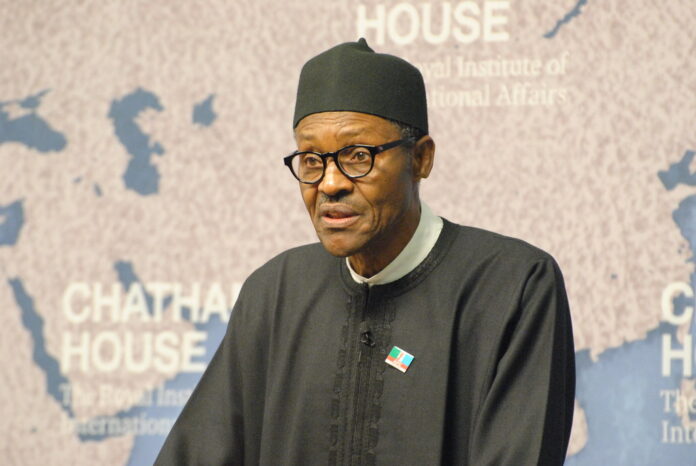
Nigeria’s former President Muhammadu Buhari, who transformed himself from an austere military leader to a dedicated reformer fighting corruption, has died in London aged 82 following a long illness.
The family of the former president released a statement saying that Buhari, who served as president between 2015-2023, passed away after travelling to a London clinic where he had been receiving treatment for a long-term illness since April.
Buhari’s body was accompanied back to Nigeria for burial by Vice President Kashim Shettima and his Chief of Staff. He was buried according to traditional Muslim funeral rites in his home state of Katsina in northern Nigeria.
Born on December 7, 1942, the late president Buhari was one of the key leaders of a military coup in December 1983 that overthrew the Second Nigerian Republic.
Following the successful coup, Buhari was appointed Chief of General Staff, where he acted as the de facto number two in the serving administration.
Before Buhari became president in 2015, he ran for the position multiple times on behalf of the All Nigeria Peoples Party (ANPP) in 2003 and 2007, and on the Congress for Progressive Change (CPC) platform in 2011.
Buhari emerged in 2015 as the presidential candidate for the All Progressives Congress (APC) party for the general election, where he won.
Subscribe to our newsletter and stay updated on the latest news and updates from around the Muslim world!
He made history as the first opposition candidate to defeat an incumbent, the then-president Goodluck Jonathan.
This was the first time in Nigerian history that a serving president was defeated in a reelection bid.
Buhari defeated his closest rival, former Vice President Atiku Abubakar, by over three million votes.
‘A converted democrat’
His presidency was received with great enthusiasm and excitement by the Nigerian people as he swore to tackle corruption and insecurity in the country.
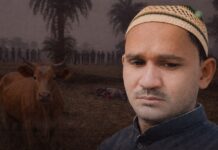
In line with this, he rebranded himself from a military leader to a softer public image. Buhari was never seen without his traditional Nigerian Muslim garments, the flowing Kaftan and his kufi.
He referred to himself as a “converted democrat” and was ultimately viewed as a reformer by his supporters. “I belong to everybody and I belong to nobody,” he often said, trying to break free from Nigeria’s deep-rooted political factions.
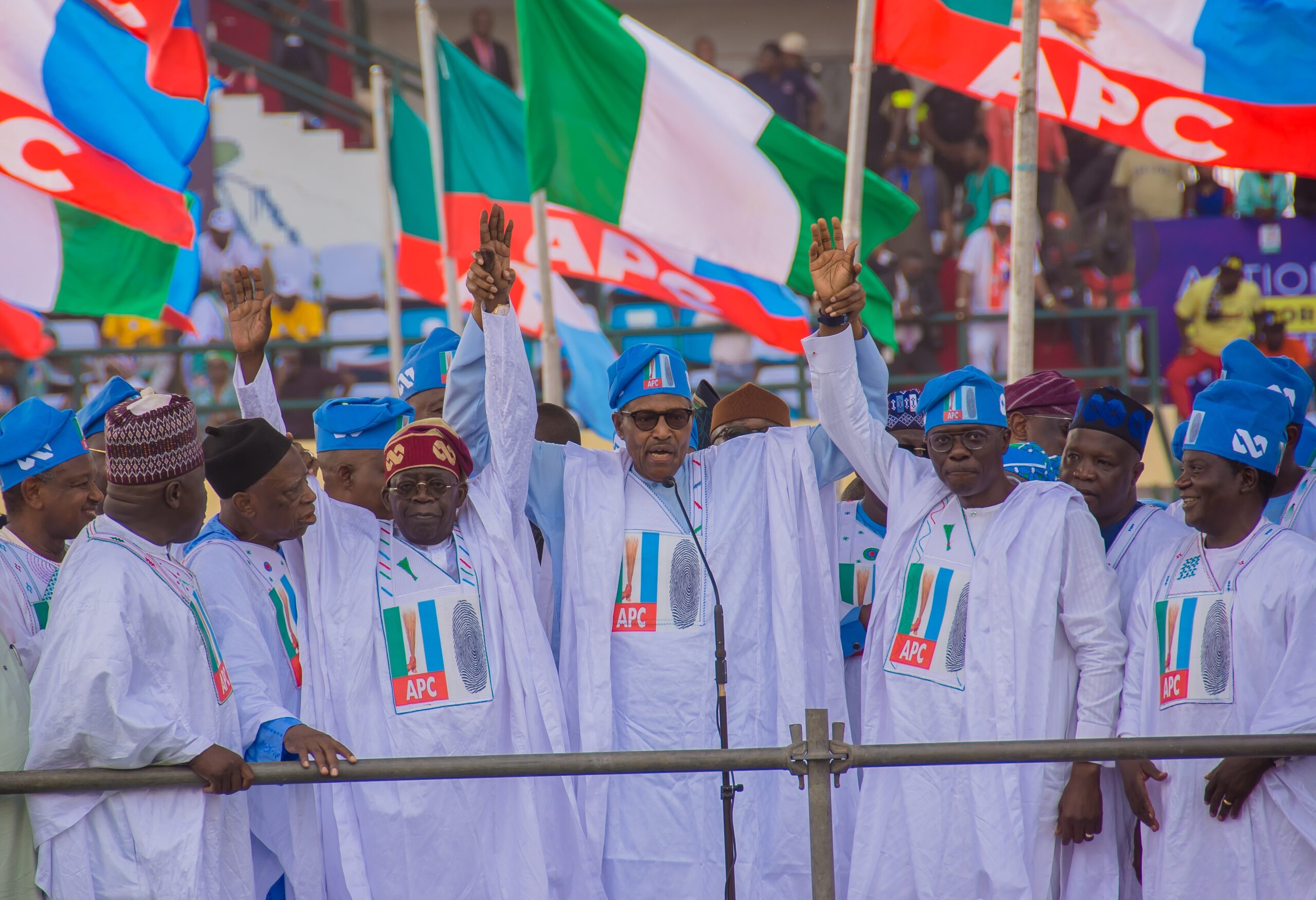
Buhari’s brand of anti-corruption conviction politics was accompanied with his promise to crack down on state insecurity by tackling extremist groups such as Boko Haram.
The kidnapping of 300 Nigerian school girls from the northeastern town of Chibok coincided with his 2015 win, immediately thrusting him into the spotlight of the international stage against terrorism.
But despite Buhari’s commitment as a reformer against corruption and terrorism, Boko Haram’s influence only expanded under his leadership.
A rival group of Boko Haram, the ISIL affiliate in West Africa (ISWAP), also emerged onto the scene and continued to threaten state security.
His policies and attempts to combat insecurity were unsuccessful for the most part. Despite this being one of his main drivers in rallying support, armed kidnapping gangs proliferated in north west Nigeria, as well as militant attacks on oilfields, Nigeria’s greatest export.
Despite these failures, Buhari retained huge popular support in Nigeria’s majority Muslim northern provinces, as voters re-elected him to his second presidential victory in 2019.
The legacy of Buhari
Under Buhari, Nigeria gained a new sense of optimism. One that was supposed to change the country’s deeply rooted corruption, political factionalism, terrorism, and declining economy.
But Buhari’s promises to tackle corruption and insecurity were often overshadowed by his declining health, thus affecting the success of his policies.
His first presidency saw Nigeria’s first recession in a generation and he ignored the IMF’s advice to devalue the naira. Thus, the currency remained artificially high.
To make matters worse, production of oil fell to it’s lowest level in decades due to crude theft in the Niger delta.
Despite this, upon his death, Buhari was celebrated by many African leaders.
Mufti Menk, the popular social media preacher and Grand Mufti of Zimbabwe, said that Buhari “was an upright man, who never missed his prayers and a very disciplined believer who served his people to the best of his ability.”
And Bola Tinubu, current president of Nigeria, said that he was “to the very core, a patriot”, adding, “He served Nigeria with unwavering dedication.”