


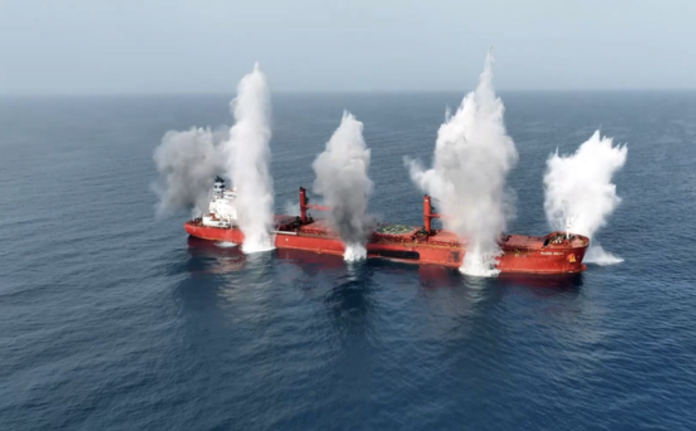
Yemen’s Houthi Ansarallah have carried out two attacks on major vessels in the Red Sea, which resulted in three deaths after the sinking of a Liberian-flagged cargo ship.
The first attack occurred on July 6 and the latest strike took place on Monday night.
The U.S. has condemned the attacks in the Red Sea, a vital maritime trade route linking Europe, Asia and the Middle East.
These strikes, which are part of a campaign that began after the outbreak of Israel’s war on Gaza in October 2023, are becoming an increasing concern for the U.S., Israel and their allies.
According to the U.S. State Department, the incidents underscore the “consistent and ongoing threat” posed by the Iran-backed Houthis to freedom of navigation in international waters.

On Tuesday, the State Department escalated its rhetoric, describing the most recent assault as “unprovoked Houthi terror.” The department also referenced earlier attacks on the MV Magic Seas and MV Eternity C.
The Magic Seas was targeted over the weekend. The Houthis claimed it was a “legitimate target” due to its shipping company’s ties with Israel.
Subscribe to our newsletter and stay updated on the latest news and updates from around the Muslim world!
Houthi military spokesperson, Yahya Saree, stated on Monday that the ship was attacked late on Sunday using “two unmanned boats, five ballistic and cruise missiles, and three drones.”

Shipping traffic in the Red Sea has been steadily increasing in recent months, but these twin attacks now raise the spectre of a broader armed campaign in the region’s waterways—one that could severely disrupt global trade.
The Houthis say their ongoing attacks aim to pressure Israel into ending what they call a “genocidal onslaught” in Gaza, where at least 57,500 Palestinians have been killed.
Their assaults have primarily targeted ships passing through the Red Sea, Arabian Sea, the Bab al-Mandab Strait and the Gulf of Aden. Since late 2023, the group has relied on drones and missiles in a campaign intended to disrupt international shipping.
Who are the Houthis?
The Houthis are an armed Zaidi Shia militia movement aligned to Iran that emerged in the 1990s but rose to global prominence in 2014 following the outbreak of Yemen’s now decade-long civil war.
They currently control significant areas of Yemen, including the capital Sanaa, as well as western and northern regions bordering Saudi Arabia.
In recent years, they have been fighting a Saudi-led military coalition, with logistical and political backing from Iran.
While widely viewed as an Iranian proxy, analysts emphasise that the Houthis operate largely in pursuit of their own strategic interests within Yemen.
Their name has become increasingly prominent during Israel’s war on Gaza, as they are one of the few groups engaging in direct military actions against Israel and international shipping interests in the Red Sea.
The group garnered international attention early in the conflict when, on November 18, 2023, they seized a cargo ship, the Galaxy Leader, and turned it into a tourist attraction for local Yemenis.
Troubling Israel’s western allies
The U.S. and the U.K. have officially designated the Houthis as a terrorist organisation.
After a brief lull in attacks following a failed ceasefire attempt in January 2024, the group resumed its campaign last March, citing Israel’s continued blockade of humanitarian aid into Gaza as a justification.
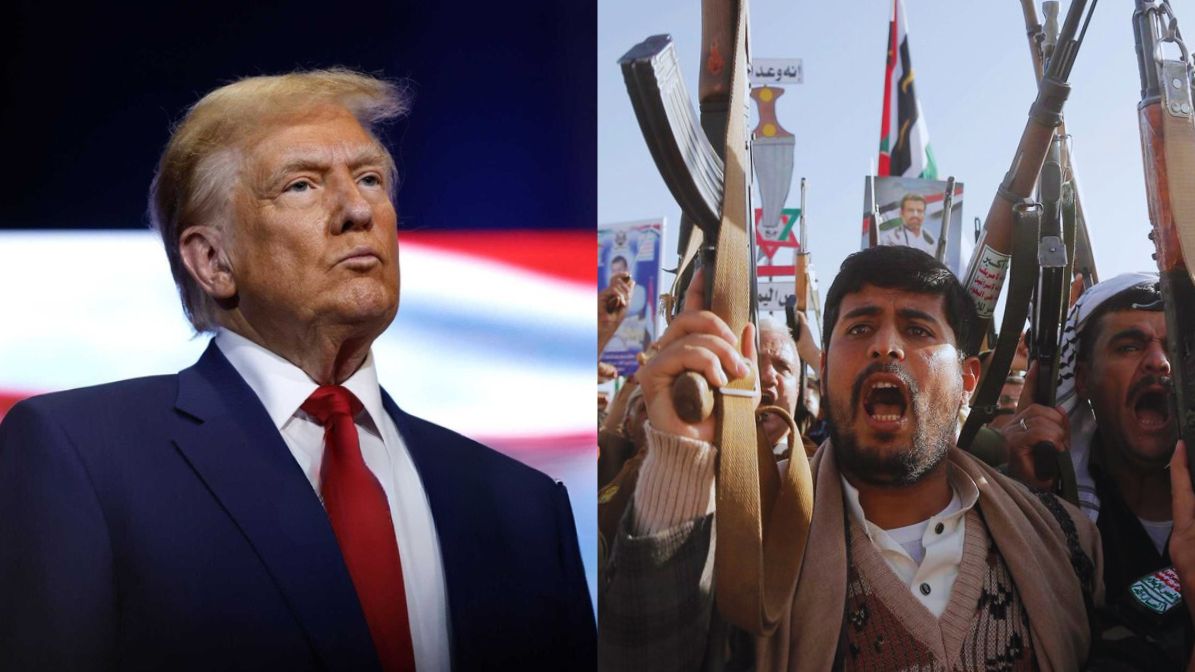
The U.S. has since launched multiple military operations against the Houthis, the most extensive of which took place in April. That operation destroyed four homes in Sanaa killing at least 11 civilians, who continue to bear the brunt of the fallout from the group’s actions.
In June, the U.S. Navy described its ongoing operations in the region as the most intense naval combat it has faced since World War II.
While the American navy experienced conflict during the “Tanker Wars” of the 1980s in the Arabian Gulf, U.S. officials say the current confrontations with the Houthis represent an unprecedented escalation.
State Department spokesperson Tammy Bruce reiterated the U.S. position: “The United States has been clear: We will continue to take necessary action to protect freedom of navigation and commercial shipping from Houthi terrorist attacks.”
“These attacks directly threaten regional peace and stability,” she added, describing global commerce as a critical “global public good.”