



Far-right extremism has become a “real concern for British intelligence,” former MI5 chief Jonathan Evans has warned, pointing to a rise in organised violence and politically motivated attacks in Britain.
“This is a problem that wasn’t really there 20 years ago, but it is now a real concern for British intelligence,” Evans told Anadolu Agency.
“I think it’s very clear that there has been a rise in organized violence from the far right, and that we’ve seen individuals killed, including MPs, over the last several years. Jo Cox is the most publicly notable example.”
Evans’ warning comes as MI5 Director-General Sir Ken McCallum reports a growing threat from extreme right-wing terrorism, particularly cases involving anti-immigration and anti-Muslim grievances.
“Over the last year the most marked trend has been an increase in cases where extremist versions of anti-immigration and anti-Muslim grievance are tipping into terrorist intent,” McCallum said in his annual threat assessment on October 13.

Home Office figures released in August showed that referrals to Britain’s Prevent counterterrorism program rose 39% to a record 10,293 in the year ending September 2025.
Referrals involving concerns about extreme right-wing ideology increased 42% to 2,103, accounting for 20% of the total.
Subscribe to our newsletter and stay updated on the latest news and updates from around the Muslim world!
Evans said the rise in far-right extremism was not primarily a consequence of Britain’s foreign policy.
“I think much of it may actually be driven by domestic policy and the deliberate promotion of these views, including by some hostile states,” he said.
Hostile states and information operations
Evans suggested that foreign information operations could be contributing to the spread of extremist views, although he stressed that the problem also reflected broader social and economic pressures.
“I think there is an information operation being conducted against us, but it is also a reflection of wider social and economic problems. This is not something unique to the UK. We’re seeing it across Europe and, of course, to some extent in the US.”
His comments highlight the difficulty of separating domestic radicalisation from the wider information environment, where extremist narratives can spread rapidly across borders.

UK national terrorism threat level at ‘severe’
McCallum’s assessment also highlighted the involvement of children and teenagers in extreme right-wing terrorism investigations.
He disclosed that MI5 had recently investigated a “radicalized extreme right-wing 13-year-old here in the UK.”
“That investigation generated insight that enabled one of our international partners to prevent a lethal attack on their soil,” he said.
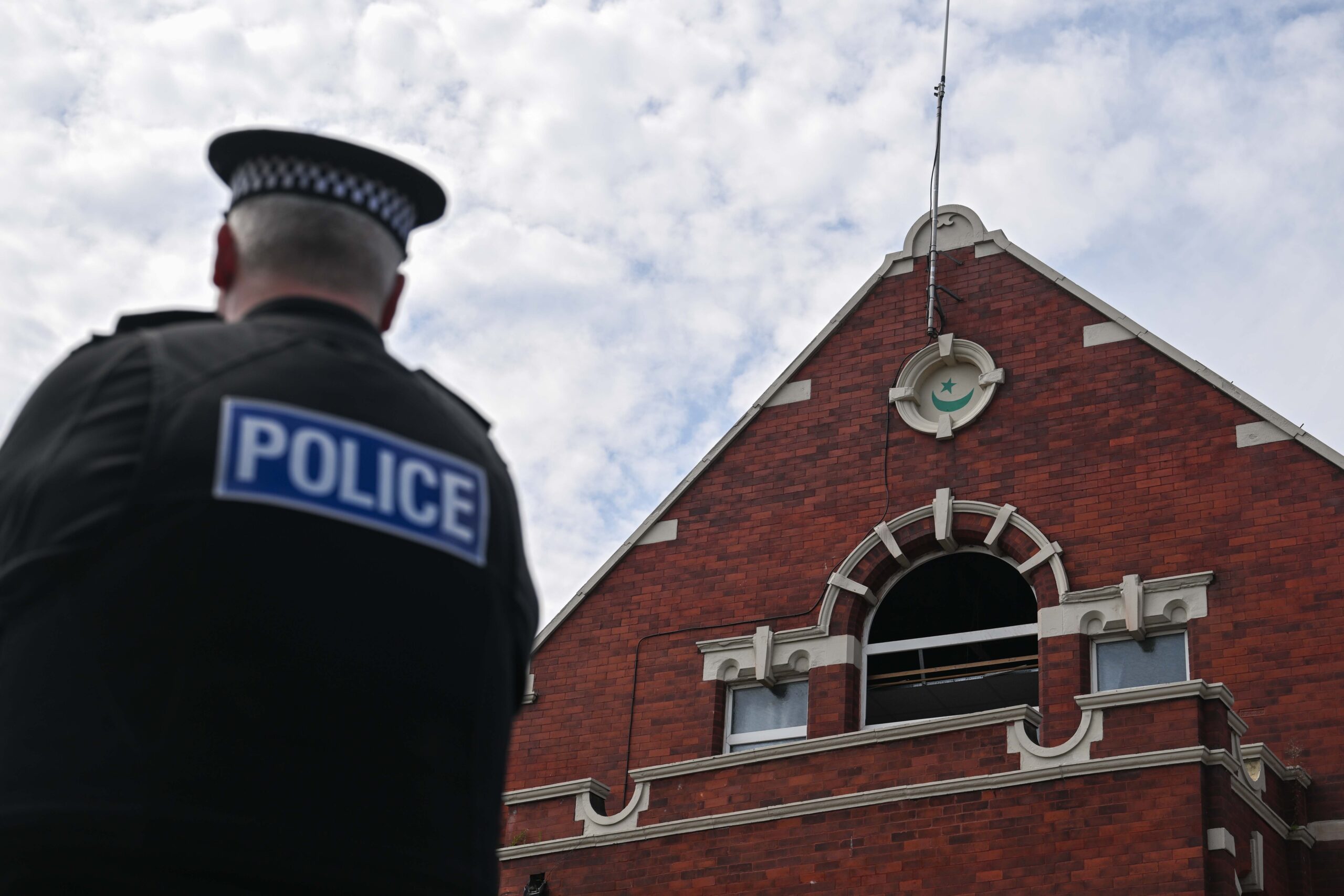
McCallum also cited the case of a 16-year-old from Inverclyde, Scotland, who received a 10-year prison sentence in 2025 for planning an attack on an Islamic community centre.
For the first time in almost five years, the UK’s Joint Terrorism Analysis Centre in May raised the UK terrorism threat level to severe, meaning an attack is highly likely.
“While the threat level change reflects the whole of the terrorist threat, the recent increase was driven in significant part by extreme right-wing terrorism. This is a complex landscape, with many subcultures,” McCallum said.
Southport riots highlight wider tensions
The intelligence warnings follow several years of heightened concern about far-right violence and anti-immigration hostility in Britain.
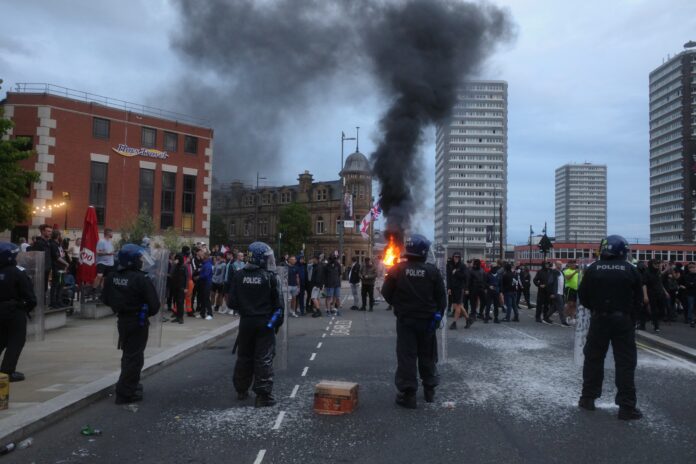
In 2024, riots erupted across parts of England and Northern Ireland following a deadly stabbing attack in Southport, with rioters targeting mosques, asylum seekers and facilities housing migrants.
False claims about the attacker’s identity and immigration status spread online in the aftermath of the killings, fueling anti-immigration unrest.
According to an analysis published in the medical journal The Lancet, the riots targeted asylum seekers, Muslims and immigration lawyers, amid what the authors described as a decade of xenophobic rhetoric and political polarization.
The unrest also exposed the international reach of online far-right networks.
An October 2024 investigation by Sky News and intelligence firm Prose found that 14 of the 20 most influential Telegram accounts in their analysis of discussions following the Southport attack were based outside Britain.
“People in Britain are dealing with the consequences of this misinformation,” said Al Baker, managing director of Prose, at the time. “The people stoking the violence, the people flooding Telegram and other platforms of misinformation are largely based outside the UK.”