


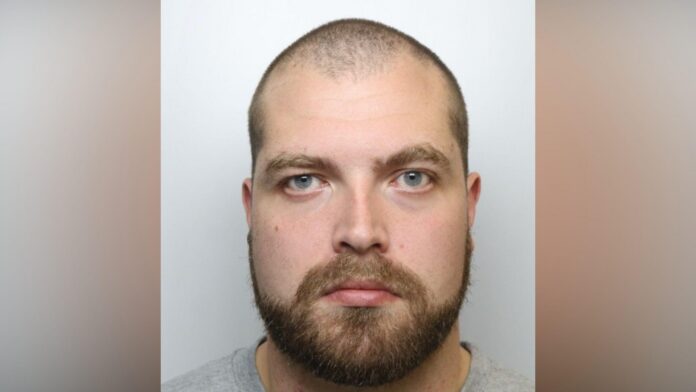
A British Army soldier who expressed hatred towards Muslims and maintained contact with three neo-Nazi terrorists convicted of plotting attacks on Muslim and Jewish communities has been jailed for possessing explosives and a homemade firearm.
Mark Broadhurst, 28, was sentenced to three years and ten months in prison at Sheffield Crown Court yesterday after a judge ruled that his weapons offences had a terrorist connection.
The serving soldier, who worked as a chef at Catterick Garrison in North Yorkshire, was found to have shared extreme right-wing views online, expressed hatred towards Muslims and other ethnic and religious minorities, and discussed forming an armed militia.
According to the Crown Prosecution Service (CPS), Broadhurst had also communicated for nearly two years with three convicted far-right terrorists who were involved in a plot targeting Muslim and Jewish communities in northern England.
Christopher Ringrose, Brogan Stewart and Marco Pitzettu were jailed for a combined 29 years in 2025 after being convicted of planning an act of terrorism and other terrorism and firearms offences. The three men were motivated by neo-Nazi ideology and had discussed carrying out attacks against Muslim and Jewish targets.

The CPS said Broadhurst communicated with the men through Facebook and Telegram, where they exchanged extremist views.
Prosecutors said he had immersed himself in far-right extremist material and maintained close contact with individuals inspired by Nazi SS tactics and white supremacist ideology.
Subscribe to our newsletter and stay updated on the latest news and updates from around the Muslim world!
Hatred of Muslims
Sheffield Crown Court heard that Broadhurst’s online messages demonstrated hatred towards Muslims, Jewish people, black people and Asians.
Prosecutor Matthew Donkin KC described his messages as hateful, racist and aggressive, saying they demonstrated clear extreme right-wing beliefs.
The court also heard that Broadhurst had discussed anarchy, the collapse of society and a desire to become notorious for terrorism and killing police officers.
Counter-terrorism detectives became aware of him while investigating other far-right extremists and examining messages posted on online forums. He was arrested at Catterick Garrison on September 25, 2024.
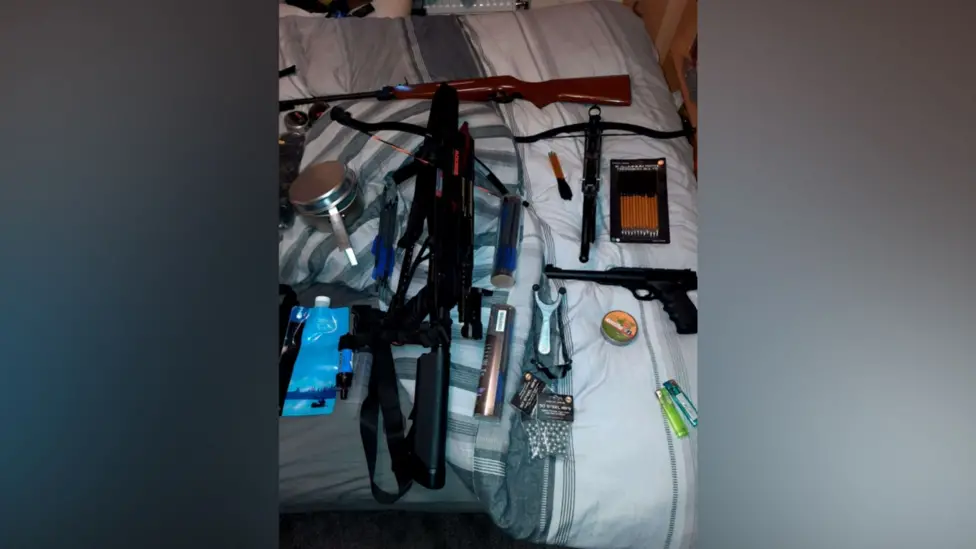
Subsequent searches of his home in Chesterfield, Derbyshire, and his military accommodation uncovered an assortment of weapons and explosive materials.
These included gunpowder, ammunition, crossbows, knives, air weapons and an improvised homemade cannon constructed using a pipe attached to wood with duct tape. Police said he had also been actively ordering components to manufacture explosives.
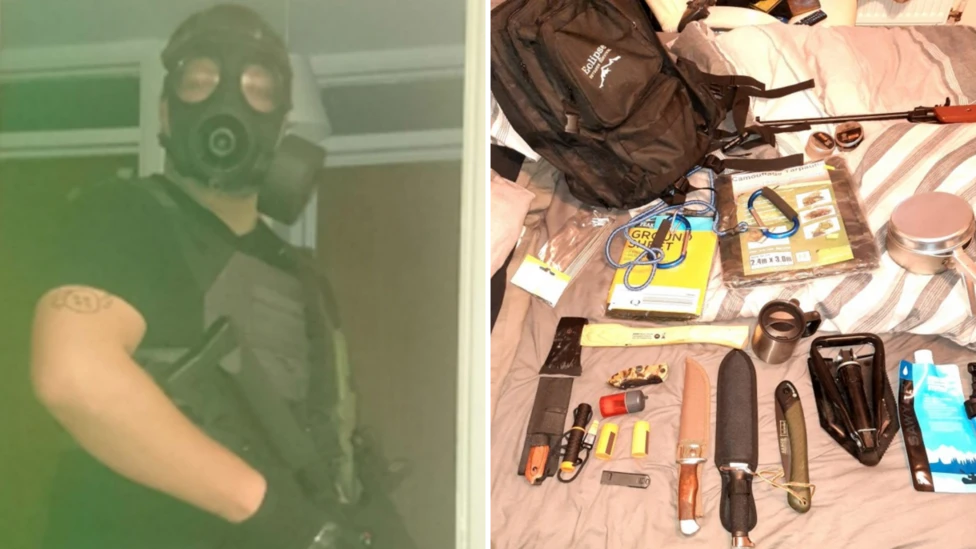
Broadhurst pleaded guilty in March 2026 to possessing explosives under suspicious circumstances and possessing a firearm without a certificate. However, he denied that his offending was connected to terrorism.
Following a separate hearing, Mr Justice Hilliard rejected that argument and concluded that Broadhurst had possessed the weapons partly to ensure that his threats of serious violence were taken seriously by fellow extremists whose ideology he wanted to advance. The judge found that his offending had a terrorist connection.
There was no finding that Broadhurst had personally participated in the terrorist plot involving Ringrose, Stewart and Pitzettu, or that he had developed a specific plan to attack a mosque or Muslim individual.
During mitigation, his defence lawyer, Jim Littlehales, presented a reference from a superior officer describing Broadhurst as an excellent mentor to junior catering staff who worked to high standards. The defence also said that the homemade firearm had not been used to threaten anyone.
An Army spokesperson condemned his extremist views, saying there was no place in the British Army for racist or extremist ideology. The spokesperson said such beliefs were incompatible with military values, undermined trust and could pose a serious national security risk.
‘Danger to the public’
Frank Ferguson, head of the CPS Special Crime and Counter Terrorism Division, said Broadhurst had shown a clear interest in violence and developing potentially deadly weapons.
He said the soldier had been immersed in extremist material and maintained prolonged contact with three convicted terrorists influenced by Nazi ideology.
Ferguson added that evidence recovered from Broadhurst’s electronic devices and online communications had been central to the prosecution.
Detective Chief Superintendent James Dunkerley, head of Counter Terrorism Policing North East, said investigators had uncovered an extreme right-wing mindset and extensive conversations with like-minded individuals.
He said Broadhurst had accumulated multiple weapons and was actively acquiring materials for explosives.
Dunkerley welcomed the prison sentence, saying it reflected both Broadhurst’s extremist mindset and the danger he posed to the public.
Broadhurst will also be subject to a ten-year terrorism notification order following his conviction.