


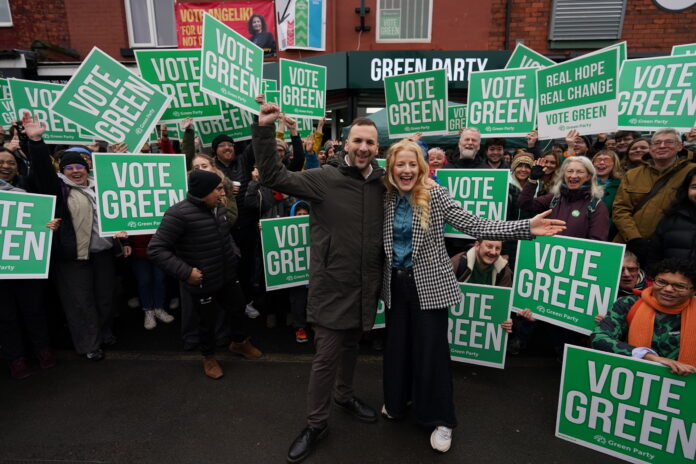
The Green Party has voted to recognise Zionism as a form of racism, formally making it the UK’s first high-profile anti-Zionist political party in a landmark conference vote.
Green members voted 1,022 to 813 in favour of the anti-Zionism motion at the party’s annual conference in Brighton on Sunday, with just 10 spoiled ballots reported.
The motion defines Zionism as an “ethnonationalist political project” and argues that its implementation in historic Palestine has involved the displacement and subjugation of Palestinians.
It also explicitly distinguishes anti-Zionism from antisemitism, stating that opposition to Zionism should not be equated with hostility towards Jewish people.
A Green Party spokesperson said: “The Green Party is an anti-racist party and has consistently opposed the illegal occupation of both Palestinian and Syrian land, called for an end to arms sales to the Israeli government and spoken out fearlessly about the devastating situation in Gaza and the West Bank. Those positions remain central to our approach. So too does our deeply held commitment to equality, justice and human rights for all and opposition to racism in all its forms.”

The motion goes significantly further than the Green Party’s existing position on Israel and Palestine.
It backs the establishment of a single democratic Palestinian state across historic Palestine, with equal rights for all ethnic and religious groups, while supporting the right of return for Palestinians and their descendants.
Subscribe to our newsletter and stay updated on the latest news and updates from around the Muslim world!
It also calls for the party to oppose the normalisation of what it describes as the racist subjugation and oppression of Palestinians, reject attempts to equate anti-Zionism with antisemitism and support Palestinian liberation.
The Greens had already taken an unusually strong position on Israel. In 2024, party members voted to recognise Israeli government conduct as apartheid and Israeli military operations in Gaza as genocide, while also reaffirming support for the Boycott, Divestment and Sanctions (BDS) movement.
Today’s vote therefore represents a further escalation of the party’s position on Palestine and Israel.
A significant moment
The vote will be welcomed by Palestine solidarity campaigners across the globe, who have argued that British political parties should distinguish between opposition to antisemitism and opposition to Zionism in order to protect free speech and end what they describe as attempts by the Israel lobby to weaponise antisemitism to silence legitimate activism.
The motion’s passage comes after almost a year of intense internal debate within the Green Party over the issue, as rival elements within the Greens attempted to scupper, water down or amend the motion.
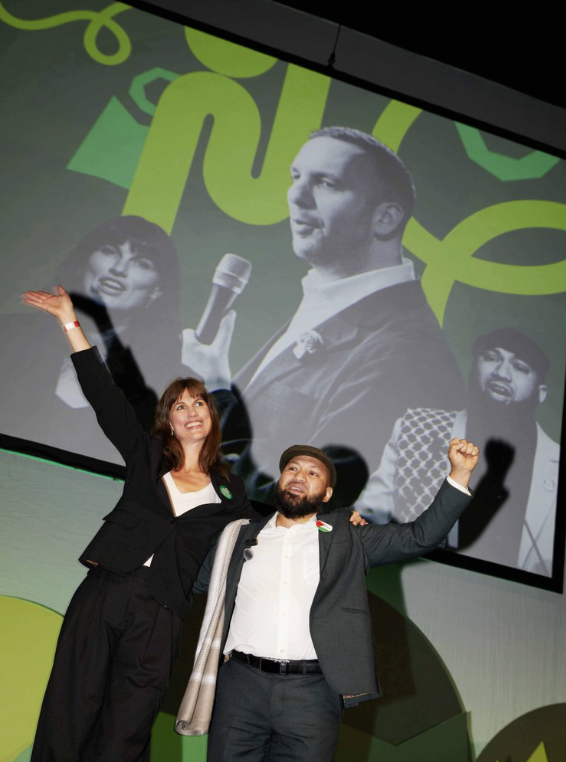
It was originally scheduled for debate at the party’s spring conference but was not put to a vote at the time. It subsequently returned to the agenda for the autumn conference in Brighton.
Jewish Greens conducted a survey ahead of conference and concluded that their members were divided over the motion, meaning the group decided not to take an official position. Their survey found that 81% of respondents did not identify as Zionist, while a significant minority did.
The issue has also exposed significant divisions within the party leadership, with conflicting comments from elected MPs and party leader Zack Polanski on their stance towards the motion.
Former Green co-leader Adrian Ramsay, MP Carla Denyer and other senior party figures reportedly opposed the motion, while critics argued that it could undermine the party’s relationship with parts of the Jewish community. It isn’t yet known how recently elected MP Hannah Spencer voted.
Crucially, it appears that Polanski did not vote. According to The Times, he had left conference to campaign in the Holborn & St Pancras by-election before the vote took place.
However, just days before the conference vote, Polanski was praised by pro-Palestine supporters after he told a pro-Israel Jewish hustings organised by the Board of Deputies of British Jews and the London Jewish Forum: “I am an anti-Zionist, which I know is difficult for people to hear in this room.”
He subsequently said that, in his view, Zionism could constitute a form of racism when defined in terms of displacement and genocide. Polanski’s position had previously been less definitive, making his declaration particularly significant in the run-up to the conference vote.
The Green leader is himself Jewish, a fact that has made his position particularly prominent in the debate over whether anti-Zionism and antisemitism should be treated as synonymous.
Impact on the by-election?
The vote means that the Green Party has firmly positioned itself on the anti-Zionist side of one of the most contentious political debates in British history. The move comes at a time when Gaza and Britain’s relationship with Israel remain major political issues and have had a massive impact on the results of key local and general elections.
The conference vote comes just days before a key by-election for London’s Holborn and St Pancras seat, which is currently considered a close-run battle between the Labour Party and the Greens.
Party leader Zack Polanski is running as the Green candidate, hoping to uproot Labour’s Sagal Abdi-Wali, a Muslim woman of Somali heritage, who is running to replace former PM Keir Starmer, who previously held the seat.
The topics of Gaza, Israel and Zionism have featured heavily during the race, despite Abdi-Wali’s efforts to avoid the subject.
A pro-Gaza election campaign has served the Greens well in the past, and they have repeated the tactic. Labour has been haemorrhaging left-wing and Muslim support over its complicity in the genocide. The Greens have benefitted hugely from the fallout.
The outcome of this vote is likely to, at worst, stave off complaints on the left that Polanski hasn’t been anti-Zionist enough or, at best, give his campaign a significant boost with just days remaining before polling day on October 8.
However, the Greens are certain to face relentless pressure and opposition from powerful pro-Israel groups, activists and media, which will work to halt the Greens’ political advance.