



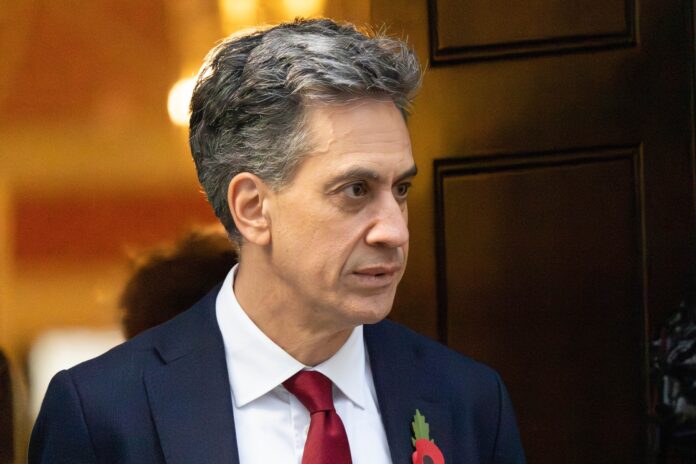
Britain has formally declared Israel’s occupation of Palestinian territory unlawful and announced sanctions targeting illegal settlements — but Foreign Secretary Ed Miliband has refused to recognise Israel’s actions in Gaza as genocide while declaring his “unwavering” support for the Israeli state.
In a major Commons statement today, Miliband announced a ban on imports from illegal Israeli settlements, sanctions against businesses and individuals facilitating settlement expansion, a ban on advertising settlement properties in Britain and further sanctions against extremist settlers.
He also announced new restrictions on arms exports connected to Israel’s occupation and accused Israeli settlers of carrying out “ethnic cleansing” against Palestinians in parts of the occupied West Bank.
However, Miliband repeatedly stressed that the measures would target Israel’s occupation and settlements — not Israel itself — and explicitly rejected the Boycott, Divestment and Sanctions (BDS) movement.
And despite acknowledging mounting evidence of Israeli war crimes in Gaza, he stopped short of accusing Israel of genocide.

No genocide recognition
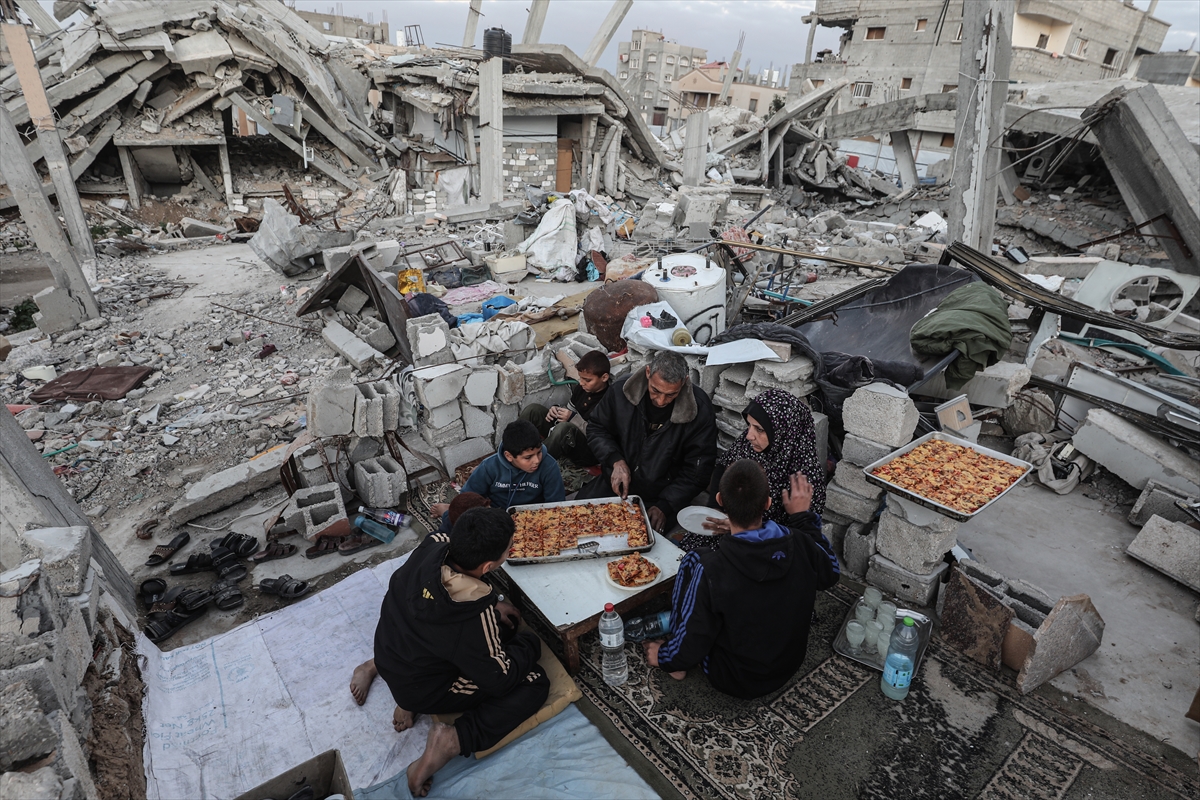
Addressing the devastation in Gaza, Miliband described the death, destruction and dehumanisation inflicted on Palestinians as “a stain on the conscience of the world and of this country too.”
Subscribe to our newsletter and stay updated on the latest news and updates from around the Muslim world!
He said Israel’s right to defend itself following the Hamas-led October 7 attacks could not justify what had subsequently happened in Gaza.
Miliband cited the enormous Palestinian death toll, including thousands of children, mass displacement, the destruction of hospitals, clinics and homes and restrictions on humanitarian aid.
He told MPs there was “increasing evidence that war crimes appear to have been committed” and said Britain supported legal processes to establish responsibility.
But on genocide, Miliband maintained the British Government’s position that it would not reach its own conclusion before an international court did so.
“On the question of genocide, the UK has always supported full, robust and fair judicial processes to consider allegations, with final determinations made by competent courts before the British government reaches a conclusion,” he said.
He pointed to previous genocide determinations involving Rwanda, Srebrenica, Cambodia and the Yazidis and said Britain would support the International Court of Justice as it considers the case concerning Gaza.

‘Unwavering’ support for Israel
Miliband also used a substantial part of his speech to make an impassioned defence of Israel.
The Foreign Secretary, who is Jewish, recalled how Israel provided sanctuary to his grandmother after her husband and 60 other members of her family were murdered by the Nazis.
He described childhood memories of visiting relatives in Israel and picking oranges on a kibbutz.
“I am proud of my Jewishness, and unwavering in my support for the State of Israel,” he told MPs.
Miliband said those questioning Israel’s right to exist as a homeland for Jewish people were “wrong,” adding that Britain would challenge attempts at what he called the “erasure of Israel.”
He also described the October 7 attacks as a “murderous act by a murderous terrorist organisation” and strongly defended Israel’s right to protect itself.
Miliband insisted there was no contradiction between supporting Israel and Palestinian statehood.
“Our argument is not with the people of Israel, with whom the UK has unshakable bonds,” he said. “Our argument is with the conduct of its government.”
‘Ethnic cleansing’ in West Bank
Nevertheless, Miliband used some of the strongest language yet employed by a British government to describe Israel’s occupation of the West Bank.
He said 65 Palestinian communities had been completely expelled since 2023 and more than 4,000 Palestinians evicted from their homes because of settler violence and Israeli state actions.
He highlighted Israel’s E1 settlement plans, warning they would cut through Palestinian territory and help make a viable Palestinian state impossible.
And he cited UN figures recording an average of six violent settler attacks against Palestinians every day this year.
“The British Government agrees that there is ethnic cleansing of Palestinians in areas of the West Bank, perpetrated by settler terrorists,” Miliband declared.
He accused the Israeli government of frequently turning a blind eye to settler violence and said members of the government had supported the forced displacement of Palestinians.

Occupation declared unlawful
In another significant policy shift, Miliband announced that Britain now formally regards Israel’s occupation itself — rather than merely its settlements — as unlawful.
“Today I announce that the official view of the British Government is that the occupation is unlawful,” he said.
The position follows the International Court of Justice’s 2024 advisory opinion that Israel’s continued presence in the occupied Palestinian territories is unlawful.
Britain had previously maintained that Israeli settlements were illegal under international law without formally adopting the wider conclusion on the occupation.
Miliband said Britain would now translate that position into economic action.
Settlement sanctions
The government will introduce an import ban on goods from illegal Israeli settlements and sanctions against companies and individuals providing construction, infrastructure, financing or real-estate services facilitating settlement expansion.
Britain will also ban advertisements for illegal settlement properties and impose further immediate sanctions on extremist settlers accused of supporting or inciting violence.
The legislation is expected within six to nine months.
Miliband also announced what he called a “double lock” on arms exports.
More than 30 licences for weapons used by Israeli forces in Gaza have already been suspended, while Britain will now refuse licences for weapons and other exports that materially contribute to the occupation.
France and Canada are joining Britain in banning settlement goods, while several European states have taken or pledged similar action.
No sanctions on Israel itself
Yet Miliband explicitly ruled out extending the settlement measures into a wider economic boycott of Israel.
“The sanctions regime will target illegal settlements and settlement expansion, not Israel,” he said.
Britain would continue what he called its “important and valued trade” with Israel inside the Green Line.
Miliband went further, declaring: “I wholeheartedly oppose the boycott, divestment, sanctions, or BDS campaign.”
Israeli ministers nevertheless reacted angrily to the measures. Finance Minister Bezalel Smotrich called for the British ambassador to be expelled, while other Israeli figures demanded retaliatory action against Britain.
Miliband said Britain could no longer simply issue statements while Palestinian territory continued to disappear.
“Today we refuse to be bystanders to further suffering and to the destruction of the two-state solution,” he said.