


Five men have been arrested as part of an investigation into the placing of a replica mosque on top of a bonfire in County Tyrone last month, amid growing concerns about anti-Muslim incitement and violence in Northern Ireland.
Police arrested three men aged 27, 38 and 51 on Tuesday morning, followed by two further men aged 58 and 74 later in the day.
All five were reportedly arrested on suspicion of offences under the Public Order Act and remained in custody as the investigation continued.
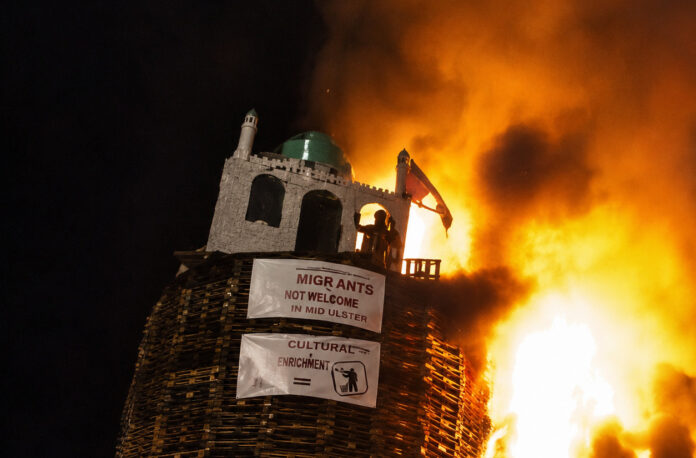
The arrests relate to a controversial bonfire in Moygashel, Co Tyrone, where a model of a mosque was placed at the top of a large pyre ahead of the annual Twelfth of July loyalist protestant celebrations.
The Police Service of Northern Ireland (PSNI) had described the display as a “hate display” and said it was being treated as a hate-motivated criminal offence.

Mid Ulster District Commander Superintendent Peter Stevenson said the arrests were made as part of a proactive policing operation.
“Additionally, two men aged 74 and 58 were also arrested this afternoon in connection with the same investigation,” the PSNI said. “All five men remain in custody at this time as the investigation into the placing of the offensive materials onto the bonfire continues.”
Subscribe to our newsletter and stay updated on the latest news and updates from around the Muslim world!
One man had previously been arrested in connection with the investigation and appeared in court in July.
The Twelfth of July, often simply called “the Twelfth” or Orangemen’s Day, is one of the most important annual celebrations in Northern Ireland’s Protestant, unionist and loyalist communities.
It commemorates the victory of King William III (William of Orange), a Protestant, over the Catholic King James II at the Battle of the Boyne in 1690. The victory helped secure a Protestant line of succession to the British Crown and became a defining symbol of Protestant and unionist identity in the north of Ireland.
The mosque model had been accompanied by signs carrying messages including “secure our borders” and “end the threat of radical Islam.”
The PSNI had launched what it described as a “significant and complex policing operation” to remove the replica from the bonfire after determining that criminal material had been placed on the pyre. However, before officers could complete the operation, the bonfire was set alight a day early.
Chief Superintendent Norman Haslett said at the time: “Before police arrival, the bonfire was set alight a day in advance to prevent removal of the criminal material.”
The display was condemned by political leaders, religious figures and human rights organisations. Amnesty International described it as a “vile display” and said it was a blatant attempt to stir up anti-Muslim hatred and intimidate local families.
Catholic Archbishop Eamon Martin and Church of Ireland Archbishop John McDowell also condemned the targeting of the Muslim community, warning that the denigration of religious symbols could ignite violence against innocent people.
Northern Ireland Secretary Hilary Benn described the incident as a “sickening and cowardly act of intimidation.”
Growing racist violence in N.Ireland
The incident also comes against the backdrop of serious anti-immigrant unrest which swept parts of Belfast and Northern Ireland in June.
The violence erupted following a knife attack in Belfast in which local Stephen Ogilvie suffered significant injuries, including the loss of an eye. A man, allegedly a refugee, was subsequently charged with attempted murder.

However, the incident was rapidly exploited to fuel anti-immigrant demonstrations and violence by far-right groups.
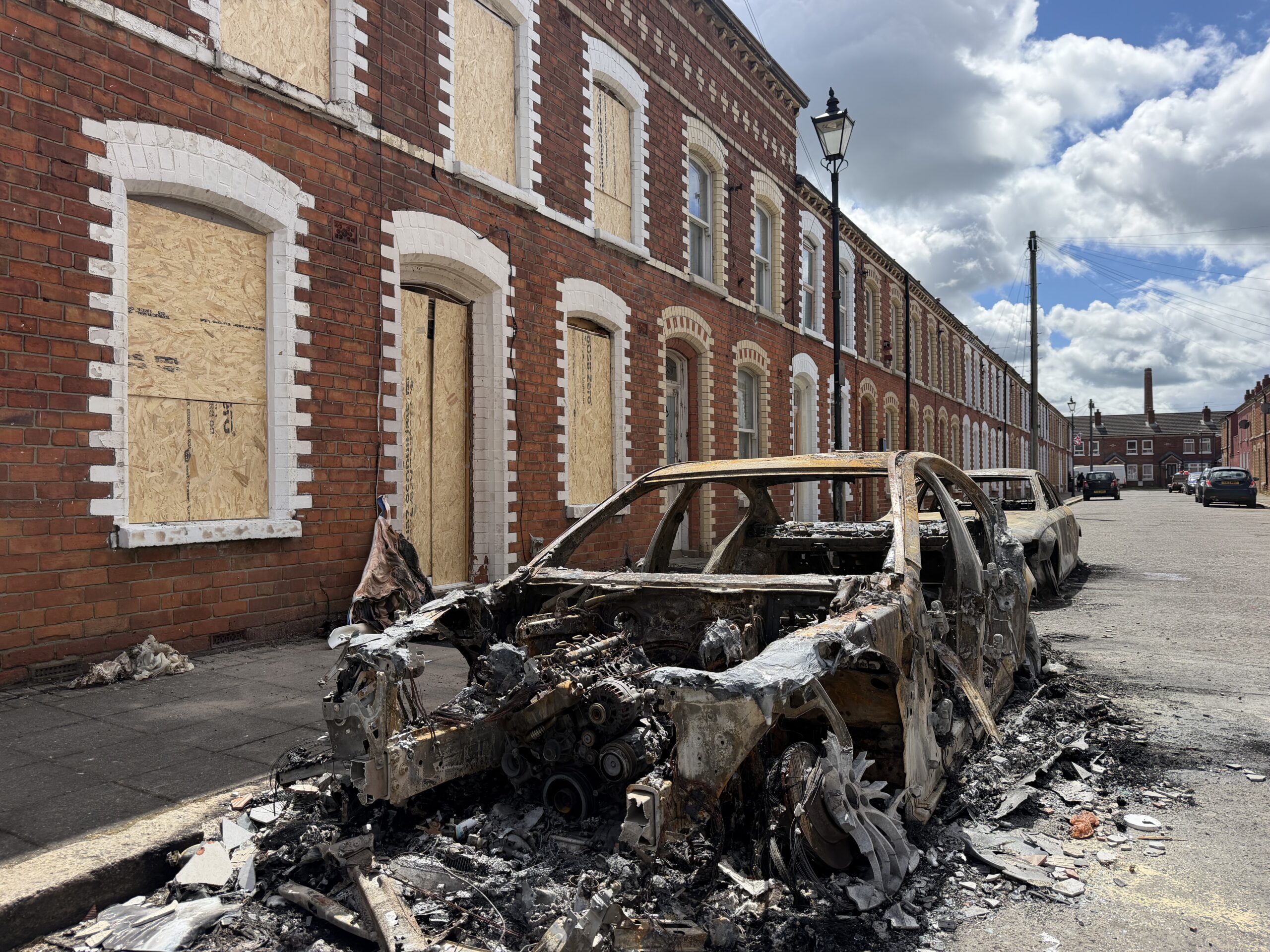
During the following riots, buses, cars and other vehicles were set alight, while homes and businesses believed to be associated with immigrants, Muslims and other ethnic minorities were attacked.
Masked groups of white men reportedly moved through areas of Belfast targeting properties housing immigrants, leaving members of minority communities fearful of leaving their homes.
The violence was condemned by the UK government as “racist thuggery” while activists and journalists described the unrest as anti-Muslim pogroms on British streets.
The attacks prompted widespread condemnation and an anti-racism demonstration in Belfast later that week, which drew around 5,000 people.
The June violence followed earlier racist and anti-immigrant attacks in Northern Ireland and revived fears among Muslim and other minority communities about the growing normalisation of openly hostile rhetoric and collective intimidation.
Against that background, the placing of a mosque replica on a bonfire – beneath slogans referring to “radical Islam” and immigration – was widely viewed not simply as political protest but as a direct act of anti-Muslim intimidation.
The PSNI investigation remains ongoing.