



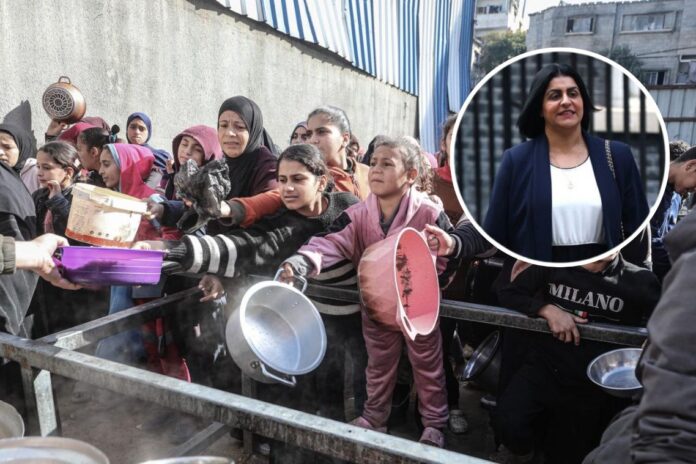
More than 85 MPs have urged Home Secretary Shabana Mahmood to stop blocking the evacuation of Palestinian women and children from Gaza, while a family of 18 has won a legal battle against her department to join relatives in Britain.
Britain’s Labour government is facing mounting criticism over its treatment of Palestinian families fleeing the devastation in Gaza, with more than 85 MPs urging Home Secretary Shabana Mahmood to stop obstructing the evacuation of women and children from the besieged territory.
The intervention comes as a separate legal battle has exposed the increasingly difficult position facing Palestinians attempting to reunite with family members in Britain.
According to Middle East Eye, more than 85 MPs have written to Mahmood expressing concern over reports that the Home Office is blocking the evacuation of dozens of Palestinian women and children from Gaza.
Labour MP Kim Johnson sent a letter to Mahmood on Thursday. Johnson’s letter has been signed by dozens of Labour MPs, including Richard Burgon, Diane Abbott, Clive Lewis, John McDonnell and Abtisam Mohamed.

It has also been signed by Green MPs Sian Berry, Carla Denyer and Hannah Spencer, members of the parliamentary Independent Alliance and some Liberal Democrat and Scottish National Party MPs.
The letter says: “Palestinians in the UK have been told by the Foreign Office that they have agreed to evacuate their families from Gaza.
Subscribe to our newsletter and stay updated on the latest news and updates from around the Muslim world!
“But their lawyers report that the Home Office appear to be refusing to provide the required onward travel assurance and sometimes to be using legal challenges to block these families coming to the UK, in a way that appears to be taking a harsher line with Palestinian families than with refugees from other countries who are applying for family reunification visas.”
The reports are particularly disturbing because the Foreign Office is understood to be prepared to facilitate the evacuation of people who have permission to leave Gaza.
Yet families seeking to join relatives in Britain have reportedly been caught between the Foreign Office, which can assist with departures, and the Home Office, which has been withholding the necessary onward travel assurances in a seemingly heartless stance.
The dispute stems from the government’s suspension of refugee family reunion applications in September 2025, with ministers promising a new and more restrictive system. However, applications made before the suspension continue to face obstacles, including cases involving Palestinians in Gaza.
The situation has prompted human rights lawyers and campaigners to accuse the government of abandoning vulnerable Palestinian families at precisely the moment they need protection most. In the past, Mahmood has been known to express sympathetic views with Palestinians and refugees when she was a Labour MP in opposition. However, since rising to become Home Secretary, Mahmood has adopted a harsh anti-immigration stance.
Family of 18 wins legal battle
The controversy surrounding Mahmood’s Home Office has been further highlighted by the case of a Palestinian family of 18 from Gaza.
The family has won the legal right to come to Britain after the Upper Tribunal rejected an appeal by Mahmood and upheld an earlier ruling allowing them to join a relative who had already been granted refugee status in the UK.
The case involved a Gaza-born woman who had been granted asylum in Britain and subsequently sought to bring members of her wider family to safety.
The Home Office rejected the application. But the family successfully challenged the decision, with the Upper Tribunal ultimately ruling in their favour.
The ruling means the woman can be reunited with her parents, brother, two sisters, their spouses and their children.
The tribunal found that refusing the family entry would have consequences of such gravity for the sponsor and her children that the public interest was outweighed.
It concluded that the Home Office’s decisions were disproportionate and unlawful under the Human Rights Act 1998. The case was decided under Article 8 of the European Convention on Human Rights, which protects the right to family life.
The court also heard that the woman and her three children had experienced mental health problems while separated from their relatives in Gaza.
For Palestinians, however, the significance of this case goes beyond an argument over immigration rules.
It demonstrates the extraordinary lengths that Palestinian families are being forced to go to simply to escape a catastrophe that has devastated their homeland. A genocide which the UK is complicit in.
Growing anger against Mahmood
The government’s position is particularly difficult to understand given the scale of the crisis in Gaza.
Britain has repeatedly spoken about the need to protect civilians and provide humanitarian assistance to Palestinians. Yet when Palestinian civilians actually seek a route to safety, the government’s immigration machinery can become another obstacle.
The controversy also comes at an awkward time for Mahmood politically.
The Home Secretary has developed a reputation for taking a particularly hard line on immigration and asylum, despite representing Birmingham Ladywood, an area with a large Muslim and migrant population.
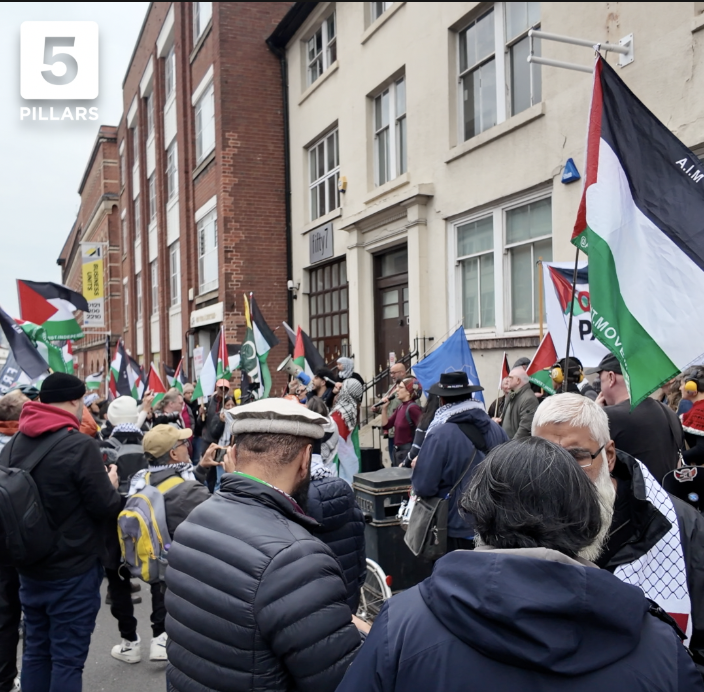
And there are signs that her political popularity is far from secure.
Survation polling conducted for LabourList in April found that Mahmood had become the least popular Cabinet minister among Labour Party members, with her favourability falling 15 points since February to a net rating of -12.
That does not, by itself, demonstrate that Mahmood will lose her parliamentary seat. But the warning signs around Birmingham Ladywood are becoming increasingly difficult to dismiss.
Current constituency projections have put Labour’s once-safe seat under serious threat. One July 2026 projection from Electoral Calculus/PLMR had the Greens on 37% and Labour on just 20% in Ladywood, while another projection from More in Common described the seat as a Labour toss-up.
The political landscape in Birmingham has already changed dramatically. Labour suffered major losses in the city’s 2026 council elections, while the Greens, Reform UK and independents made significant gains.
Mahmood therefore cannot necessarily assume that Birmingham Ladywood will remain a Labour stronghold forever.
For a politician who has spent much of her career relying on the support of an overwhelmingly urban and diverse electorate, the question is increasingly whether voters will continue to reward her party – and her own political choices – at the ballot box.