



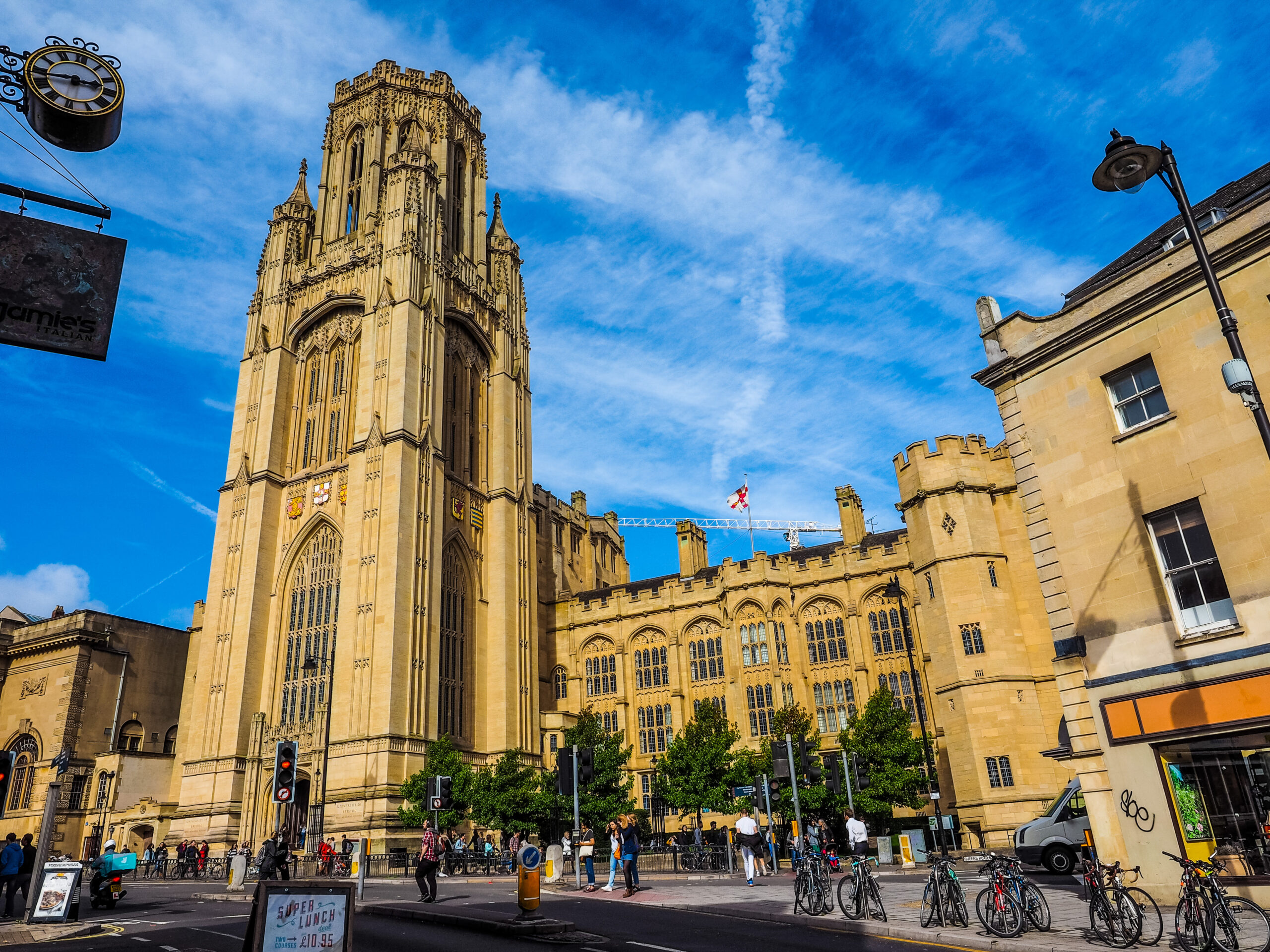
The Employment Appeal Tribunal (EAT) has ruled that anti-Zionist beliefs are protected under the Equality Act, overwhelmingly dismissing the University of Bristol’s appeal against a landmark judgment in favour of former professor Dr David Miller.
In a significant victory for campaigners defending free speech on Palestine, the EAT upheld the Employment Tribunal’s earlier decision that Miller was unlawfully discriminated against and unfairly dismissed because of his anti-Zionist philosophical beliefs.
The ruling means it is unlawful to discriminate against someone because they hold the belief that Zionism is inherently racist, imperialist and colonial, and ought to be opposed.
Miller, a professor of political sociology specialising in propaganda, lobbying and state power, was dismissed by the University of Bristol in October 2021 following a sustained campaign over his outspoken criticism of Zionism, Israel and pro-Israel lobbying organisations.
After a seven-day tribunal hearing in 2023, the Employment Tribunal concluded that Miller’s anti-Zionist beliefs were protected under the Equality Act 2010 and that his dismissal amounted to unlawful discrimination, unfair dismissal and wrongful dismissal. Bristol appealed that decision on nine separate grounds.

However, the EAT rejected almost all of the university’s arguments, leaving the central findings of discrimination and unfair dismissal intact.
The appeal judges found that the tribunal had been entitled to conclude that Miller’s expression of his anti-Zionist beliefs had a “material impact” on the university’s decision to dismiss him, meaning he had been dismissed because of the manifestation of those protected beliefs.
Subscribe to our newsletter and stay updated on the latest news and updates from around the Muslim world!
The EAT also reaffirmed an important principle on freedom of expression, stating that courts and tribunals must keep at the forefront of their minds that protection of free speech is particularly important in cases involving political speech.
The university had argued that Miller’s views on Zionism were merely political opinions rather than protected philosophical beliefs. The EAT firmly rejected that argument.
In one of the most striking passages of the judgment, the appeal tribunal said it was coherent to describe Zionism as “racist”, “colonial” and “imperialistic”, noting that an ideology promoting a state for one race in territory inhabited by another people could legitimately be characterised in those terms.
The court also dismissed Bristol’s attempts to challenge the tribunal’s factual findings, observing that the university had accepted during the original proceedings that it was not alleging anything Miller had said or done was antisemitic.
It further upheld the tribunal’s finding that Miller “did not oppose or hold antipathy towards Jews or Judaism” and was not supportive of violence as a means of opposing Zionism.
The only aspect of Bristol’s appeal that succeeded related to a technical issue concerning the calculation of Miller’s future financial losses. That question will now return to the Employment Tribunal during a remedies hearing.
A ‘victory for supporters of Palestine’
Responding to the judgment, Miller hailed it as a victory not only for himself but for supporters of Palestine across Britain.
“I am very pleased that the Employment Appeal Tribunal has dismissed the case put forward by the University of Bristol. It is a remarkable and extremely welcome vindication of my long fight to defend myself and all those who hold and express anti-Zionist beliefs. This judgment has now firmly established that anti-Zionist views are a protected belief under the terms of the Equality Act 2010.
“This is a victory for the entire anti-Zionist movement and will protect people across the UK from victimisation simply for standing up or speaking out for the Palestinians.
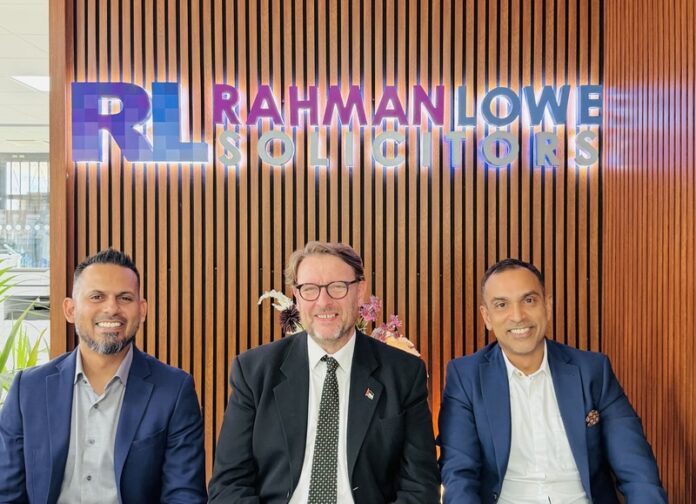
“I want to thank my legal team – Zillur Rahman, and also Jahad Rahman, from Rahman Lowe, Zac Sammour from 11KBW and Gianna Seglias from Brick Court Chambers. And I want to say a heartfelt thank you to all the thousands of people who supported me including all those that donated to my crowdfunding appeals. This victory could not have been accomplished without that essential help.
“I now look forward to returning to work as Professor of Political Sociology at the University of Bristol; to have my career reinstated and be free to work in higher education without fear of intimidation or reprisal.”
His solicitor, Zillur Rahman of Rahman Lowe Solicitors, described the outcome as “a comprehensive victory.”
“Dr Miller’s belief that Zionism is inherently racist, has now been recognised by a binding appellate authority as a protected philosophical belief. We are proud to have played a part in securing recognition of the legal right to hold that belief and hope this judgment will provide reassurance and guidance for others in the future.
“I am once again delighted for our client, David, who has now been vindicated for a second time. We look forward to assisting him in the next stage of the proceedings and in securing the maximum compensation to which he is entitled to, and which has been delayed because of the University’s appeal.”
The case is expected to have major implications for universities and employers across the UK.
According to Miller’s legal team, the judgment reinforces that equality laws protect controversial and unpopular beliefs just as much as popular ones, meaning employers cannot lawfully discriminate against workers because their protected beliefs provoke complaints or public controversy.
They also argue the ruling demonstrates that institutions should not bow to pressure from third-party lobbying groups seeking to suppress lawful academic debate or free speech on Palestine.
The EAT’s decision therefore leaves the landmark findings against the University of Bristol firmly in place, with only the amount of compensation still to be determined by the Employment Tribunal.









Professor David Miller’s victory did not happen in isolation.
It was made possible because thousands of ordinary people refused to look the other way. They signed petitions. They donated to legal funds. They shared articles. They defended a principle, even when it was unpopular and even when they knew they would be attacked for doing so.
That is worth remembering.
Too often I hear people dismiss petitions as pointless or complain that a £5 or £10 donation can’t possibly make a difference. Others shrug their shoulders and assume the Establishment always wins.
Not this time.
This judgment is proof that determined, organised people can take on powerful institutions and prevail. Justice is rarely handed to us. It has to be fought for, patiently, persistently and, yes, sometimes at considerable personal cost.
So to everyone in the Muslim community—and beyond—who stood with David Miller, who gave what they could, who refused to be intimidated, this victory belongs to you too.
Never underestimate the power of collective action.
All you need is belief, hope and faith. The rest is courage and perseverance.
Sr Yvonne Ridley
Scotland.