


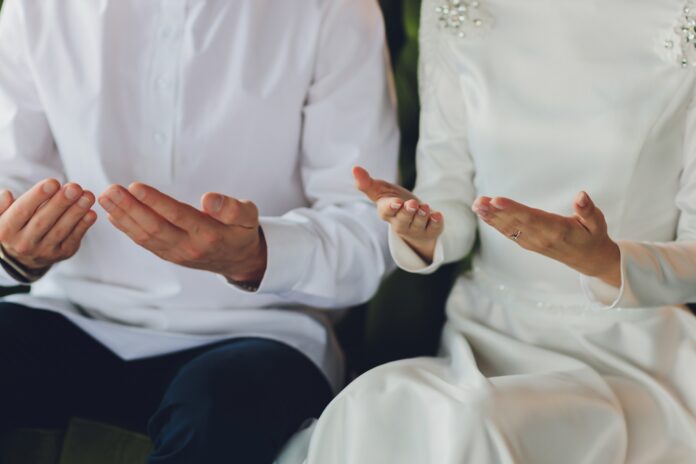
The government has unveiled plans that could fundamentally transform the legal status of Islamic marriages in England and Wales by allowing Nikah ceremonies to become legally recognised marriages for the first time.
The proposals, published this month in the Ministry of Justice’s consultation Tying the Knot: Reforming Weddings Law in England and Wales, would overhaul centuries-old marriage laws by shifting away from the current system based on registered buildings towards one centred on authorised officiants.
If implemented, the reforms would mean that, instead of requiring many Muslim couples to undergo both a Nikah and a separate civil ceremony, an authorised Islamic marriage officiant could conduct a Nikah that is itself legally recognised, provided all statutory requirements and safeguards are met.
However, the proposed new law would not automatically make every single Nikah legally binding, meaning that Muslim men would still be allowed to practise polygamy.
The consultation is open until September 24, after which ministers will decide whether to bring forward legislation.

A major change for Muslim marriages
At the moment Muslim couples can conduct a Nikah in a mosque or another setting which is not recognised under civil law because it does not comply with the requirements of the Marriage Act.
Subscribe to our newsletter and stay updated on the latest news and updates from around the Muslim world!
The government now proposes changing the legal framework so that the Islamic marriage ceremony itself could satisfy the legal requirements for marriage.
The consultation specifically acknowledges the central role of the Nikah, stating: “The Muslim ritual of the exchange of ijāb (offer) and qubūl (acceptance) are understood within these religions to be a central act by which the couple enter into marriage.”
It adds that under the current law: “These acts are not recognised as a lawful expression of consent to a legally valid marriage.”
Instead, ministers propose that: “In religious and non-religious belief ceremonies, consent should be capable of being expressed through actions as well as words.”
Taken together, those proposals would allow the exchange of ijāb and qubūl during a Nikah to constitute the legal act of marriage, provided the legal preliminaries have been completed and the ceremony is conducted by an authorised officiant.
Government says current law disadvantages Muslims
The consultation accepts that the existing legal framework does not treat all faith communities equally.
It states: “Jews and Quakers can legally marry anywhere with no requirements as to who attends or how the ceremony is conducted. Muslims, by contrast, must marry in a registered building and use prescribed words, despite the fact that traditional Muslim ceremonies do not take place in mosques or use words from a civil ceremony.”
The government argues that one of the principal problems is that the current law regulates weddings according to where they take place rather than who conducts them.
It says: “A key driver of these issues is that the current law regulates weddings primarily by the building in which they take place, rather than the person conducting the ceremony.”
The consultation also notes the limited availability of registered Muslim wedding venues in some areas, observing that: “In Wales, the only options for a legal Muslim wedding are in Bangor or Cardiff.”
Registered mosques would no longer be required
One of the most significant structural changes would be the abolition of the requirement for religious weddings to take place in registered buildings.
Instead, qualifying religious organisations would nominate authorised officiants responsible for ensuring the legal requirements have been met.
The consultation states: “Places of worship would no longer need to be registered for weddings under the Marriage Act 1949.”
It also proposes: “Religious and non-religious belief organisations should be able to nominate officiants where they meet a set of defined criteria.”
For Muslim communities, this could mean legally recognised Nikahs taking place in a much wider range of venues, rather than only in registered mosques or licensed premises.
The government says the reforms are intended not only to modernise marriage law but also to reduce the number of religious-only marriages that leave couples without legal protection.
It states: “Where individuals are unable to marry in accordance with their beliefs, there are practical consequences, as they may instead choose to have a religious or belief-based ceremony that is not legally recognised.”
The proposals would retain existing safeguards, including notice requirements, checks to prevent forced, predatory and sham marriages, and the formal registration of every marriage.