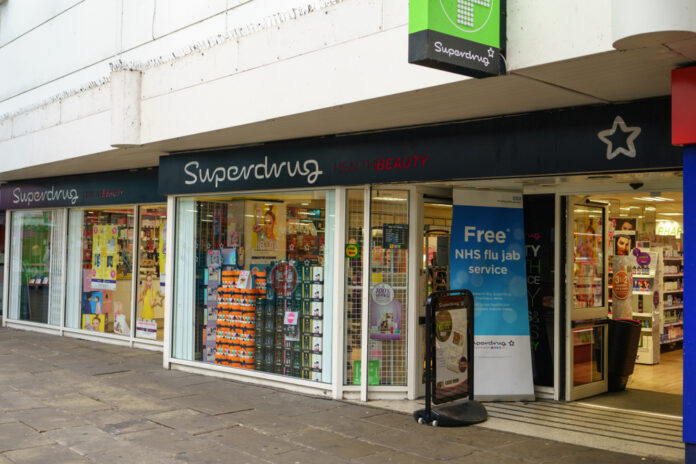
UK health and beauty retailer Superdrug has removed skincare brand Ahava from its online marketplace after concerns were raised over the company’s alleged links to Israel’s illegal settlements in the occupied West Bank.
The decision follows research by the American Friends Service Committee (AFSC), a Quaker organisation, which shared images it said showed activity at a site in the Israeli settlement of Mitzpe Shalem where cosmetic ingredients used in Ahava products may be processed.
Superdrug said the Ahava products had been sold through a third-party seller on its online marketplace rather than directly by the retailer itself.
“We have now removed the SKU (stock keeping unit) and implemented additional system actions that will block and prevent any future listings of this brand from all sellers,” a company spokesperson told Sky News.
Ahava rejected claims that it operates a production facility in Mitzpe Shalem, stating that all manufacturing activities had been relocated to internationally recognised Israeli territory.

“As previously communicated publicly, by 2022, all production activities were consolidated within internationally recognised Israeli territory,” Ahava Chief Executive Ron Michael said.
The company also stated that “all muds, salts and botanicals are and have always been collected from undisputed Israeli territory.”
Subscribe to our newsletter and stay updated on the latest news and updates from around the Muslim world!

However, images obtained by AFSC reportedly showed containers bearing production and receipt dates from 2025 and 2026, along with piles of earth that researchers believe may be Dead Sea mud used in Ahava cosmetics.
According to AFSC, a recording from Ahava’s visitor centre in Ein Gedi includes an employee stating that the Mitzpe Shalem site continues to process raw mud and salt materials before they are transferred elsewhere for production.
The UK government considers Israeli settlements in the occupied West Bank to be illegal under international law and has repeatedly stated that settlement expansion undermines the prospects for a two-state solution. Israel disputes that interpretation.
The development comes amid increasing scrutiny of commercial activity linked to Israeli settlements. The UK Parliament’s Foreign Affairs Committee has recommended a ban on imports originating from illegal settlements, while the Business and Trade Committee has questioned the government’s approach to settlement-related trade.
Ahava and its parent company, the Chinese conglomerate Fosun International, were added in 2025 to a United Nations database of companies involved in activities linked to Israeli settlements in occupied Palestinian territory.
The case is likely to add further pressure on retailers operating in the UK to review products connected to settlements that are widely regarded by the international community as illegal under international law.
BDS pressure
Due to activist pressure several major international retailers have previously dropped or restricted the brand. For instance, UK retailers like John Lewis have faced similar campaigns to remove Ahava from their shelves.
In 2011, the Boycott, Divestment and Sanctions (BDS) group celebrated their success in pressuring John Lewis and raising awareness of brands which profit from illegally stolen Palestinian land.
At the time, Sarah Colborne, the Palestine Solidarities Campaign’s Director of Campaigns and Operations, said in a statement: “The PSC welcomes John Lewis’ decision to stop stocking Ahava products. Israel’s continued attacks on the Palestinian population – whether living under a brutal blockade in Gaza, under illegal occupation in the West Bank and East Jerusalem, or under constant assault inside Israel, has led to a seismic shift in public opinion, with the movement for peace and justice for Palestinians gaining massive support internationally.

“Ahava Dead Sea Laboratories, an Israeli cosmetics company, has its manufacturing plant and visitors’ centre based in the illegal Israeli settlement of Mitzpe Shalem in the West Bank. The company is 44 per cent owned by Mitzpe Shalem and another settlement, Kalia, so Ahava’s profits subsidise these illegal colonies.
“Ahava’s beauty products can’t conceal the role Ahava plays in Israel’s dirty occupation. Ahava, and other companies profiting from Israel’s illegal occupation, are being sent a clear message by consumers who are refusing to buy their products. Although governments, including our own, are failing to end Israel’s violations of international law and human rights, we can all take action by refusing to buy Israeli goods and joining the movement for BDS. The PSC will continue to ensure that companies which profit from Israel’s occupation pay the price for their complicity in Israel’s crimes.”
The BDS website lists various companies and brands which are owned by or are supporting Israel’s illegal activities in Palestine. They have played a key role in applying economic pressure on the regime in Tel Aviv since the group was officially launched in 2005.