



The UK government has announced plans to open a national war memorial dedicated to remembering the contribution of Muslim soldiers in the two World Wars.
The monument will be based in England with a £1m fund made available to organisations who will help design and run it.
It is estimated that some 400,000 Muslim soldiers fought in the First World War, according to the government.
The UK government has decided to fund and build the memorial in an effort to highlight the diverse groups which have contributed to Britain over the last century, with the aim of bringing the forgotten stories of Muslim soldiers “out of the shadows.”
The announcement on the Gov.uk website is calling for different organisations to apply for a grant of up to £970,000 to design and build the national Muslim War Memorial, with successful applicants being tasked with running interfaith dialogue and education about the “remarkable” stories of Muslim soldiers during the World Wars.

Forgotten soldiers
The memorial aims to represent the often-forgotten Muslims who travelled across the Middle East, North Africa, and the Indian subcontinent, who served alongside Britain and their allies.
Subscribe to our newsletter and stay updated on the latest news and updates from around the Muslim world!
There are estimated to be over 70,000 war memorials across the UK, including several which commemorate the contributions of several different nationalities and faith groups from the 20th century.
However, no memorial currently exists which is dedicated exclusively to the contribution of the hundreds of thousands of Muslim soldiers “who selflessly fought and died for Britain.”
The Minister for Faith and Communities, Nesil Caliskan, said: “Our country is made up of a strong, diverse tapestry of different faith communities – and we owe that freedom to the bravery and sacrifice made by those who fought alongside us for a better future all those years ago.
“Muslim soldiers were a fundamental part of securing victory, but their story has been in the shadows for too long. This memorial will make sure their contribution stays in our memory now, and for generations to come.”
“The new memorial will also help to shine a light on the continued impact that Muslims make on British society – from politicians to athletes, and doctors to teachers, our Muslim communities continue to play a vital role in all aspects of our national life,” Caliskan concluded.
A controversial legacy
However, the World Wars themselves have not come without an enormous cost in Muslim lands, and on Muslim lives themselves.
The British, as a colonial power, were the main players in dividing and carving up the Middle East during WWI, as they worked against the Ottoman Empire to plot internal rebellions to collapse the final Islamic Caliphate.
The British had also simultaneously given Palestine, then under British mandate, to the Zionists to establish a “Jewish homeland” under the 1917 Balfour Declaration.
Many British Indian Muslim soldiers, whom this memorial will commemorate, were unknowingly fighting for a colonial power which was carving up their fellow Muslims’ homelands behind closed doors, including Palestine, home of the third-holiest site of Islam, the Al-Aqsa Mosque.
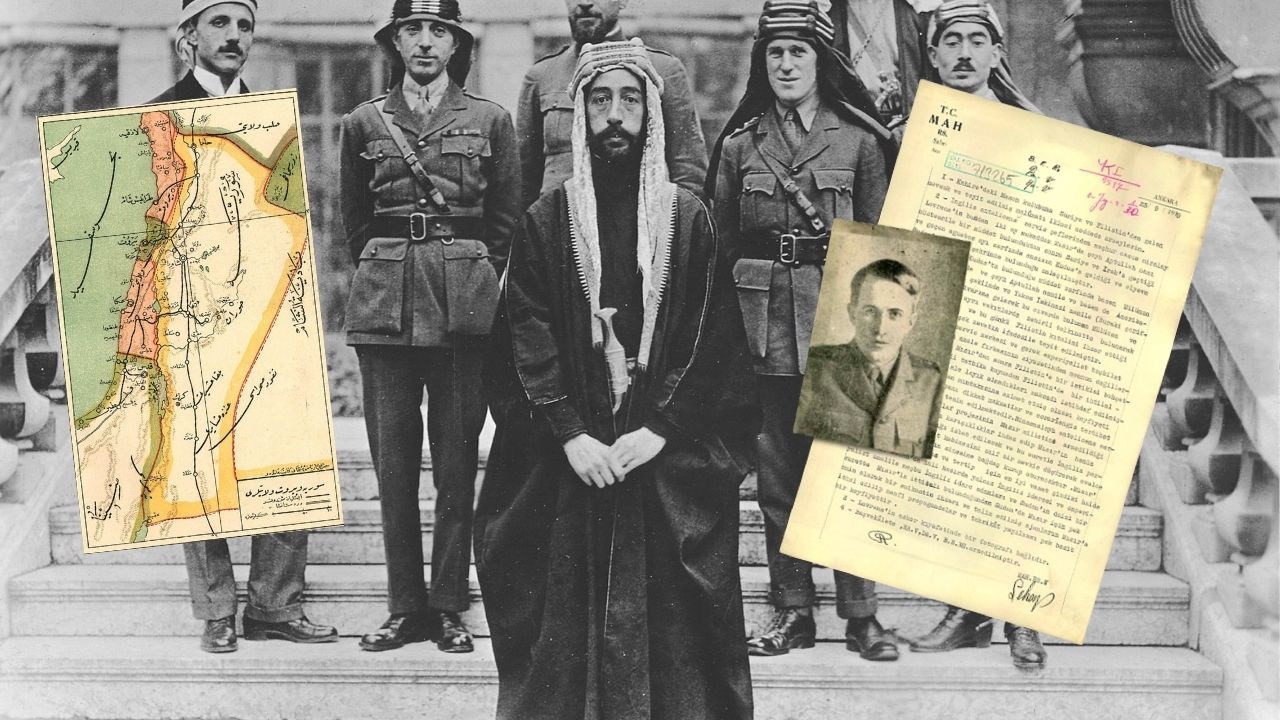
This plotting behind closed doors also included the 1916 Sykes-Picot agreement, which secretly divided the Muslim-majority Arab world between British and French spheres of influence, which imposed arbitrary divisive borders across communities which still remain enforced to this day.
Of the estimated 400,000 Muslim soldiers who fought for the British during the World Wars, the vast majority were colonial subjects who lacked a real choice in the matter.
Soldiers from British India in particular were fighting not as free citizens but as subjects of an empire that denied them basic rights, political representation and self-determination – the very freedoms the war was supposedly being fought to protect.
The highlighting of Muslim soldiers overshadows the devastating effects of British colonial rule over India, where hundreds of millions of Muslims were affected, through engineered famines and violently suppressed uprisings.
Stories from Muslim soldiers
Stories which are expected to be highlighted in the memorial include examples such as Khudadad Khan, the first Muslim to be awarded the Victoria Cross.

Khan fought at Hollebeke in Belgium in 1914, where he fired his machine gun at enemies all alone after all of his fellow soldiers had been killed, despite being severely wounded.
Khan was “left for dead on the battlefield”, but crawled back to his regiment under the cover of darkness and carried on fighting.
He was awarded the Victoria Cross by King George V at Buckingham Palace.
Another story includes that of Shahamad Khan, who also earned the Victoria Cross for his actions in Mesopotamia (a region spanning modern day Iraq, Syria, Turkey, and Iran), where he manned a machine gun alone within enemy trenches, beating back three counterattacks after all but two of his men had died.

In the Second World War, Mohammed Hussain ran away from his home in Rawalpindi to volunteer for the British Indian Army at just 16, going on to serve as a machine gunner at Monte Cassino, one of the fiercest battlegrounds of WWII.
He moved to the UK in 1960, where he lived and dedicated himself to community service until his death in 2025 at 102.
The Muslim War Memorial will be used as a resource for education in order to increase public awareness of this chapter of British history, which comes at a time when Muslims are being increasingly alienated and attacked in the media and on the streets of Britain by growing far-right sentiments.
The competition to design the memorial will open on June 10, and applicants will be able to submit their proposals until July 21.