


A new report on the 2022 Leicester riots has found that significant failures in policing and responses to Hindutva misinformation contributed to the serious disorder between Hindu and Muslim communities.
The study led by researchers from the School of Oriental and African Studies (SOAS) and the London School of Economics (LSE), found that rapidly spreading online disinformation, including from Hindutva sources and Indian media, along with external political influences linked to India and Pakistan, led to the escalation of days of violence across the city.
The report, titled Better Together: Understanding the 2022 Violence in Leicester, concluded that social media played a central role in escalating tensions between the communities.
Researchers found that unverified claims and “fear messaging” circulated widely online, deepening mistrust and encouraging mobilisation on the streets.
Based on interviews and surveys with more than 300 local residents, the report states that misinformation “acted as an accelerant throughout the unrest, spreading inaccurate information, deepening communal divides, and undermining trust”.

Some viral posts alleged attacks on religious groups or places of worship which were later found to be misleading or taken out of context.
The report also highlighted the role of external ideological influences, including Hindutva nationalist narratives circulating from India, which researchers said distorted local perceptions of events.
Subscribe to our newsletter and stay updated on the latest news and updates from around the Muslim world!
The unrest followed a period of rising tension earlier in 2022, including incidents linked to celebrations after a cricket match between India and Pakistan.
Researchers also pointed to demographic shifts in Leicester over the past two decades, including migration from India’s Daman and Diu region, where many Hindu families settled in neighbourhoods historically populated by Gujarati Muslim communities.
New religious processions and public displays — including vehicle convoys and flag-waving — were sometimes interpreted by other groups as politically-motivated or provocative, contributing to mistrust on both sides.
“Intelligence gaps” and inconsistent policing
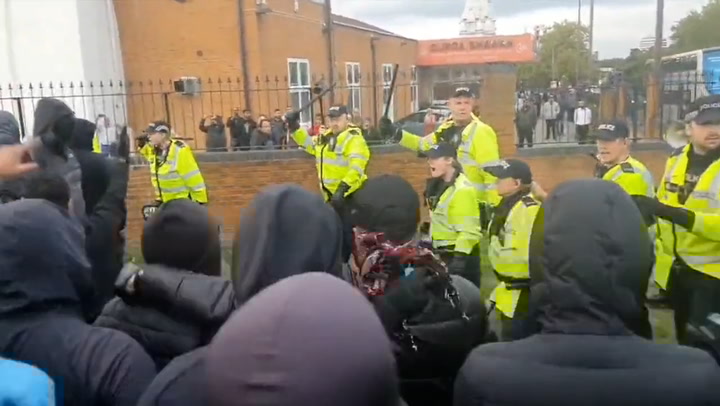
The report criticised the response from Leicestershire Police, stating that authorities failed to act early enough on warning signs emerging from May 2022.
It found police responses were “delayed, inconsistent, and at times disproportionate.” The report stated: “During the Leicester unrest, the police suffered from intelligence gaps, poor communication, inconsistent operational decisions, and a lack of understanding of South Asian communal dynamics.”
Researchers said both Hindu and Muslim residents expressed distrust in police actions during the unrest.
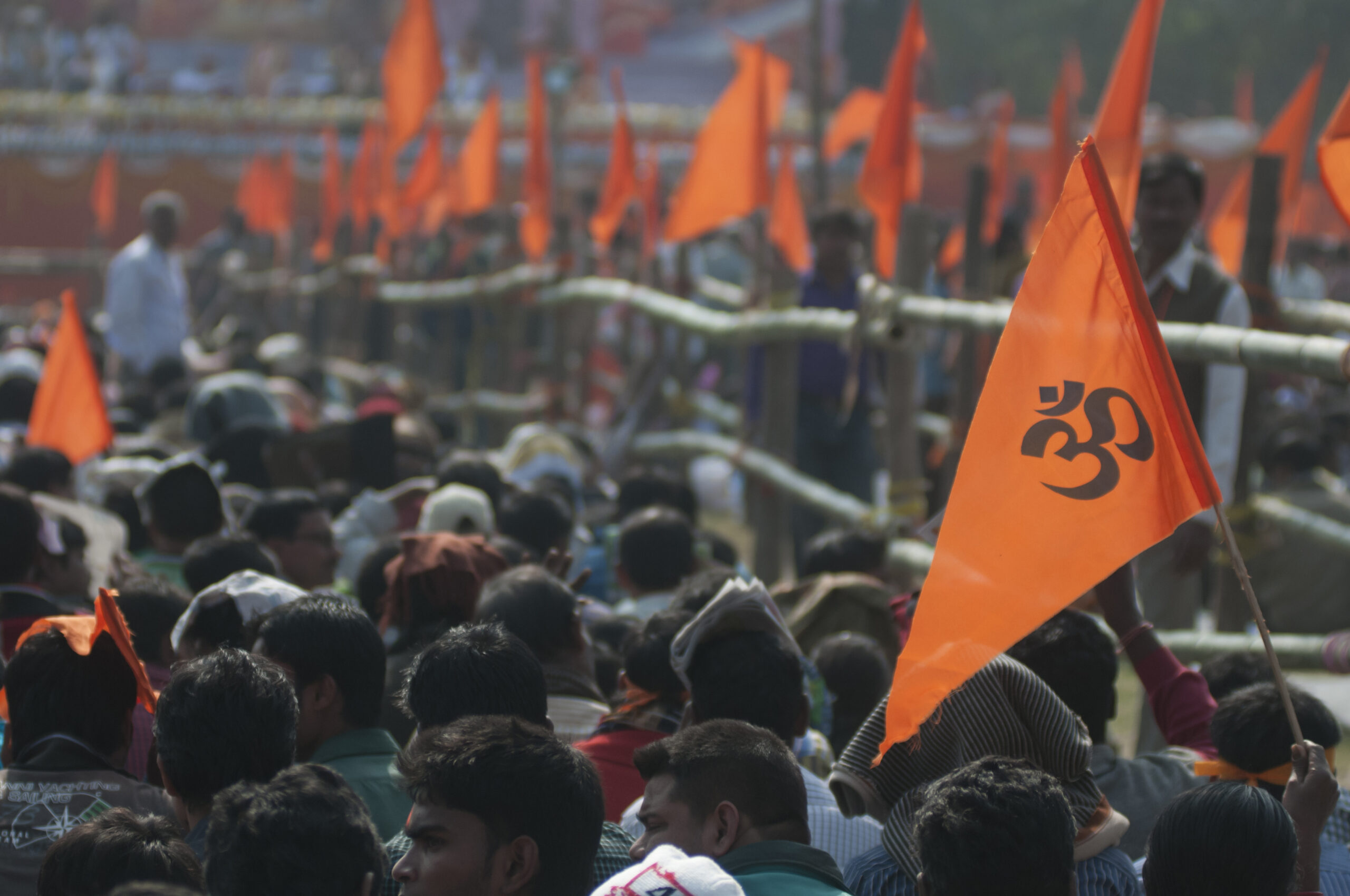
Editorial credit: arindambanerjee / Shutterstock.com
Leicestershire Police said it would review the findings as part of its ongoing commitment to improvement, adding that they would “seek to improve” their approach in such a diverse community.
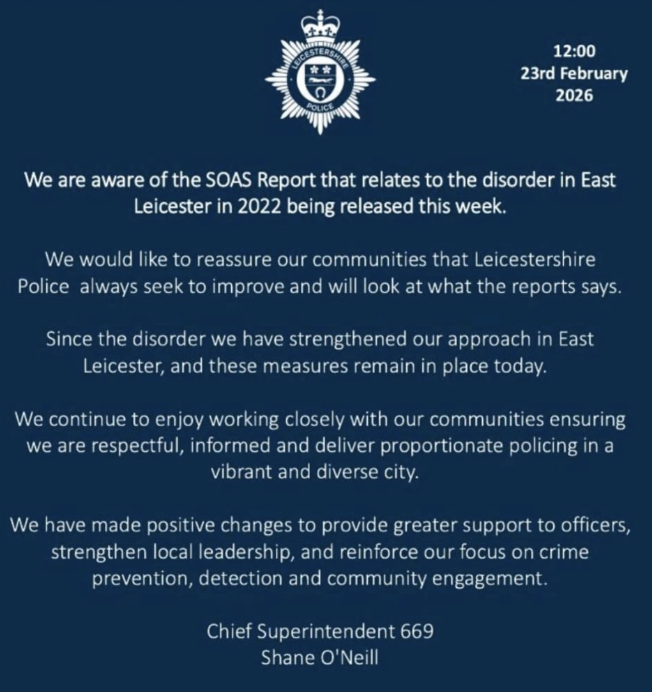
Leicestershire Police added that it had since strengthened neighbourhood teams and increased cultural awareness training.
External ideological influences
One of the report’s findings relates to the role of overseas political narratives, most notably Hindutva ideology.
A previous report from the UK Indian Muslim Council, titled Community Tensions, Hindutva, & Islamophobia, also pointed towards a similar conclusion that the sectarian Hindutva ideology was the key instigator.
Researchers said disinformation linked to Hindu nationalist networks in India amplified tensions and contributed to polarisation on the streets of the UK.
The report concluded that Leicester’s unrest demonstrated how international political narratives — particularly those tied to India-Pakistan relations and Hindu-Muslim identity politics — can influence community relations in the UK.
It states that these influences “intensified local tensions and distorted public understanding of the unfolding events”.
Recommendations to prevent future unrest
The study warns that trust between communities remains “profoundly fractured” and that further violence remains possible without long-term action.
Recommendations include increased investment in youth services, improved community-led policing, and stronger strategies to counter misinformation online.
The report also calls for clearer political leadership that rejects sectarian campaigning and promotes shared civic identity across religious lines.
Juan Méndez, the human rights lawyer who chaired the research panel, said the aim was not to assign blame but to understand how tensions escalated.
“The events of 2022 were deeply traumatic for many residents,” he said. “Much depends on how young people work better together.”
While Leicester has largely returned to calm, the report concludes that the unrest exposed vulnerabilities within one of Britain’s most diverse cities — showing how quickly local tensions between Hindu and Muslim communities can escalate when misinformation, political narratives and institutional failures come together.