




Rescue workers in Indonesia struggled to reach victims in several devastated areas that were hit by an earthquake and floods, as authorities confirmed a death toll of 248, which is expected to rise.
Indonesia, Malaysia and Thailand have been devastated by cyclone-driven rain for a week, killing about 400 people in total across the three countries. In Indonesia alone, authorities have confirmed the death of 248 individuals, a death toll expected to rise in the coming days.
The affected areas on Sumatra Island, Indonesia, were cut off by damaged roads and collapsed communications lines. Relief and rescue efforts led by aircraft were seen delivering aid and supplies to the hard-hit district of Central Tapanuli in North Sumatra province and elsewhere in the region.
However, rescue efforts were severely hampered by damaged bridges, roads and a lack of heavy lifting equipment to clear the damage.
The National Disaster Management Agency, or BNPB, said rescuers in West Sumatra’s Agam district recovered more bodies, increasing the death toll to 248, with more than 500 people injured.

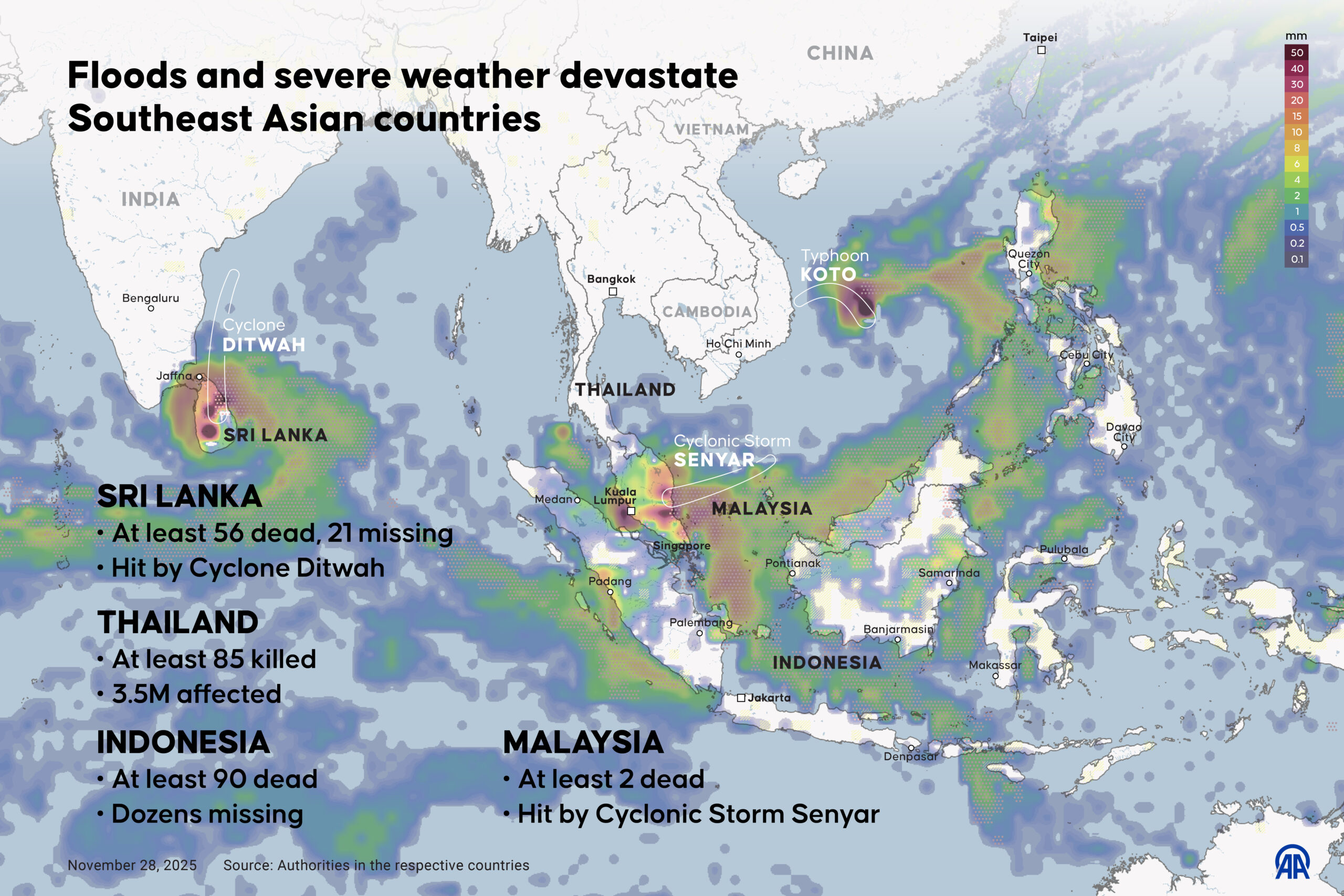
Monsoon rains over the past week caused rivers to burst their banks in North Sumatra province. The floods tore through mountainside villages, swept away hundreds of people and submerged thousands of houses and buildings, the BNPB said.
Nearly 3,000 displaced families have since fled to government shelters.
Subscribe to our newsletter and stay updated on the latest news and updates from around the Muslim world!
Rescue missions hampered
Rescue teams have voiced their desperate need for heavy equipment to reach potential survivors buried under tonnes of mud and rocks in Agam district, where rescuers had already retrieved bodies of those killed by the floods, bringing the death toll to 74 in West Sumatra alone by Saturday, 29 November, said Rahmat Lesmono from the local disaster office.
Some 78 others were still missing in three villages in Agam. Tragic scenes were reported from the sites of the disaster, as families wailed as they watched rescuers pull mud-caked bodies from a buried house in Agam’s Salareh Aia village.
Authorities struggled to get tractors and other heavy equipment over washed-out roads after torrential rains sent mud and rocks crashing onto the hilly hamlets in Aceh province. Hundreds of police, soldiers and residents dug through the debris with their bare hands, shovels and hoes as heavy rain continued to hinder their efforts.
“The death toll is believed to be increasing, since many bodies are still missing, while many have not been reached,” said Suharyanto, the BNPB chief.

Television reports showed two rescuers battling strong currents in a small rubber boat moving toward a man clinging to a coconut tree.
Authorities in Aceh province said rescuers were having difficulty reaching victims. The stricken areas also needed relief supplies, fuel, fresh water and generators.
“There are many challenges,” Aceh Governor Muzakir Manaf said after declaring a state of emergency until 11 December to address the disaster. “We have to do many things soon, but conditions do not allow us to do so,” he continued.
Local media said that flash floods in the Bireuen district in Aceh caused nine bridges to collapse, paralysing two-way transportation from North Sumatra’s Medan city to Banda Aceh and forcing residents to cross the river from village to village by boat.
It was the latest natural disaster to hit Indonesia, which is frequently struck by earthquakes, volcanic eruptions and tsunamis due to its location on the “Ring of Fire,” an arc of volcanoes and fault lines in the Pacific Basin.
Seasonal rains frequently cause flooding and landslides in Indonesia, an archipelago of 17,000 islands where millions of people live in mountainous areas or near fertile flood plains.