



Concerns have been raised after the judge expected to hear a legal case challenging the ban on the direct action group Palestine Action was removed from the case with no explanation.
Mr Justice Chamberlain was replaced by a last-minute change to a panel of three different judges in the legal case challenging the ban on Palestine Action.
Chamberlain had granted permission for the judicial review and said that he would preside over the trial, but it has now emerged that the new panel will hear the case, which is due to start on Wednesday 26 November.

Palestine Action co-founder Huda Ammori was granted a full judicial review of the Home Secretary’s decision to proscribe the direct action group. Palestine Action was banned under anti-terrorism laws on 5 July, sparking nationwide debate on the UK’s stance with Israel amid the Gaza genocide.
The replacing of a judge on such a public case is unusual, and not a common occurrence this close to the hearing date.

When asked why he had been removed from the case, the Ministry of Justice redirected enquiries to the judiciary press office, which refused to comment.
Despite the change of trial judges, Chamberlain has been presiding over application hearings this week in relation to the judicial review.
Subscribe to our newsletter and stay updated on the latest news and updates from around the Muslim world!
The three judges who will now hear the case are the president of the High Court’s King’s Bench Division, Dame Victoria Sharp, Mrs Justice Steyn and Mr Justice Swift.
A spokesperson for Defend Our Juries, which has organised demonstrations against the proscription of Palestine Action in recent months, said Chamberlain was widely respected for his fairness and independence, and had been consistently confirmed as the judge presiding over this judicial review in court documents, correspondence and related criminal hearings involving peaceful protesters arrested for holding signs.
The spokesperson said that in a case of such national significance, determining whether more than 2,350 peaceful protesters will continue to be criminalised as terrorists for holding cardboard signs saying “I oppose genocide, I support Palestine Action”, the public deserves transparency, not backroom manoeuvres to cherry-pick judges and undermine judicial independence.
Lawyers representing Ammori argued at the time of the ban that the proscription of Palestine Action put it on par with groups such as ISIS, Boko Haram and Al-Qaeda. They said the move by the Home Office was repugnant, authoritarian, and a blatant abuse of power.
Palestine Action protests
The Home Office officially banned Palestine Action in July under the Terrorism Act 2000, which means that membership of, or expressions of support for, the group are now criminal offences.

The decision followed an incident in June when activists broke into RAF base Brize Norton in Oxfordshire, sprayed red paint over two Voyager aircraft, and caused an estimated £7 million worth of damage.
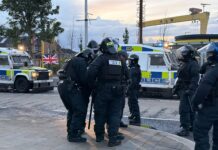
Protesters supporting Palestine Action across the UK have been mobilising for months in London and other major cities, leading to mass arrests each time. More than 2,350 people have been arrested for holding signs in support of the group, with more than 200 charged for expressing support for a proscribed organisation simply for holding placards that read “I oppose genocide, I support Palestine Action.”
Activists include pensioners, Christian priests, former military servicemen, Jewish activists, wheelchair-bound civilians and university students.
Hunger strikes have also been carried out by activists imprisoned for their activism, adding further pressure on the government.