



Dick Cheney, the architect of America’s warmongering post-9/11 foreign policy, has died aged 84.
His passing, announced by his family in a somber statement, closes a chapter on one of the most polarising figures in modern U.S. history — a man whose unyielding advocacy for military intervention reshaped global conflicts, domestic surveillance, and the very fabric of American power projection.
While tributes pour in from allies hailing his “courage and honour,” Cheney’s legacy is indelibly stained by his role as the chief proponent of what critics deride as endless warmongering: a doctrine that prioritised preemptive strikes, regime change, and the erosion of civil liberties under the banner of national security.
It was in the 1980s, as a Wyoming congressman and later as Secretary of Defense under George H.W. Bush, that Cheney’s worldview crystallized: a conviction that American might must be wielded decisively, without apology, to deter adversaries and secure dominance.
Cheney’s warmongering ethos reached its zenith during his tenure as Vice President to George W. Bush from 2001 to 2009. Thrust into the spotlight after the September 11 attacks, he didn’t merely advise; he orchestrated.

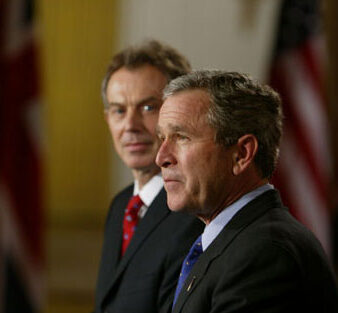
From the Situation Room, Cheney championed the invasion of Afghanistan in 2001 which ballooned into a 20-year quagmire under his expansive vision of the “Global War on Terror.”
But it was Iraq that defined his belligerence. Cheney was the relentless drumbeater for war, peddling the false claim that Saddam Hussein possessed weapons of mass destruction (WMDs) and harboured ties to Osama bin Laden.
Subscribe to our newsletter and stay updated on the latest news and updates from around the Muslim world!
In a now-infamous January 2003 speech, he asserted with chilling certainty: “There is no doubt that Saddam Hussein now has weapons of mass destruction. There is no doubt he has links to Osama bin Laden.”
These assertions, later exposed as fabrications built on cherry-picked intelligence, propelled the U.S. into a catastrophic 2003 invasion that claimed hundreds of thousands of Iraqi civilian lives.
Critics argue Cheney’s Iraq fixation wasn’t mere error but a deliberate fusion of ideology and self-interest. As CEO of Halliburton from 1995 to 2000, he had steered the oil services giant toward lucrative defense contracts. Post-vice presidency, Halliburton raked in billions from Iraq reconstruction, fueling accusations of war profiteering.
“Cheney saw war not as a last resort but as a profit center and a tool for imperial expansion,” wrote journalist Seymour Hersh in a 2007 exposé.
His influence extended to the war’s darker underbelly: the authorisation of “enhanced interrogation techniques” — waterboarding, stress positions, and worse — at CIA black sites, which Cheney defended unrepentantly in his 2011 memoir In My Time. “I’d do it again in a minute,” he said of torture in a 2014 interview, embodying a philosophy that equated moral compromise with strategic necessity.
Cheney’s warmongering wasn’t confined to battlefields abroad; it infiltrated the home front, eroding the guardrails of democracy in the name of vigilance.
He was the intellectual force behind the Patriot Act, which expanded domestic surveillance powers, and the National Security Agency’s warrantless wiretapping program.
Cheney’s “unitary executive theory” posited near-unchecked presidential authority during wartime — a doctrine that justified indefinite detentions at Guantanamo Bay and the extrajudicial killings via drone strikes that would proliferate under subsequent administrations.
Even in retirement, Cheney’s saber-rattling persisted. He lambasted President Barack Obama’s troop drawdown in Iraq as “retarded,” advocated bombing Iran preemptively, and in 2015 urged escalated action against ISIS, echoing the very overreach that birthed the group from Iraq’s ashes.