



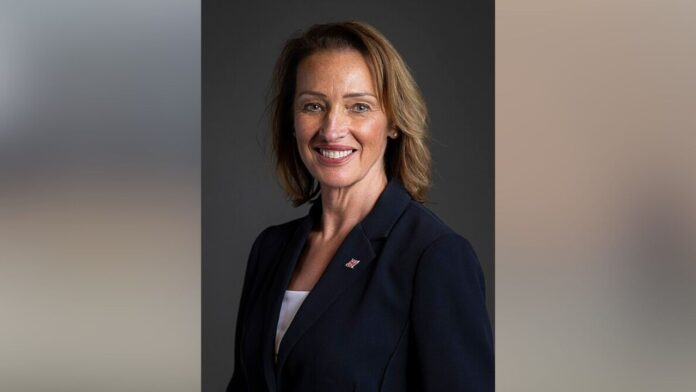
Reform UK MP Sarah Pochin, who has lobbied for a burqa ban in Britain, has been accused of “racism” after claiming in a recent interview that it “drives me mad seeing adverts full of black and Asian people.”
The offensive comments were made as the right-wing Runcorn and Helsby MP appeared on TalkTV on 25 October.
Responding to a question from a caller named Stuart, who asked Pochin if her party will do anything about the “representation of demographics in TV adverts.”
Responding to Stuart, she said: “It is something that has happened because, I believe, of the woke Liberal that goes on inside.”
The MP has since apologised for any offence caused, saying her comments were “phrased poorly.”

However, speaking on the BBC, Health Secretary Wes Streeting criticised the Reform MP for what he called “racist” language.
Justice Secretary David Lammy called on the Reform UK leader Nigel Farage to “sack” Pochin from the party for her “mean, nasty and racist” remarks.
Subscribe to our newsletter and stay updated on the latest news and updates from around the Muslim world!
Lammy said he was “disgusted” by what she said, adding “our country is so much better than this.”
The Liberal Democrats have also called on Farage to suspend Pochin from the party.
In response to the backlash, Zia Yusuf, Reform UK’s head of policy, defend Pochin calling her a “close friend” and “great MP”, however, he too acknowledged she had made a “poorly phrased” comment.
Banning the burqa obsession
Pochin has sparked other controversies since being elected as Reform UK’s first female MP.
Pochin has relentlessly targeted the full Islamic face veil branding it “oppressive”, a threat to public safety and “hugely misogynistic.”
Her anti-burqa obsession first came to light in early June 2025, when she randomly called for a burqa ban “in the interests of public safety” during Prime Ministers Questions in Parliament.
Her call was dismissed by the Prime Minister, however, she later defended the call arguing it was a barrier which prevented integration and hindered the police from doing their job in tackling terrorism.
At the time, her Reform colleague Zia Yusuf suggested she should have chosen a different topic for her first PMQs question, writing on social media: “I do think it’s dumb for a party to ask the PM if they would do something the party itself wouldn’t do.”
Since then she has continued to lobby for a burqa ban in Britain, repeating the demand in numerous interviews and claiming that the burqa ban policy should be officially adopted into the Reform Party manifesto in September.

In a more recent Talk TV appearance, Pochin called the Islamic face veil a “misogynistic garment”, demanding that those who want to wear a niqab or burqa “go back to your countries.”
“This is a mysoginitic garment. If they want to wear it, if men want their women to wear it, if women who want to wear it, fine. Go back to your countries where it is acceptable because it is not acceptable in this country.
“We are a Christian country. We are fundamentally living by Christian values. We respect other religious but this is an oppression on British streets.”
Speaking to 5Pillars, Muslim political commentator Fahima Mahomed questioned her credientials when it comes to defending women against “oppressive garb.”
“As the first female Reform UK MP addressing the chamber back in June, I expected her to perhaps champion women’s issues in a way that unites, not divides. Instead, she chose to focus on banning the burka, a move that targets a minority group already facing discrimination while ignoring the pressing issues affecting women across the country, from the persistent gender pay gap to the unacceptably high levels of violence against women.
“If her concern was truly about security, why single out Muslim women? Why not call out the face masks and balaclavas worn by men committing street crimes, mobile phone snatches, or participating in anti-social behaviour? It feels less about security and more about targeting a visible minority.
“What’s particularly alarming is that, as a former magistrate, she should understand the law and the principle of impartiality. To say she wouldn’t allow a woman to, for example, appear in court wearing a burka is not only discriminatory but also legally questionable.
“This kind of rhetoric isn’t leadership, it’s divisive. British women need MPs who are advocating for equality, safety, and opportunity for all women, not singling out minority groups for political point-scoring. Reform UK should be using its platform to address real issues facing women today, rather than pushing policies that only serve to stoke fear and prejudice.”