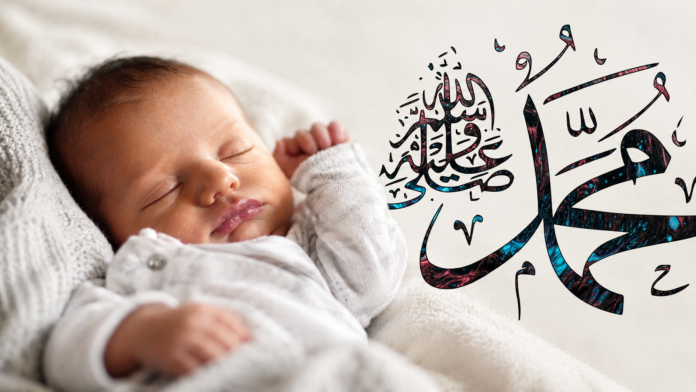
“Muhammad” remains the undisputed most popular boys’ name in England and Wales, with several other Islamic names also appearing in the top 100 for both boys and girls.
There were 5,957 baby boys named Muhammad in 2025, up from 5,721 in 2024, when it also topped the rankings, according to figures released by the Office for National Statistics (ONS).
However, because there are several variant English spellings of the Islamic name, the data is split across different entries. The name “Mohammed” was given to 1,712 boys, while “Mohammad” was chosen for a further 895.
Combined, 8,564 boys were given one of the three spellings of Muhammad – more than double the number named Noah.
Other Islamic names also featured in the top 100: Ibrahim, Yusuf and Musa (the Arabic names for Abraham, Joseph and Moses) ranked 48th, 58th and 63rd respectively.

Adam and Isaac also appeared in the top 100. However, these are shared Abrahamic names that are common among Muslims, Christians and Jews alike, so whether they are counted as “Muslim names” depends on how narrowly the term is defined.
The 2025 baby names data for England and Wales also shows a noticeable presence of names with Arabic or Islamic origins among girls. Five such names appear in the top 100: Layla (50th), Maryam (53rd), Zara (73rd), Fatima (79th) and Anaya (86th). While some of these names have become increasingly popular across the wider population, others remain particularly associated with Muslim families.
Subscribe to our newsletter and stay updated on the latest news and updates from around the Muslim world!
Unlike the boys’ rankings, where the different spellings of Muhammad occupy multiple places in the top 100, the girls’ list is more diverse, with no single Muslim-associated name appearing near the very top of the rankings. Nevertheless, the presence of five Arabic or Islamic-origin names in the top 100 reflects the growing cultural diversity of England and Wales and the continuing influence of Muslim communities on national naming trends.
The growth of the Muslim community in Britain is the main reason for the rise in popularity of the name Muhammad.
Both via immigration from Muslim countries but also Muslim families typically maintain a socially conservative or “nuclear family” model of living which typically see more children born in Muslim households.
Islam places marriage, family and childbearing as highly important duties and the rewards for marriage and raising successful and religious children are plentiful in Islam.
In Islam, naming a child after a prophet or a senior historic personality is seen as a way of honouring people regarded as exemplars of faith, good character and devotion to Allah SWT.
The practice is rooted in religious tradition rather than a requirement: parents hope that by giving a child the name of a revered prophet, the child will be inspired by that prophet’s virtues.
The Prophet Muhammad PBUH is especially significant because Muslims regard him as the final prophet and the ideal model for human conduct. Numerous sayings attributed to him encourage giving children good names, and the name Muhammad has therefore become one of the most popular names in the Muslim world. Other prophetic names such as Ibrahim (Abraham), Yusuf (Joseph), Musa (Moses), Isa (Jesus) and Adam are also widely used because these figures are honoured in the Quran.
For girls, names associated with important women in Islamic tradition – such as Maryam (Mary), the mother of Isa (Jesus), and Fatima, the daughter of the Prophet Muhammad – are especially popular.