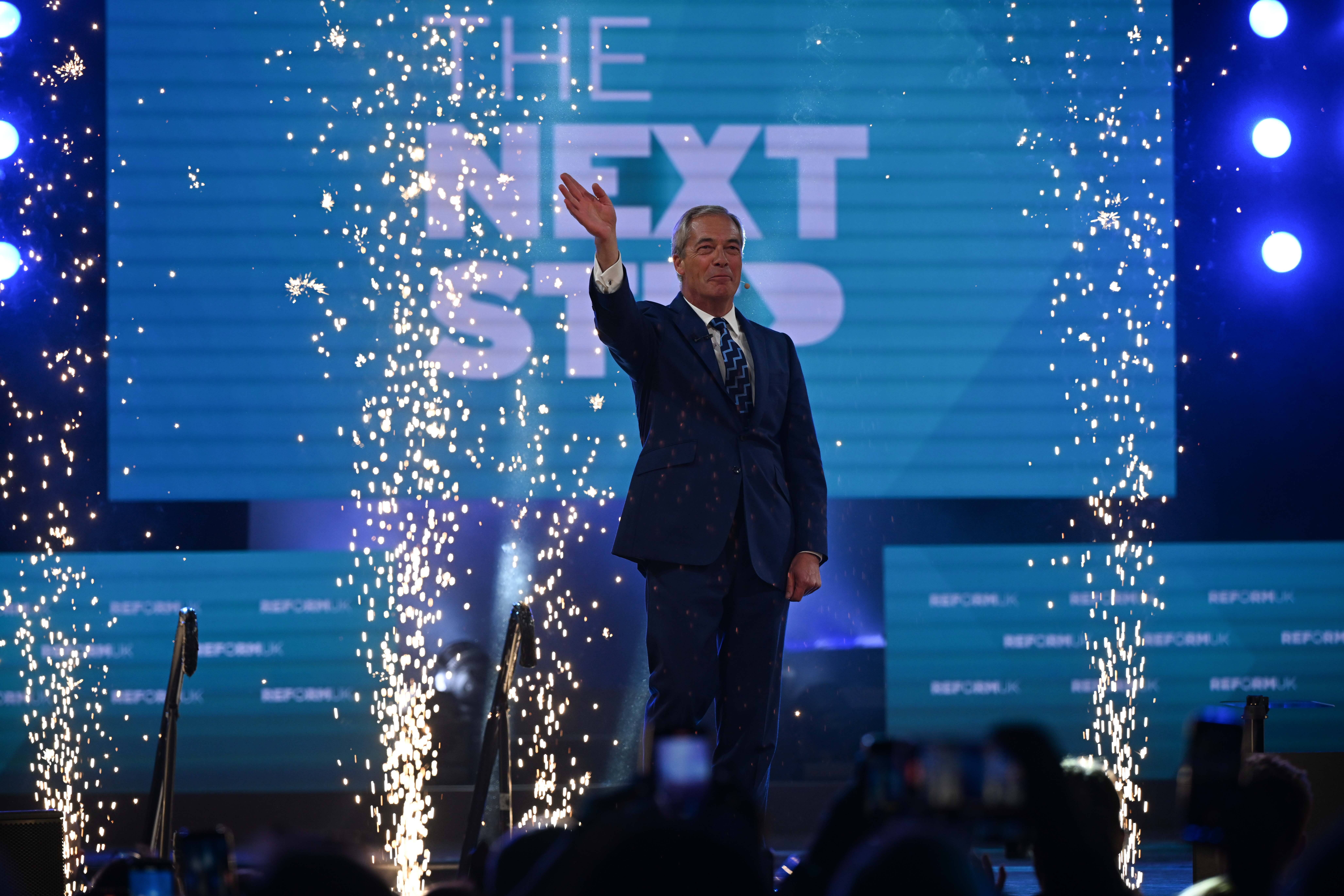
Reform UK leader Nigel Farage has pledged to ban the Muslim Brotherhood if he becomes Prime Minister.
During a speech at the Reform UK conference in Birmingham, Farage accused the Islamic organisation of having “links to terrorism,” something they firmly deny.
He said: “We will stop dangerous organisations with links to terrorism operating in our country. Why we’ve been so gutless about this, both Conservative and Labour, I don’t know. All across the Middle East, countries have banned and proscribed the Muslim Brotherhood as a dangerous organisation. We will do the very same.”
The Muslim Brotherhood is a transnational Islamic organisation founded in Egypt in 1928 by Hassan al-Banna.
It began as a response to Western colonialism and the dissolution of the Ottoman Caliphate. It promotes Islam as a comprehensive way of life, advocating for Shariah-based governance and social reform. Its slogan, “Islam is the solution,” reflects its goal of Islamising society.


Initially focused on education and charity, it grew rapidly, reaching an estimated 500,000 members by the late 1940s. It became politicised in the 1930s, opposing British influence and supporting the Palestinian cause.
Subscribe to our newsletter and stay updated on the latest news and updates from around the Muslim world!
The group faced bans and crackdowns in Egypt under Gamal Abdel Nasser, especially after a 1954 assassination attempt. Sayyid Qutb’s writings during this period influenced modern jihadism, though the Brotherhood officially renounced violence in the 1970s.
It expanded to countries like Syria, Jordan and Libya, adapting to local contexts. In some nations, like Morocco and Tunisia, affiliated parties gained political traction post-Arab Spring.
Legalised after the 2011 Egyptian revolution, its Freedom and Justice Party won significant parliamentary seats, and Mohamed Morsi became Egypt’s first democratically elected president in 2012. But a 2013 military coup ousted Morsi, leading to another ban and terrorist designation by Egypt, Saudi Arabia and others.
Despite repression, it remains resilient, with members in exile and a focus on nonviolent reformism. Its influence persists through social networks and ideological offshoots.
Critics, including Egypt, Saudi Arabia and the UAE, argue the MB’s ideology promotes violence and destabilises nation-states by advocating for a global caliphate. These countries designated the MB a terrorist organisation.
UAE lobbying
The United Arab Emirates has long lobbied successive UK governments to ban the Muslim Brotherhood.
In 2015, a Tory government review found that membership of, association with or influence by the Muslim Brotherhood should be considered as a possible indicator of extremism. However, they said the organisation would not be banned in the UK.
In a statement to parliament then PM David Cameron said the worldwide Islamic movement was “deliberately opaque, and habitually secretive.”
He said the Brotherhood desired political unification in a Caliphate under Shariah law and “characterises Western societies and liberal Muslims as decadent and immoral.”
The Brotherhood said the review was neither fair nor based on credible evidence. The group said that it is committed to peaceful activism.