


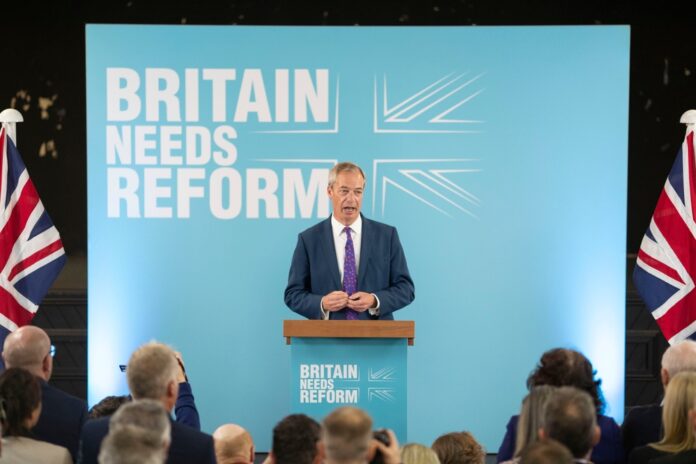
Reform UK leader Nigel Farage has unveiled plans for “mass deportations” of refugees arriving in small boats, aiming to expel 600,000 migrants, amid predictions he could become the next prime minister.
Farage, the leader of the right-wing populist party Reform UK, said his party would bar anyone who comes to the UK on small boats from claiming asylum, under plans announced earlier.
Speaking to journalists, Farage set out a five-year strategy that would include withdrawing from human rights laws, detaining new arrivals at large removal centres, and sending people to countries where they could face imprisonment or capital punishment.
Farage’s plan claims it would make £2 billion available to offer payments or aid to countries like the Islamic Emirate of Afghanistan to take back migrants, with sanctions potentially being imposed on uncooperative states.
While launching the plan, dubbed “Operation Restoring Justice”, Farage said the “only way” to stop small boats crossing the English Channel was by “detaining and deporting absolutely anyone who comes via that route.”
During the news conference, Farage asked Reform UK’s chair Zia Yusuf whether it was realistic to deport 500,000-600,000 people within the lifetime of the first parliament under a Reform government, to which he replied “totally, yeah.”
Yusuf claimed “north of 650,000 adults” were already living in the UK illegally, and could be deported “promptly and efficiently.”
Subscribe to our newsletter and stay updated on the latest news and updates from around the Muslim world!

However, he also accepted his estimate was an attempt to “count the uncountable”, and Farage added there would need to be an “exercise of common sense” in how the policy is applied.
Afghanistan “ready and willing”
After news broke that a Reform government would seek to sign deportation agreements with countries like Eritrea and the Islamic Emirate of Afghanistan (IEA), a senior IEA official has reportedly expressed strong support for the idea.
A senior IEA official was quoted in The Telegraph saying: “We are ready and willing to receive and embrace whoever he (Nigel Farage) sends us. We are prepared to work with anyone who can help end the struggles of Afghan refugees, as we know many of them do not have a good life abroad.
“We will not take money to accept our own people, but we welcome aid to support newcomers, since there are challenges in accommodating and feeding those returning from Iran and Pakistan.
“Afghanistan is home to all Afghans, and the Islamic Emirate is determined to make this country a place where everyone – those already here, those returning, or those being sent back from the West by Mr Farage or anyone else – can live with dignity.”

Amid speculation that the current Labour government might attempt to undermine Reform UK and secure its own agreement with the IEA, the official suggested that it might be easier to deal with the Reform leader if he were to become prime minister because of his “different” views.
“We will have to see what Mr Farage does when or if he becomes prime minister of Britain, but since his views are different, it may be easier to deal with him than with the current ones. We will accept anyone he sends, whether they are legal or illegal refugees in Britain.”
Following Mr Farage’s speech, Downing Street suggested that UK Prime Minister Sir Keir Starmer would not rule out a returns agreement with Afghanistan and Eritrea, with the Prime Minister’s spokesman saying: “We’re not going to take anything off the table.”
A Home Office spokesman also said: “While conditions in certain countries will often make returns challenging, we continue to work tirelessly to remove those with no legal right to be in the UK.”
The rise of Farage and Reform UK
Founded by Farage in 2018 as the single-issue Brexit Party, it was rebranded to Reform UK in 2021, following the UK’s formal departure from the European Union in 2020.
Reform UK is Farage’s first serious attempt to create a party fit for racing for the grand prize of taking over power at No.10 Downing Street.
Farage has a long career in politics, first arriving on the scene in 1993, when he co-founded the far-right anti-immigration party, the UK Independence Party (UKIP).
UKIP was a fringe party but advocated strongly for a referendum on UK membership to the EU and laid the groundwork for bringing far-right ideas back into the mainstream political discourse in Britain.

Farage would go on to win a seat as an MEP for UKIP and would become the party leader but failed to ever gain a parliamentary seat. He would later quit the party following his success in helping secure and then aiding the win of Brexit during the referendum on EU membership in 2016.
After Britain announced it would leave the EU, Farage went through a short retirement stint before dramatically returning to the scene after declaring that Brexit was being betrayed by the establishment.
In 2019, Farage launches the Brexit Party but chose to campaign rather than contest the 2019 general election.
Fast forward to 2025, Farage has now secured himself as the undisputed head of Reform UK and has succeeded in getting himself and four others elected as Reform MPs in parliament.
Reform UK currently boasts 4 MPs but polling suggests that the party has become so popular nationwide that if a general election were to be held in 2025, Reform UK could win strongly and become the next party of government.
Reform UK’s core beliefs focus on anti-immigration policies but also being tougher on crime and promote more passion about patriotism and nationalist ideas.
Their critics have accused Reform and its leadership of being xenophobic populists who peddle divisiveness for political gains. Many British Muslims consider Reform UK to be a deeply Islamophobic party which represents a threat to the Muslim community.
Fears amid far-right unrest
The rise in popularity of Reform UK coincides with a worrying increase in far-right activism and violent disorder across Britain.
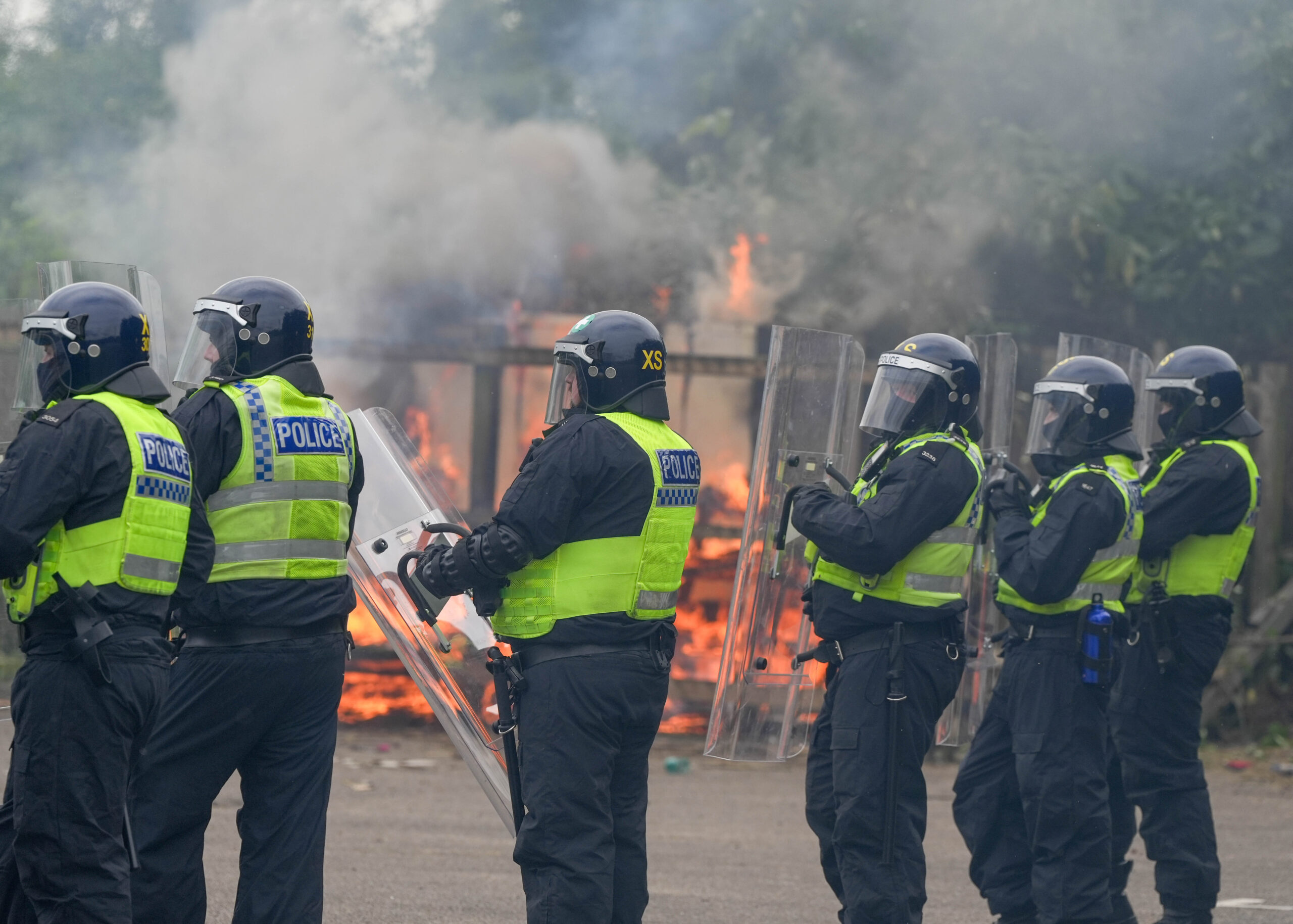
In 2024, England was gripped by far-right summer riots which saw mobs of mostly white Englishmen attacking mosques, hotels housing migrants, and minority communities of colour across the country.
The violence began in Southport, shortly after a horrific knife attack on July 29, 2024, during a Taylor Swift‑themed dance class that killed three young girls and injured others.
Far-right accounts began peddling misinformation rapidly online, falsely claiming that the attacker was a Muslim asylum seeker who arrived to Britain on a boat, even though the suspect was a teenage boy born in Wales to Christian Rwandan parents.
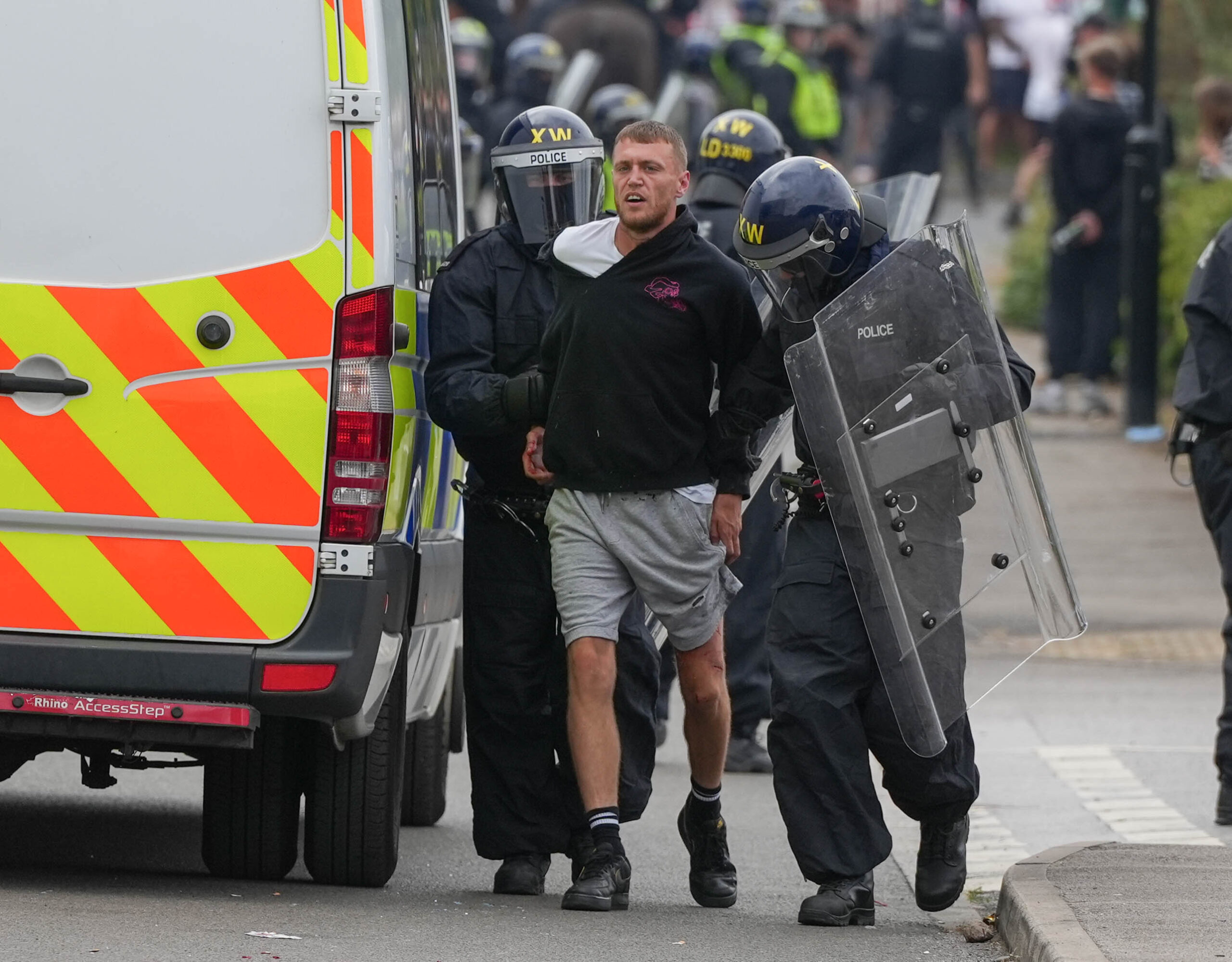
Muslims, mosques, hotels housing migrants, South Asian men and other ethnic minorities were the main target of the rioters who were filmed attacking police, attempting to burn down hotels, and throwing projectiles at buildings.
Although Farage condemned the violence, he has since continued to push the “two‑tier policing” conspiracy theory which alleges that UK police treat criminals from ethnic minorities and Muslim communities specifically softy, while cracking down harshly on white British criminals.
At the time, shorty after the violence erupted, the riots were referred to by some commentators as the “Farage riots” over allegations Farage and Reform UK had helped create the toxic environment around the issues of foreigners, Islam and illegal immigrants, which inspired some of the racist outpouring.
Farage strongly rejects this association, calling such characterisation deeply unjust.
Surge in Islamophobia
Following the start of Israel’s genocidal war on Gaza, Islamophobic hate in Britain has spiked.
According to the Home Office, almost 40% of all religiously motivated hate crimes were directed at Muslim communities, 3,866 incidents, making Muslims the most affected group in England and Wales.
The Muslim Council of Britain described these surges as “shocking and deeply distressing”, directly linking the rise to divisive political rhetoric, false narratives, and far-right mobilisation.
Surprisingly, Farage has also come under fire from extremist elements within the far-right including prominent Islamophobe Tommy Robinson for refusing to embrace high level agitators including Robinson himself into his party.
“He is a repeated law breaker, that doesn’t suit a political party,” Farage was quoted when asked about his views on Robinson.
However, senior figures within Reform UK have already expressed Islamophobic views of their own, such as Sarah Pochin, Reform MP for Runcorn and Helsby, who called for the burqa to be banned in parliament on 5 June, 2025.
Also Reform MP and deputy leader, Richard Tice, once called for sharia to be banned in Britain during a GB News discussion.