


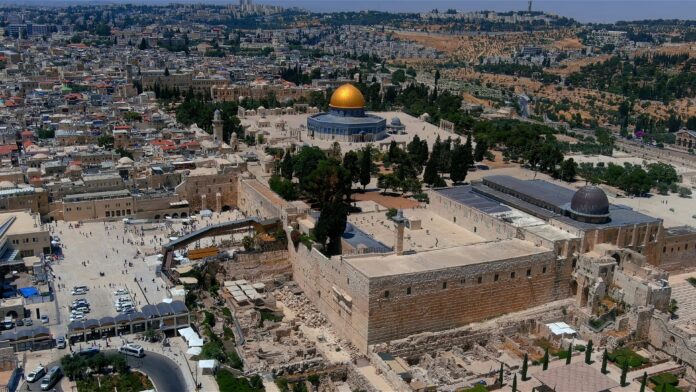
Scores of illegal Israeli settlers forced their way into the Al-Aqsa Mosque complex in occupied East Jerusalem on Wednesday morning, local media said.
The settlers toured the compound and performed Talmudic rituals under the protection of Israeli police, the official news agency Wafa reported.
Witnesses said the settlers roamed the courtyards and performed ritual dances, despite international agreements which prohibit non-Muslim worship at the holy site.
Palestinians described the scenes as a deliberate provocation and another attempt to impose a new reality at one of Islam’s holiest mosques.
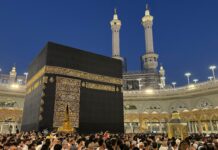
For Muslims worldwide, Al-Aqsa Mosque is the third-holiest site after Makkah and Madinah. Jews refer to the area as Temple Mount, claiming it was the site of two ancient temples.

Israel occupied East Jerusalem during the 1967 Arab-Israeli War, and later annexed the entire city in a move never recognised by the international community.
Settler raids on Al-Aqsa have expanded dramatically over the past two decades. In 2009, around 5,000 settlers participated in such incursions.
Subscribe to our newsletter and stay updated on the latest news and updates from around the Muslim world!
By 2019, the number had risen to 30,000. The settler group Beyadenu, which leads many of these raids, now aims to reach 100,000 annual participants.
These incursions are closely linked to movements that openly call for the demolition of Al-Aqsa Mosque and the construction of a so-called “Third Temple” in its place.
Palestinian leaders argue that Israeli authorities are gradually transforming the mosque from a site of exclusive Islamic prayer into a shared space, opening the door for eventual takeover.
The status quo under threat
Since the late Ottoman period, a system known as the “status quo” has governed Jerusalem’s holy sites.
This arrangement gave the Islamic Waqf, under Jordanian custodianship, sole authority over Al-Aqsa Mosque’s 144,000 square metre compound.
The Waqf manages its gates, mosques, and surrounding courtyards, and decides when and how non-Muslims may visit. International agreements uphold this arrangement.
Non-Muslims are allowed to visit during limited hours but are barred from engaging in rituals, raising flags, or praying.
Israel itself formally recognised Jordan’s custodianship in its 1994 peace treaty with Amman.
For decades, breaches of the status quo were relatively rare, with Israeli leaders cautious of global Muslim backlash.
That changed dramatically in 2000 when Ariel Sharon, then opposition leader, entered Al-Aqsa with hundreds of armed guards.
The raid ignited the Second Intifada, a Palestinian uprising that lasted several years.
Since then, settler incursions have become routine and Israeli authorities have increasingly facilitated them.
Palestinians say this has eroded the historic status quo and strengthened settler groups who view the mosque as an obstacle to their religious and political ambitions.
Third Temple
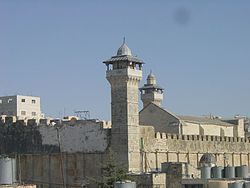
Palestinians warn that Israel is repeating the model used at the Ibrahimi Mosque in Hebron.
That mosque was divided after a settler massacre in 1994, with separate areas allocated for Muslims and Jews.
Today, Muslims face heavy restrictions there while settlers enjoy military protection.
Similar proposals are now being openly discussed for Al-Aqsa. In mid-2023, Israeli MP Amit Halevi from the ruling Likud party put forward a plan to divide the compound.
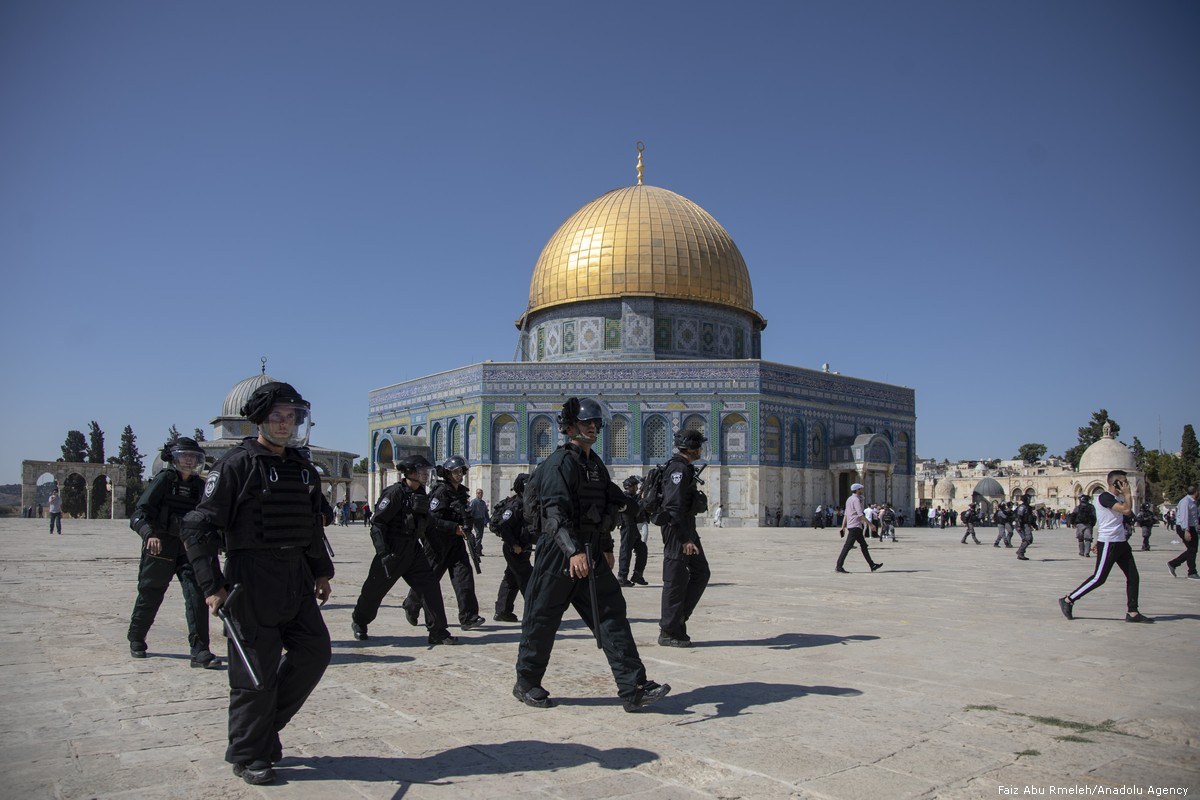 He suggested Muslims retain the southern section, while Jews take control of the rest, including the area of the Dome of the Rock. His plan also called for removing Jordan’s custodianship.
Months later, Israel’s far-right National Security Minister Itamar Ben Gvir voiced support for a synagogue inside the compound.
Though he stopped short of endorsing a full division, Palestinians say his proposal reflects a staged process of gradual takeover.
Such measures have already fuelled major escalations. In May 2021, Israeli raids during Ramadan prayers at Al-Aqsa triggered an 11-day war between Israel and Palestinian groups in Gaza.
Two years later, Palestinian resistance factions cited repeated violations at the holy mosque as a key reason for the October 7, 2023, attack.
Tensions today remain high, particularly as Israel’s genocidal war Gaza continues. Since October 2023, nearly 63,000 Palestinians have been killed in the besieged enclave, while settler violence has surged across the West Bank.
Palestinians believe the attacks on Al-Aqsa are part of the same policy – to erase their presence and tighten Israeli control over Jerusalem.
For them, the repeated incursions into Al-Aqsa Mosque are not isolated events but part of a wider strategy.
The fear is that, unless global pressure forces Israel to back down, Jerusalem’s most important Islamic site could eventually face the same fate as Hebron’s Ibrahimi Mosque – divided, militarised, and transformed forever.