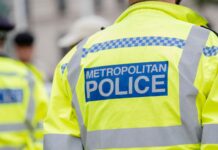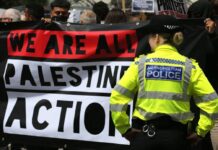



London’s Metropolitan Police have confirmed that a further 60 people will be prosecuted for “showing support” for the proscribed direct action group Palestine Action amid growing protests over the terror listing of the pro-Palestine group.
In a statement published on the Met Police website, 60 people will be prosecuted for “showing support for the proscribed terrorist group Palestine Action.”
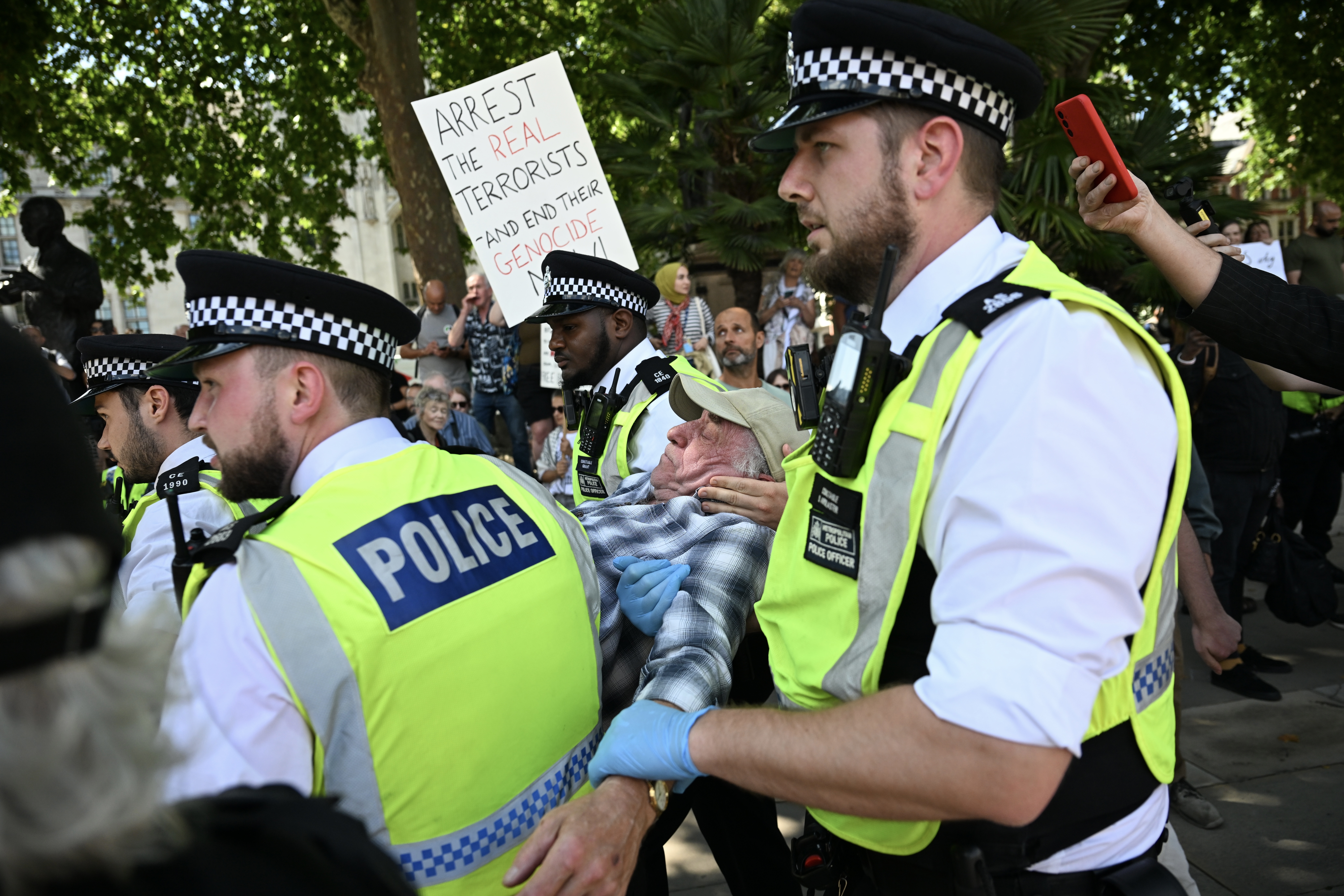
This follows the arrest of more than 700 people since the group was proscribed on 7 July, including 522 in central London during a protest last Saturday. The total number of individuals charged since the group was proscribed in July sits at around 63.
In the statement, Metropolitan Police Commissioner Sir Mark Rowley was quoted, saying he was “proud” of how police and CPS teams have worked “so speedily” to arrest and prosecute protesters.
“I am proud of how our police and CPS teams have worked so speedily together to overcome misguided attempts to overwhelm the justice system. If necessary, we are able to investigate and quickly charge significant numbers of people each week if people want the potentially life-changing consequences of a terrorist conviction.

“At the same time, we will continue to police the numerous protests each week where people express their views in support of Palestine without choosing to break Counter Terrorism Laws by supporting proscribed terror groups.
“To be clear, these arrests and prosecutions do not outlaw people’s right to demonstrate in support of Palestine, or any other cause. They are simply the enforcement of a specific provision under the Terrorism Act in relation to a specific proscribed terrorist organisation, Palestine Action.”
Subscribe to our newsletter and stay updated on the latest news and updates from around the Muslim world!
Palestine Action was proscribed after the group claimed responsibility for damage to jets at RAF Brize Norton and, according to police, was also linked to allegations of a serious assault on staff and police officers at a business premises in South Gloucestershire. Proscription of Palestine Action made membership or support of it a criminal offence.
The police statement detailed the difference between showing support for a proscribed organisation – an offence under the Terrorism Act – and legitimate protest in support of a cause.
“Individuals are entitled to protest within the law, but where that activity breaks the law, the police will make arrests and the Crown Prosecution Service will bring prosecutions,” the statement added.
Escalating protests
Since Pal Action was proscribed a growing number of people have begun engaging with a protest movement flouting UK law to express support for the banned group.
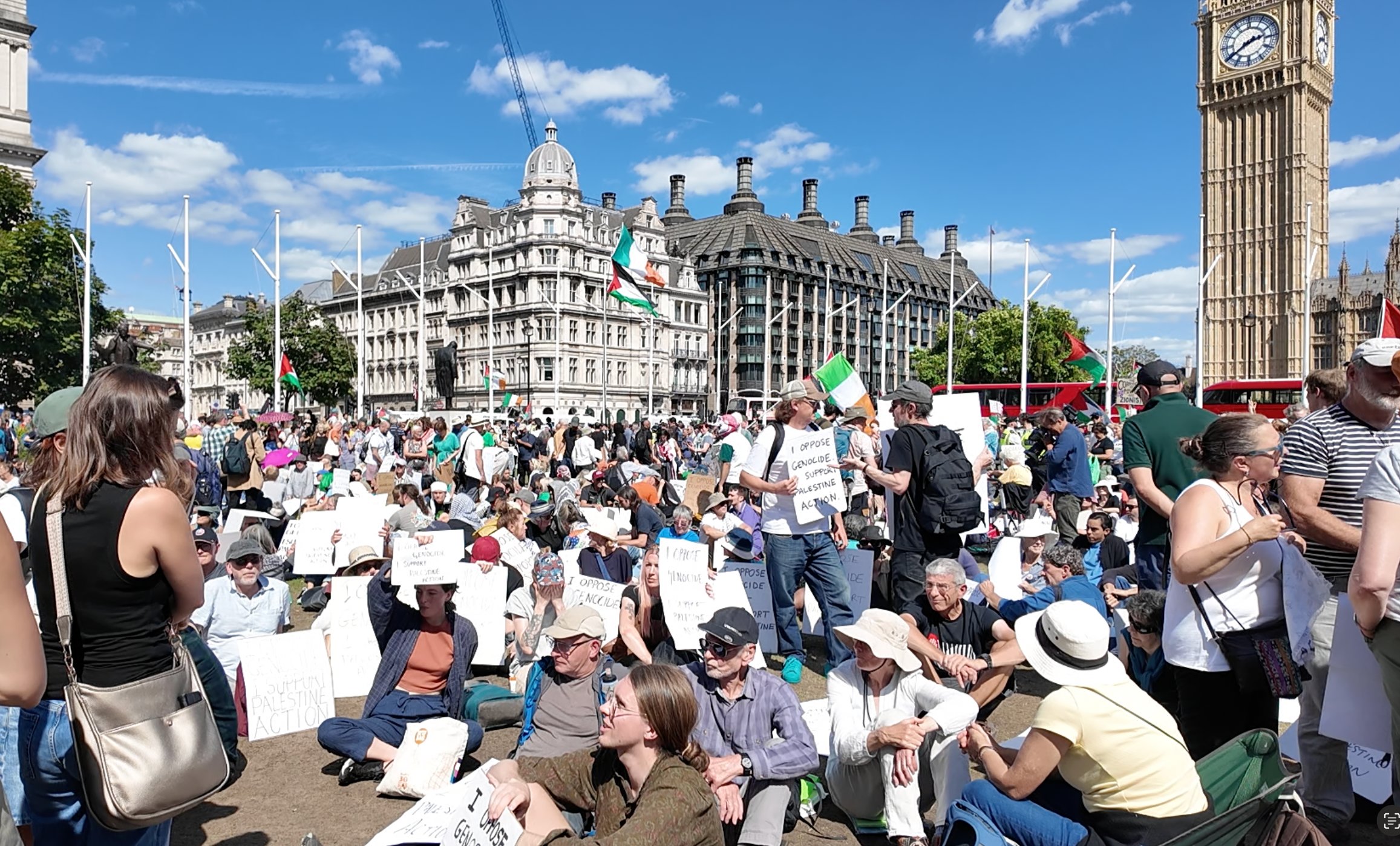
The mass arrests of over 500 people at the latest protest at Parliament Square on 9 August was the largest number of arrests made for a terror related crime in one day in UK history.
The activists sat silently on the ground, around status of Ghandi and Nelson Mandela while holding signs which read: “I oppose genocide, I support Palestine Action.”
The protests have grown steadily in the weeks following the proscription and have occurred in cities all over the UK including London, Manchester, Cardiff and parts of Scotland and the north of Ireland.
Protesters arrested at these illegal demonstrations include pensioners, retired medics and doctors, Christian pastors, disabled individuals in wheelchairs and even a knight of the realm and long-time adviser to the King when Prince of Wales, Sir Jonathon Porritt.
A senior Muslim rights defend Moazzam Begg of Cage International was also filmed taking part and being arrested at the same protest.

On 6 August, more than 300 British Jews denounced the UK government’s decision to proscribe the direct action group Palestine Action.
A letter of condemnation was delivered to Prime Minister Keir Starmer and Home Secretary Yvette Cooper.
The letter, coordinated by Jewish Voice for Labour (JVL) and signed by prominent public figures across the arts, academia and activism, expressed outrage over the ban which placed Palestine Action on the same list as Al Qaeda, Maniacs Murder Cult and National Action under the Terrorism Act 2000.
Signatories include award-winning director Mike Leigh, known for films such as Secrets & Lies and Vera Drake, as well as acclaimed poet and children’s author Michael Rosen, a former Children’s Laureate.
Also on the list are celebrated play-writer and novelist Gillian Slovo, actress Miriam Margolyes, prominent historian Professor Avi Shlaim, and Dr Brian Klug, a leading academic at the University of Oxford specialising in philosophy and antisemitism.
Amid the widespread criticism of the authorities and claims by activists that the UK is silencing pro-Palestine activism, Stephen Parkinson, Director of Public Prosecutions, said: “The public has a democratic right to protest peacefully in this country, and I understand the depth of feeling around the horrific scenes in Gaza.
“However, Palestine Action is now a proscribed terrorist organisation and those who have chosen to break the law will be subject to criminal proceedings under the Terrorism Act. When protest conduct crosses the line from lawful activity into criminality, we have a duty to enforce the law.
“People should be clear about the real-life consequences for anyone choosing to support Palestine Action. A terrorism conviction can severely impact your life and career – it can restrict your ability to travel overseas and work in certain professions. I urge people to think very carefully about their actions at protests. Anyone who chooses to disobey the law will have to face the consequences.”