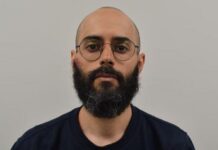




The UK High Court today heard arguments from the Crown Prosecution Service (CPS) in a high-profile appeal seeking to reinstate the conviction of Hamit Coskun, a 51-year-old Turkish asylum seeker who burned a copy of the Quran outside the Turkish Consulate in London last year.
Prosecutors argued that Coskun’s conduct on February 13, 2025, in Rutland Gardens near Knightsbridge was “intrinsically disorderly” and could not reasonably be found otherwise.
They pointed to the provocative nature of burning a holy book, the central London location near a foreign consulate, and Coskun’s shouted slogans linking Islam to terrorism as conduct plainly likely to cause harassment, alarm or distress under Section 5 of the Public Order Act 1986.
The CPS said the immediate violent reaction from bystanders — including a knife attack — demonstrated the foreseeable impact of the protest, even if such reactions were unlawful.
The CPS is appealing after Coskun’s conviction was quashed last year. It urged the High Court to rule that the lower court had erred in law and to remit the case to the Crown Court for reconsideration, including whether the offence was religiously aggravated and whether any interference with free expression would be proportionate.

Background to the case
Coskun had been convicted in June 2025 at Westminster Magistrates’ Court, where he was fined £240 plus surcharge for using disorderly behaviour aggravated by hostility toward Muslims.
Subscribe to our newsletter and stay updated on the latest news and updates from around the Muslim world!
However, on appeal to Southwark Crown Court in October 2025, Mr Justice Bennathan quashed the conviction, ruling that Coskun’s actions were not disorderly in context and that England and Wales have no blasphemy law.

That ruling held that Coskun’s act — though offensive — amounted to a solo political protest carried out in daylight in a known diplomatic area, without targeted intimidation.
The court rejected what it described as a “heckler’s veto,” stating that violent reactions by others could not convert peaceful expression into a criminal offence.
It relied on Article 10 of the European Convention on Human Rights, which protects speech that may “offend, shock or disturb.”
The protest itself triggered a violent response. Coskun was assaulted by two members of the public, one armed with a knife, and required hospital treatment. One attacker, Moussa Kadri, was later convicted and given a suspended sentence.
Defence arguments
Before the High Court today, Coskun’s defence described the CPS appeal as “hopeless” and “astonishing.”
They argued that simply burning a Quran is not “disorderly,” and just because Coskun’s actions may have been offensive that does not mean they were criminal
The defence warned that accepting the CPS’s approach risked reintroducing blasphemy “by the back door” and undermining statutory protections for free expression, including Section 29J of the Public Order Act.
The case has attracted close scrutiny from secular “free speech advocates” who are critical of Islam. Humanists UK, the National Secular Society, and the Free Speech Union warned that a successful CPS appeal could encourage “extremists to suppress expression through threats or violence.”
Coskun, who has received Home Office protection following threats, attended the hearing. He has said publicly that he may seek asylum in the United States if the appeal succeeds, with reports suggesting U.S. officials are monitoring the case.
The High Court, with Lord Justice Warby and Mrs Justice Obi presiding, reserved judgment. A decision is expected at a later date and is likely to have wider implications for how public order laws interact with freedom of expression in religiously sensitive protests.