



Australia’s official Islamophobia envoy has urged the authorities to confront Islamophobia with equivalent urgency to other forms of discrimination.
Aftab Malik, the nation’s first-ever special envoy to combat Islamophobia, presented a major report entitled A National Response to Islamophobia, which includes 54 recommendations.
He said the reality is that Islamophobia in Australia has been “persistent, at times ignored, at other times denied, but never fully addressed.”
“In Australia today, Islamophobia is a pervasive, and at times terrifying, reality that has devastating consequences for victims, eroding social cohesion,” Malik says in the report.
“The normalisation of Islamophobia is so widespread that many incidents go unreported. It manifests online and in person, on social media, within institutions, and in everyday public spaces. From vile, hate-filled graffiti, the vandalism of Muslim property, and the verbal, as well as physical, violence towards Muslim bodies, Islamophobia is a part of everyday life for Muslim communities in Australia.”

Malik, a British-Australian Muslim scholar and community leader, was appointed to the newly created role in 2024 after the Anthony Albanese government introduced two special envoys, one for Islamophobia and another for antisemitism.
The decision came in response to a surge in hate incidents following the start of the Gaza war in October 2023.
Subscribe to our newsletter and stay updated on the latest news and updates from around the Muslim world!
In late 2024 and early 2025, Malik travelled widely across Australia to hear directly from Muslim communities. His report, the first of its kind, reflects those consultations and proposes a comprehensive national strategy.
The recommendations cover four areas: accountability and responsibility, protection and support, education and awareness, and building social cohesion.
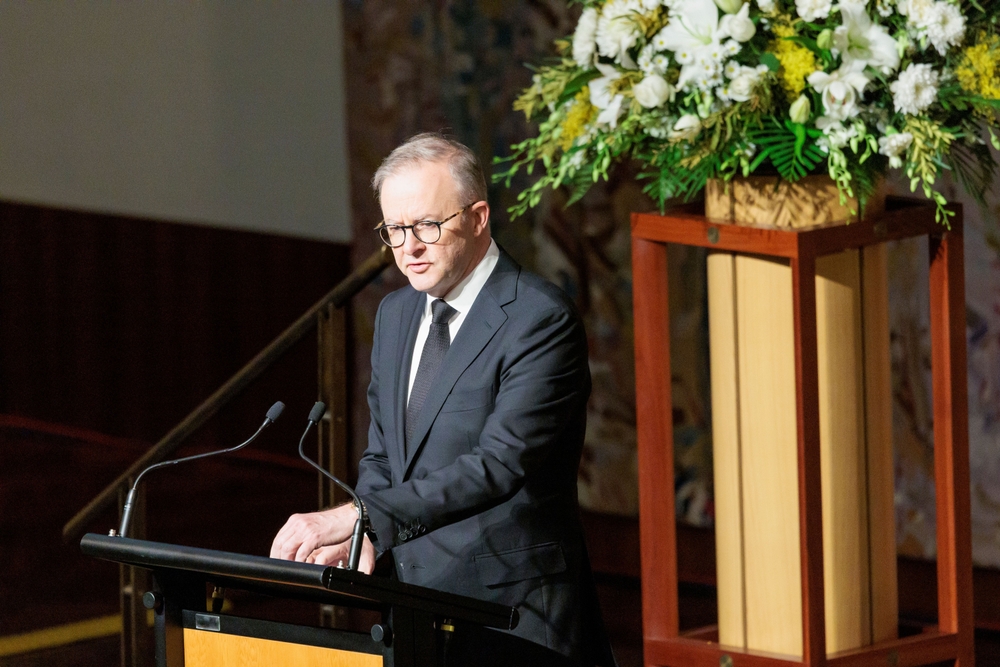
At a press conference alongside Prime Minister Anthony Albanese, Malik described Islamophobia as a deeply entrenched issue in Australian society. He highlighted how “opposition to mosques and Islamic schools turn to violent vandalism and assaults on Muslim properties,” alongside “public abuse, graffiti, and assaults of Muslims.”
The report calls for government to confront Islamophobia with equivalent urgency to other forms of discrimination, granting the same rights, protections and legal recourse.
It recommends parliament develop behavioural codes of conduct for MPs and staff, implement a zero-tolerance approach to racism with appropriate sanctions, and introduce mandatory training on Islamophobia for politicians.
Malik also recommends a commission of inquiry into Islamophobia and a similar body to investigate anti-Palestinian and anti-Arab racism. He suggests police officers should receive sensitivity training, and that the Racial Discrimination Act be clarified to specifically include Muslims, as it already does Jews and Sikhs.
Education is a key area, with Malik urging the creation of an anti-racism framework and curriculum changes to include Muslim contributions to Australia, Western civilisation and the development of universal values. He also advocates for stronger online safety laws to counter digital hate and for government funding to improve the security of mosques and other not-for-profit institutions.
Prime Minister Albanese told reporters: “We must stamp out the hate, fear, and prejudice that drives Islamophobia and division in our society.” He added that while “certainly supporting” religious discrimination legislation, he does not want to “support starting a debate that leads to rancor.”
The Albanese administration had abandoned its religious discrimination legislation in 2024 after failing to secure bipartisan support.
For Muslim Australians, who have long called for official recognition of Islamophobia, Malik’s work is unprecedented. It documents their experiences in a national framework and provides the government with a roadmap for change.