


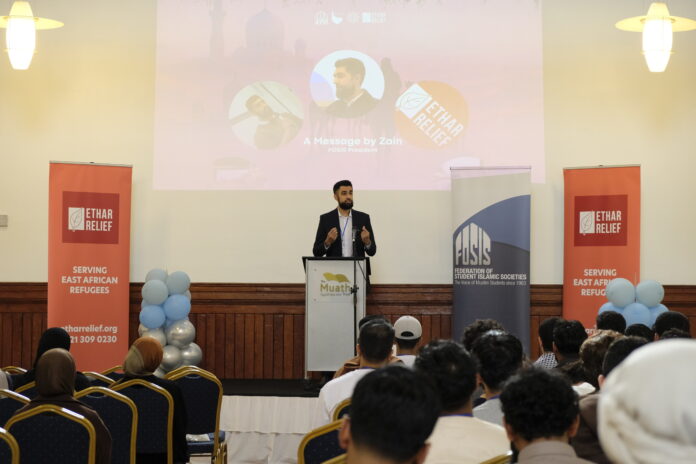
Hundreds of Muslim university students gathered in Birmingham over the weekend for the Federation of Student Islamic Societies (FOSIS) conference, aimed at shaping the next generation of Muslim leaders.
The umbrella organisation, which represents over 350,000 Muslim university students across the UK and Ireland, hosted the 62nd FOSIS conference this weekend.
The two-day event was full of keynote speeches from prominent Muslim leaders, various hands-on workshops, and networking opportunities for the next generation of Muslim leaders and professionals.
The event was hosted at the Muath Trust, the largest Muslim community centre in Birmingham, providing education and classes to the youth, among other functions.
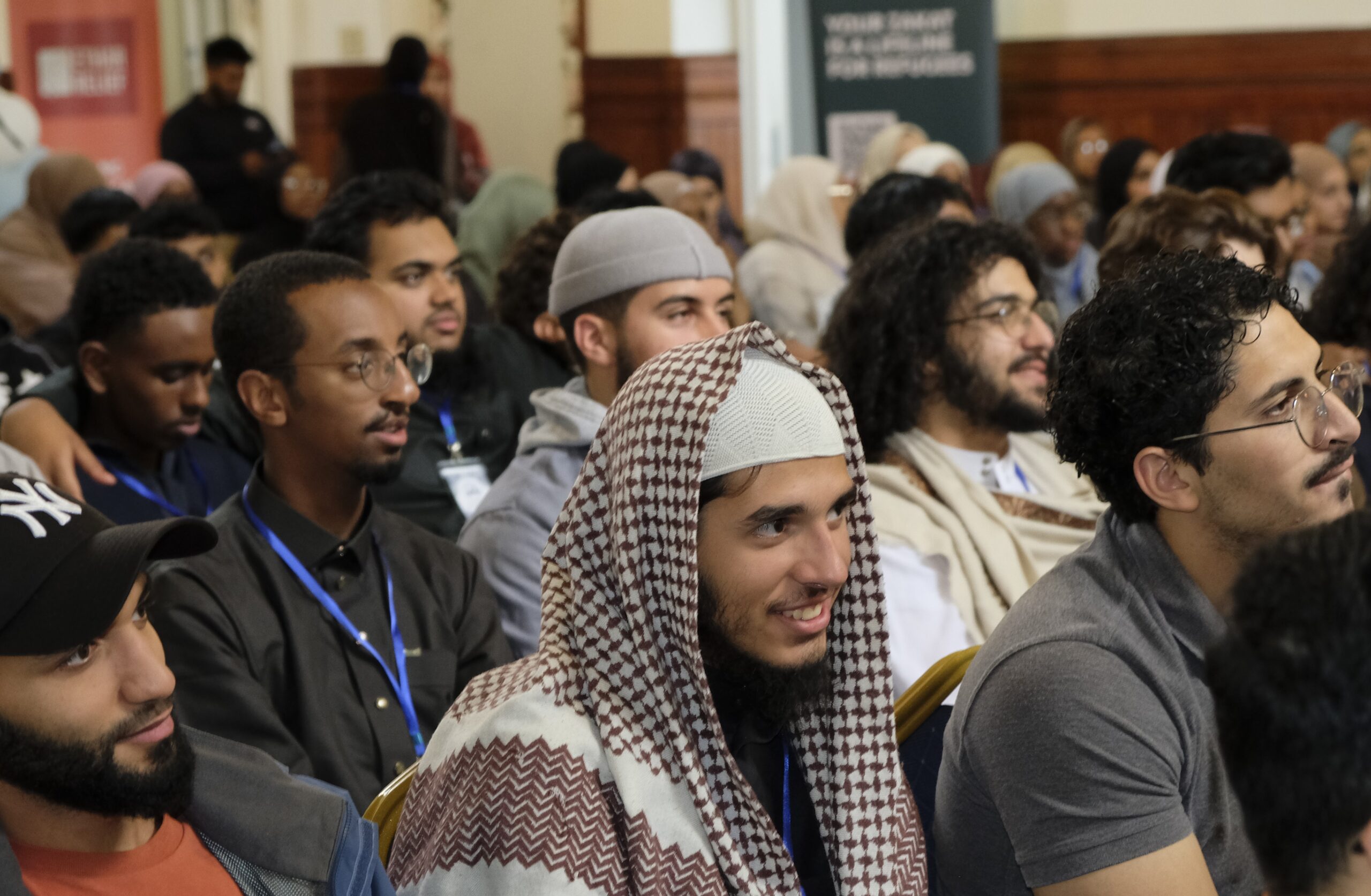
It was attended by hundreds of students from many different Islamic societies across the UK, and was centred around the theme, “Rise and Lead From Consumers to Change makers.”

In an opening speech, FOSIS president Zain Islam, highlighted the importance for Muslim student societies in UK universities amidst an increasing climate of islamophobia and discrimination.
He said: “FOSIS has always been there… it’s from this community, your community and my community of Muslim students, that some of the greatest recent leaders of the Ummah have blossomed, from community leaders, duat, imams, students of knowledge, activists, heads of states and governments, and more, this is our history and this is our legacy.”
Subscribe to our newsletter and stay updated on the latest news and updates from around the Muslim world!
He added: “As practicing Muslims, highly educated, at one of the best countries for higher education in the world, those who are practicing, proud of their religion, who are leading Islamic societies, if they aren’t going to be the drivers of that change, then honestly, who is?”
FOSIS was founded in 1963 by a group of seven Muslim students, at a time when Muslim students only numbered a few hundred.
Zain Islam described how these students’ went on to form FOSIS when “Islamophobia was rife,” and how they still decided to form an organisation “that led to the birth of FOSIS.”
“Today, the Federation represents over 350,000 muslim students in the UK and Ireland,” he said.
NUS disaffiliation
Muslim student societies at UK universities have been facing an increasing sentiment of alienation from governing bodies such as the National Union of Students (NUS).
Due to the societies’ outspoken pro-Palestine stance, and the “failure” of the NUS to defend pro-Palestine students in a number of incidents on campuses, FOSIS launched a campaign earlier this month to disassociate from the NUS called “Not my NUS.”
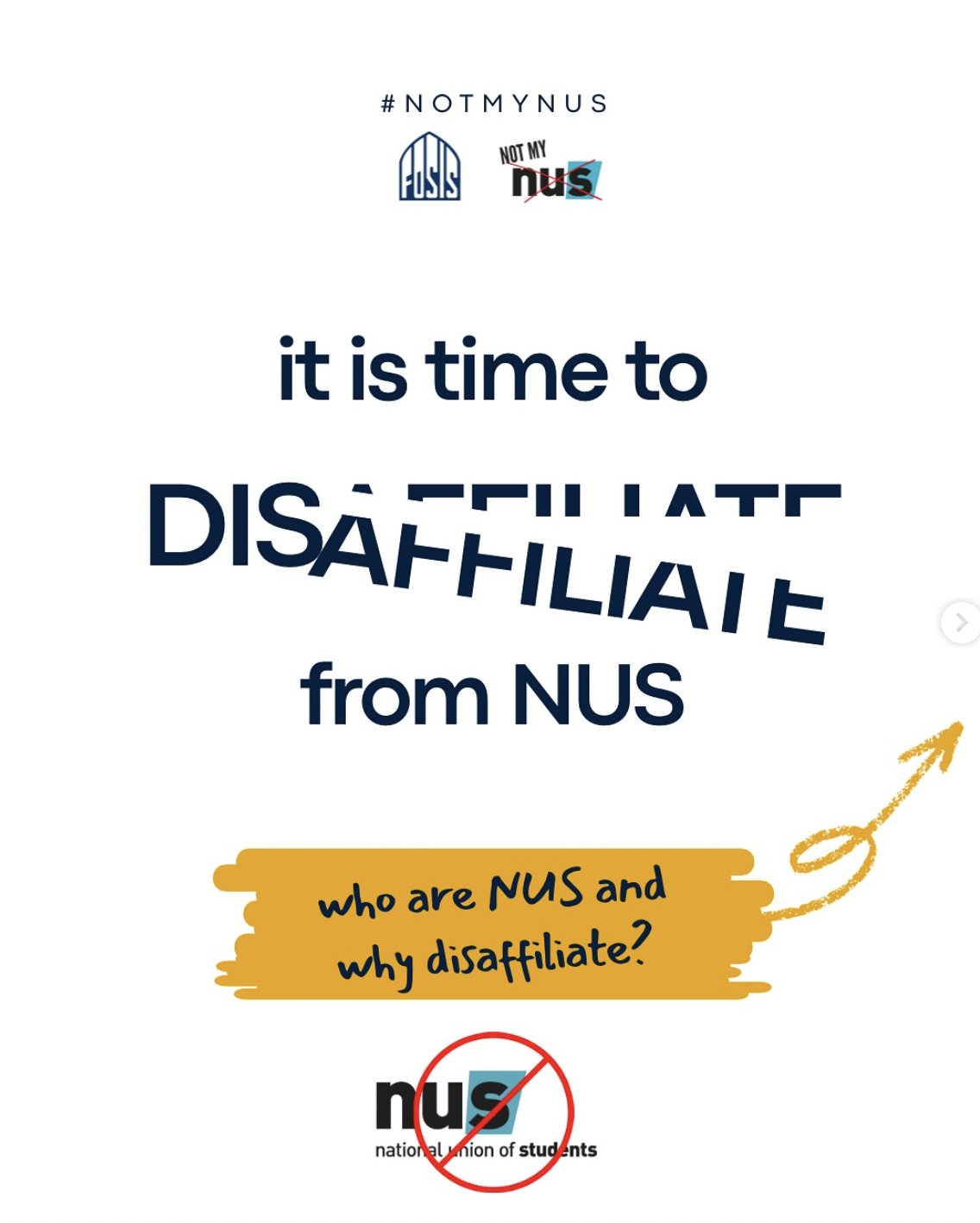
The NUS’s alleged “neutrality” amidst the ongoing genocide caused dozens of Muslim student societies to ditch the governing body.
FOSIS was also a big part of this movement, as they told 5 Pillars earlier this month that:“The NUS is no longer fit for purpose. It has failed to defend students facing censorship, ignored rising Islamophobia, and remained silent during a genocide.
“Its treatment of Muslim students, from the dismissal of Shaima Dallali to the recent blacklisting of over 70 sabbatical officers for signing an open letter to them, is indefensible.”
The conference over the weekend aimed to address some of these feelings, as they discussed how students could continue to voice their opinions.
‘Rise and lead, from consumers to change makers’
The theme of the conference “rise and lead from consumers to change makers” was central to the planning and direction of the event, as it focused heavily on leadership lessons for young Muslims who will graduate university within the next few years.
“The call for change makers couldn’t be more urgent than it is today,” as he went on to describe the alarming rise of Islamophobia in the media, university campuses and streets of the UK.
5Pillars Deputy Editor, Dilly Hussain, who was one of the main keynote speakers of the event, also raised this worrying point.

Dilly described how in the last month alone, 5Pillars have covered over 50 cases of Islamophobic abuse or attacks in the streets of Britain.
Across all the speakers, from Dilly Hussain, to Dr. Wajid Akhter (Secretary General of Muslim Council of Britain), to Hamza Tzortzis and other members of the FOSIS committee, the main message was as following: Muslim university students are the future leaders and representatives of their communities.
UK Muslim university students ‘a privileged minority’
Dr. Wajid Akhter was adamant that Muslim students in Britain are in one of the most advantageous positions across the Muslim world.

His workshops centred around the topic of “leadership lessons from Islamic history,” borrowing stories and lessons from figures like Khalid ibn al-Walid, Nizam ul-Mulk, and Salahuddin al-Ayyubi.
During the workshop, Dr Akhter said: “It is Muslim students, with access to all the resources and opportunities in the world, who can propel the situation of UK Muslims — and Muslims worldwide — forward.”
Dilly Hussain also led a media training-style workshop, where he created mock debate panels, and taught the students how to escape and deal with Islamophobic lines of questioning – such as the typical question of “do you condemn the October 7th attacks?”
The FOSIS conference was sponsored by Ethar Relief, a UK-based charity that serves East African refugees in countries like Yemen, Sudan, Eritrea and Djibouti.
Throughout the weekend, Ethar Relief gave numerous speeches, and rallied to get students involved in fundraising opportunities and potential aid trips to orphanages and refugee camps.
They talked about their work, and raised awareness amongst the students for the dire situation of Muslim refugees in the horn of Africa.