



India’s Supreme Court has refused to hear a plea seeking fresh rehabilitation measures and reassessment of compensation for the survivors of the 1983 Nellie Massacre, one of the worst anti-Muslim pogroms in the country’s modern history.
The decision, announced on Tuesday, directs petitioners to approach the Assam High Court instead, effectively blocking fresh relief at the national level.
For many, the move symbolises yet another chapter of state neglect toward survivors of one of India’s darkest episodes of Hindu extremist violence against India’s Muslim minority.
The massacre occurred on 18 February 1983, when armed mobs descended on villages around Nellie in India’s northern state Assam. Over the course of just six hours, nearly 1,800 people – overwhelmingly Bengali-speaking Muslims – were hacked, shot, and burnt to death. Pregnant women, children, and the elderly were not spared.
The killings took place in broad daylight, with police and paramilitary forces reportedly standing by. Entire hamlets were reduced to ash, and mass graves became the only testimony to the scale of the bloodshed.

Despite the enormity of the crimes, not a single senior official or political leader has ever been held accountable. Thousands of cases were filed in the aftermath, but almost all were quietly dropped by the state.
The Nellie massacre unfolded against the backdrop of the Assam Agitation (1979–1985), a mass movement led by local Assamese nationalist groups demanding the expulsion of so-called “illegal immigrants” from Bangladesh.
Subscribe to our newsletter and stay updated on the latest news and updates from around the Muslim world!
The Election Commission’s discovery of alleged foreign nationals on Assam’s electoral rolls in 1979 triggered widespread unrest. The All Assam Students’ Union (AASU) and the All Assam Gana Sangram Parishad (AAGSP) mobilised large sections of Assamese society around the slogan of protecting “indigenous” identity.
For Bengali-speaking Muslims, derogatorily called Miyas, the agitation was an existential threat. They feared disenfranchisement, displacement and persecution.
When Prime Minister Indira Gandhi’s government went ahead with state elections in February 1983, despite nationalist calls for a boycott, Muslims in Assam saw voting as their only way to assert Indian citizenship.
But their political participation triggered brutal backlash. In the weeks leading up to Nellie, sectarian Hindu mobs attacked Bengali Muslim communities in Khoirabari, Chaulkhowa, and other areas. Nellie became the bloodiest climax of this violence.
Shockingly inadequate compensation
The fresh petition before the Supreme Court sought reassessment of compensation, arguing that what was given to victims’ families four decades ago amounted to little more than an insult.
At the time, families of those killed were awarded only 5,000 rupees (£47) per death, while survivors of bullet wounds received 1,500 rupees (£14).
“This was not justice. It was a token meant to silence,” said advocate Warisha Farasat, who represented the petitioners. “Most of the survivors were poor farmers. They were left to fend for themselves for decades.”

Many of those who survived continue to live in poverty, in makeshift houses, with no recognition, no proper rehabilitation and no closure.
The massacre was not a spontaneous eruption but a calculated campaign of violence.
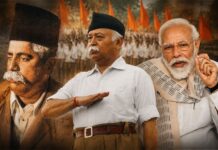
The role of AASU in orchestrating attacks has long been documented. Hindu nationalist organisations such as the Hindutva ideological group, Rashtriya Swayamsevak Sangh or RSS, were also accused of exploiting Assamese anxieties about land and culture to demonise Muslims.
Just days before the massacre, Atal Bihari Vajpayee, the then senior RSS member and later India’s Prime Minister, delivered a speech in Assam warning against “foreigners.” He said that in Punjab such people would have been “cut into pieces and thrown away.”
Historians say this rhetoric legitimised mob violence and bears a chilling resemblance to the language used by Assam’s current Chief Minister Himanta Biswa Sarma, who has branded Bengali Muslims as “Bangladeshi infiltrators” and a “civilisational challenge.”
Assam’s unhealed wounds
Forty years on, the wounds of Nellie remain open and the narratives that fuelled the violence persist.
The Islamophobic slur “miya” continues to be weaponised in Assam’s local politics, reducing an entire community to mere outsiders despite their generations-long presence in the state.
The BJP-led government in Assam has been accused of perpetuating the same exclusionary politics through policies like the National Register of Citizens (NRC), which left nearly two million people, many of them Muslims, at risk of statelessness, and the Citizenship Amendment Act (CAA), which critics say institutionalises religious discrimination.
Mass eviction drives have also disproportionately targeted Bengali-speaking Muslim families, demolishing homes, mosques, and schools under the guise of clearing “illegal encroachments.”
“Today’s Assam looks eerily similar to 1983,” said a rights activist in Guwahati, who asked not to be named. “The government is still treating Muslims of Bengal origin as if they don’t belong.”
For the survivors of Nellie, the Supreme Court’s refusal to hear their plea is a painful reminder that their suffering has never truly been acknowledged.
Many have died waiting for justice. Children who grew up as orphans of the massacre are now elderly, still struggling for dignity and recognition.
As India positions itself on the global stage as the “world’s largest democracy,” the silence over Nellie remains one of its most damning hypocrisies.